
 Español
 Türkçe
 Français
 عربي
عربي  dansk
dansk 한국어
한국어 Deutsch
 Việt Nam
 Italiano
 日本語
日本語 Português

HOW TO SOLVE THE PROBLEM OF UNEVEN AND WARPED STEEL PLATES AFTER SLITTING?
InPEB production factories, leveling and cutting is a very critical step in the production process, however, unevenness and curling phenomena in the process of leveling and cutting will not only affect the appearance and performance of the product but also may hurt the subsequent processing and acceptance. So why is this?
In the steel plate production process, open-level cutting refers to the cutting of steel plates into corners of the required size using a cutting tool. However, due to the pressure and stress exerted by the cutting tool during the open-level cutting process, the cutting edges are uneven and rolled up.
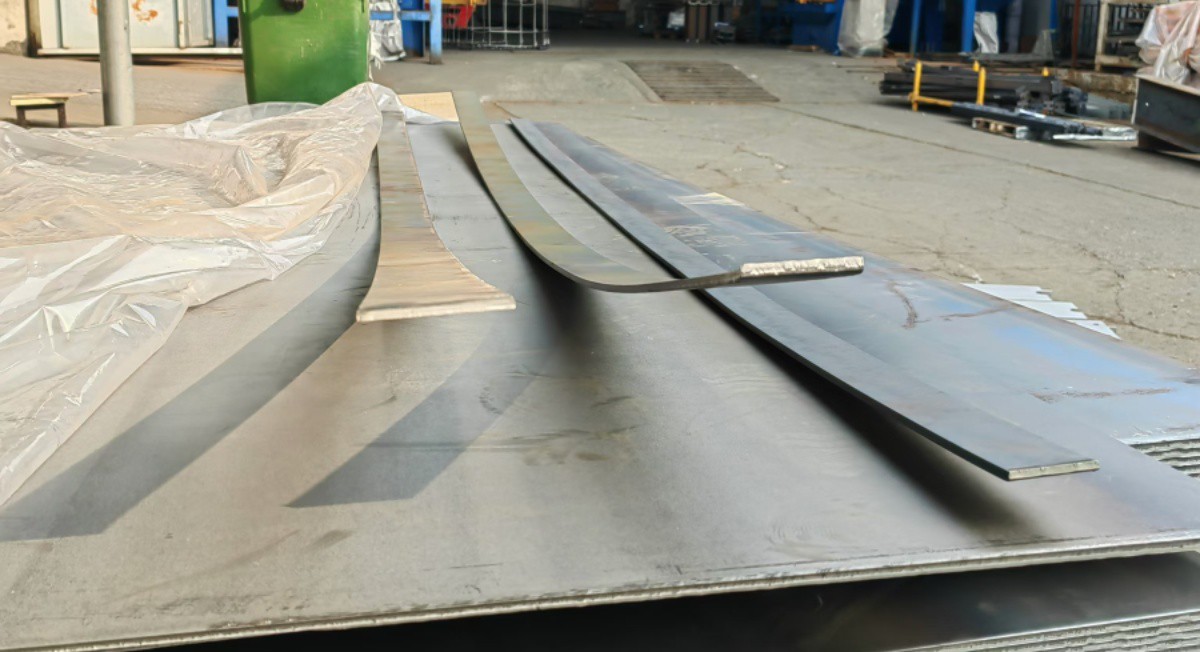
What are the Causes of Uneven and Warped Steel Plates?
1. Influence of material properties
Stress build-up and stress concentration: During the cutting process, the cutting tool is subjected to more stress than it can handle, resulting in stress build-up or concentration, which affects the smoothness and strength of the cut.
Material instability: Some steel materials may experience stress concentration during open cutting due to instability, resulting in uneven cutting edges.
2. Inadequate tool performance
Insufficient tool sharpness and angle: Insufficient tool sharpness and angle may lead to uneven cutting edges during the cutting process.
The thickness of the tool is too thin: the thinness of the tool may be insufficient to withstand the stress during the cutting process, resulting in uneven cutting edges.
3. Tool and cutter wear
Tool wear: The tool may wear out due to unevenness during the cutting process, which may lead to a decrease in the performance of the tool.
Tool wear: The cutting tool may wear out due to unevenness, affecting the subsequent cutting results.
4. Mismatch between tool and cutting sequence
Improper cutting sequence: If the cutting sequence is not correct, it may lead to uneven cutting edges.
Effective Solutions for Uneven and Warped Steel Plates
1, Optimize Tool Selection and Cutting Parameters
Ensure that the slitting tools are of the highest quality, and adjust cutting parameters like cutting speed and clearance based on the material type and thickness. Experiment with different settings to find the optimal cutting conditions for your specific application.
2, Regular Maintenance and Inspection
Implement a strict maintenance schedule for slitting machines and tools. This includes sharpening or replacing blades, checking machine calibration, and ensuring that all machine components are in top working condition.
3 ,Invest in High-Quality Slitting Machines
If your current machine is outdated or malfunctioning, consider upgrading to a newer, more efficient model that offers better precision and control during slitting. Modern slitting machines also offer more advanced features that help reduce warping.
4, Correct Material Handling and Preparation
Before slitting, make sure the material is properly aligned and secured to avoid unnecessary deformation during cutting. Pre-straightening the material before slitting can help reduce the risk of warping.
5, Optimizing the Slitting Process
Review the slitting process and adjust the cutting sequence if necessary. Cutting steel in specific patterns and adjusting pressure distribution can help avoid post-slitting deformation.
Laser cutting appears to be uneven or curved
1, Cause Analysis
- Uneven cutting path: Uneven cutting path during laser cutting can lead to uneven cutting edges.
- Uneven distribution of the laser beam: If the laser beam is not properly focused during the cutting process, it may lead to uneven cutting edges.
- Tool wear: The tool may be worn out during the cutting process due to the non-smoothness, affecting the subsequent cutting results.

2, Solution
Adjust the laser focus position:
Ensure that the laser beam is evenly distributed during the cutting process to avoid localized concentration.
Optimize the cutting path:
Adjust the cutting path according to the material characteristics to ensure even distribution of the laser during the cutting process.
Use more precise cutting tools:
If the tool is hard or not smooth, use a more precise cutting tool to assist in adjusting the cutting path.
Clean and lubricate regularly:
Keep knives and tools clean and lubricated to avoid unevenness due to wear.
Optimize the cutting sequence:
Ensure that the cutting sequence is correct to avoid tool jamming or uneven cutting edges.
AtPromisteel, we specialize in providing high-quality steel products and slitting solutions tailored to your specific needs. Contact us today for personalized advice and to discuss how we can help you streamline your production process and ensure superior quality in every cut. Get in touch now!


