
 Español
 Türkçe
 Français
 عربي
عربي  dansk
dansk 한국어
한국어 Deutsch
 Việt Nam
 Italiano
 日本語
日本語 Português


Hot Rolled Steel
What is Hot Rolled Steel
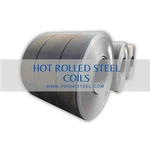
Hot rolled steel is a type of steel that is formed by heating a metal billet or slab to very high temperatures and then passing it through a series of rollers to flatten and shape it into the desired thickness and shape. This process results in a steel product that is strong, durable, and highly malleable, making it an ideal material for a wide range of industrial applications. Hot rolled steel is commonly used in construction and manufacturing industries, where it is used to make everything from structural beams and pipes to automotive parts and machinery components.
Benefits of Hot Rolled Steel
Cost-effective:Hot rolled steel is a cost-efficient option as it requires less processing and manufacturing.
High Strength:Hot rolled steel has a high strength-to-weight ratio, making it an ideal choice for heavy-duty applications.
Ductility:Hot rolled steel is ductile and can be easily formed and shaped into various sizes and shapes.
Versatility:Hot rolled steel is used in a wide range of applications, including construction, manufacturing, and transportation.
Durability:Hot rolled steel is highly durable and can withstand harsh environmental conditions and extreme temperatures.
Availability:Hot rolled steel is readily available in the market and can be easily sourced from local suppliers and distributors.
Speed Of Production:Hot rolled steel can be produced in large quantities quickly, making it an ideal choice for large-scale projects and tight project timelines.
Reduction Of Internal Stresses:The heat generated during the hot rolling process reduces the internal stresses of the steel, thereby improving the durability and strength of the material.




Why Choose us
Quality Products
Promisteel is known for delivering high-quality steel products that are durable and reliable. Quality is assured through rigorous testing and quality control measures.
01
Experienced Team
Promisteel has an experienced team of professionals who have excellent knowledge of the industry's market trends and customer needs.
02
Customer Service
Promisteel is committed to providing customers with exceptional customer service. You can expect prompt and efficient service from their team of experts.
03
Competitive Pricing
Promisteel offers competitive pricing on their steel products without compromising quality. This makes them an affordable option for customers.
04
Expertise
Ensure the service provider has the necessary skills and knowledge to handle your specific needs.
05
What are the Uses of Hot-Rolled Steel
Art and architecture
Hot-rolled steel, once it has been fully processed and its surface has been smoothed, can be finished with all kinds of different methods. Hot-rolled steel in general also presents a unique finish — it has varying colors along the surface, which gives this kind of steel a lot of character. Because of this, it is the ideal material for artistic applications and structures, such as metal sculptures.Architects also favor hot-rolled steel for certain architectural designs. It is aesthetically appealing in indust


Automotive engines and parts
Hot-rolled steel can be used in the automotive industry and is typically used to make vehicle frames (a.k.a. the chassis), engine components, and seat frames.In these cases, hot-rolled steel needs further processing to withstand the corrosion and heat typical in automotive applications. This process is known as pickle and oiling (P&O), which is used to improve rust resistance and has the added benefit of allowing for painting.
Agricultural and mining equipment
This kind of steel is also used widely in agricultural and mining equipment, due to its improved strength and formability. This allows manufacturers to make anything from simple bends to complex draws using hot-rolled steel.Generally, you can find hot-rolled steel being used in the manufacturing of equipment like harvesters and tractors. They are also commonly used to make engine components and grouser bars.


Bridges and Infrastructure builds
Hot-rolled steel’s strength and capability to be formed in large format pieces make it a great option for projects concerning infrastructure builds, such as bridges. Hot-rolled steel is frequently used to make structural sections, as well as components like grid decking and expansion joints.
Material handling
Manufacturers prefer to use hot-rolled steel for certain material handling applications, such as components for fork trucks, trams, cranes, and elevators. This type of steel is typically used to make frames, rails, joint bars, and more.


Water transmission
Hot-rolled steel is also ideal for water transmission applications, such as making pipes and tubes. Hot-rolled steel can also be used for manufacturing additional components, like pipe couplings and spigot sections.
What is The Difference Between Hot Rolled Steel and Cold Rolled Steel
Appearance
Hot rolled steel is easily noticeable for having a scaly surface. How this happens is that the surface bubbles when it's piping hot, and as it cools, the miniature deformations harden and before permanent. If appearance isn't much of a priority, manufacturers tend to choose hot rolled steel. The heat may also change the shape of steel, so rather than having a perfectly square metal bar, you will end up with a slight trapezoid of a bar.When comparing the appearances of hot and cold rolled steel, you can compare it to night and day. Cold rolled steel has a flat, smooth finish with deformations that are few and far between. The surface of cold rolled steel also looks shiny and feels slick. Bars of steel that are cold rolled are straight and square, and will have sharper edges compared to hot rolled steel. Cold rolled steel is used in scenarios in which the appearance of the steel is important.
Performance
Hot rolled steel is used typically in scenarios where dimensions do not need to be exact, such as for railroad tracks or construction. Contrary to popular belief, its scaly surface does not reinforce the steel in any way.Compared to hot rolled steel, cold rolled steel is generally harder, stronger, and more resilient. When the metal is shaped when it cools, it is more fortified to withstand tension and deformations, which would be expected with hot rolled steel when used for work. There is a caveat to cold rolled steel, and that is that if you use extra treatments with this steel, is that it can cause stress from inside which can cause it to warp.
Other Differences
Hot rolled steel is often cheaper to buy than cold rolled steel, due to less processing being required. Hot rolled steel can cool naturally at room temperature, which makes it contain zero stress from inside that be caused by quenching; unlike cold rolled steel, which requires more processing following cooling.
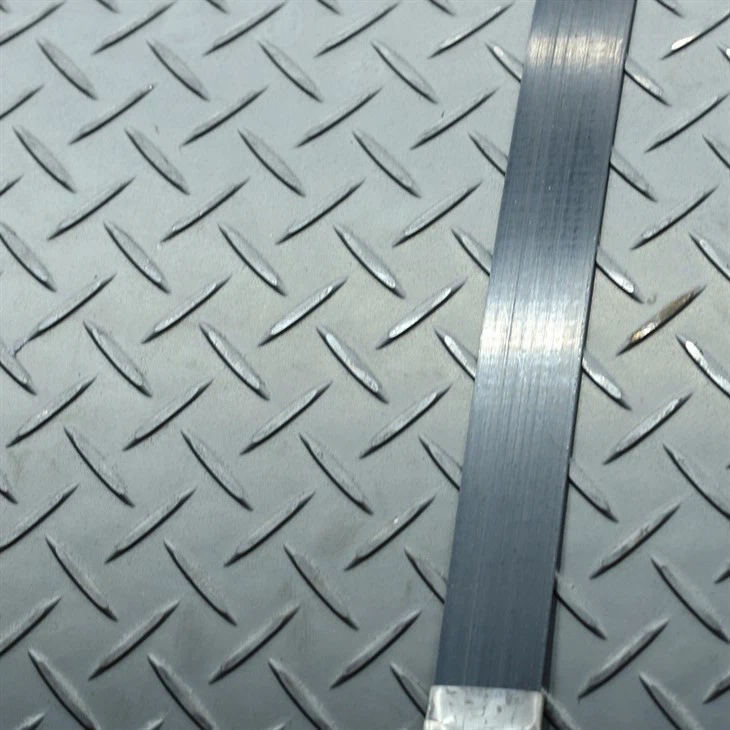
Hot Rolled Steel Plate Production Process Flow
Heating the steel to above its optimal rolling temperature
Forming and rolling the steel into a large rectangular piece
Feeding the piece through a series of roll mills to form and stretch it into a thin strip
Water cooling the strip at the rate needed to achieve the desired metallurgical properties
Winding it into a coil (if needed)
What Are the Most Common Hot-Rolled Steel Grades
A-36
With a carbon content of between 0.25% and 0.29%, this is low carbon steel. As mentioned above, the “A” in this ASTM grade denotes steel. And in this case, the “36” means that this steel’s tensile strength has a minimum yield of 36,000 psi. A-36 is easy to machine and weld, and its mechanical characteristics are superb.A-36 is popular for use in structural applications. It is common steel for making bars, channels, angles, plates, tubes, and shafts.
1010
This steel has a very low (from 0.08%–0.13%) carbon content. It is readily machinable and weldable, and it forms easily compared to higher carbon and alloy steels.
1018
AISI 1018 is another fairly low-carbon steel (0.14%–0.20% carbon content). Aside from slight differences in ductility and tensile strength, it is nearly indistinguishable from AISI 1010.Both 1010 and 1018 are ideal for use in structural, automotive, and furniture applications.
A-1011
This designation is for high-strength low-alloy steel that contains trace amounts of other elements. It boasts improved formability and is extremely versatile.A-1011 sees common use in structural steel sheets, automotive bodies, and drums.
The characteristics of AISI-designated 1026 are very similar to those of ASTM’ s A-36 steel. They have similar chemical properties, and 1026’ s 0.22%–0.26% carbon content places it on the upper end of the low carbon steels. When hot rolled, 1026 and A-36 also perform nearly identically. Both 1026 and A-36 are suitable when more strength and durability than 1010 or 1018 are required.Hot-rolled 1026 is a regular constituent of structures, automotive components, and furniture.
A-500 is another low carbon (up to 0.26% by weight) steel that is commonly hot rolled. It is very similar to A-36, except that A-500 is only used to make tubing. Despite the specificity of the form in which it’s available, A-500 still sees common use in structural applications.
This steel contains 0.42%–0.50% carbon, making it a medium carbon steel. As such, it is generally stronger than other hot-rolled steels that have lower amounts of carbon. And due to its higher carbon content, it can be heat treated with quench hardening or annealing, which greatly alters its mechanical characteristics compared to lower carbon steel. However, because of its increased hardness, it is much less ductile. This should be kept in mind when considering what application to use it in.
Being another medium carbon steel, 1141 contains 0.37%–0.45% carbon. However, what sets it apart from similar “10” varieties of steel is its additional 1.35%–1.65% manganese and 0.08%–0.13% sulfur content. These additional elements make 1141 more conducive to heat treating than 1045 steel.Despite its medium carbon content, which generally translates to greater hardness, 1141 is also much less harsh on machining tools. That makes it something called a “free machining steel.” However, the added sulfur means that 1141 is unsuited to welding.
Strength Requirements
Consider the structural requirements of your project. Hot rolled steels are known for their superior strength, while cold formed sections may be a better choice when weight reduction is essential.
Cost Constraints
Evaluate your budget and production requirements. Hot rolled sections are typically more cost-effective for large quantities, while cold formed sections may be suitable for smaller, precision-oriented projects.
Aesthetics
If the appearance of the steel sections is essential, cold formed sections often offer a smoother and more appealing surface finish.
Tolerances And Precision
Consider the level of precision required for your project. Cold formed sections are known for their tight tolerances and dimensional accuracy.
Environmental conditions
Think about the environment in which the steel sections will be used. Hot rolled sections may be more suitable for outdoor applications due to their durability.
Lead time
Evaluate your project's timeline. Cold forming processes may have longer lead times than hot rolling, impacting project scheduling.
Regulatory requirements
Ensure that your choice of steel sections complies with local and industry-specific regulations and standards.
About Us
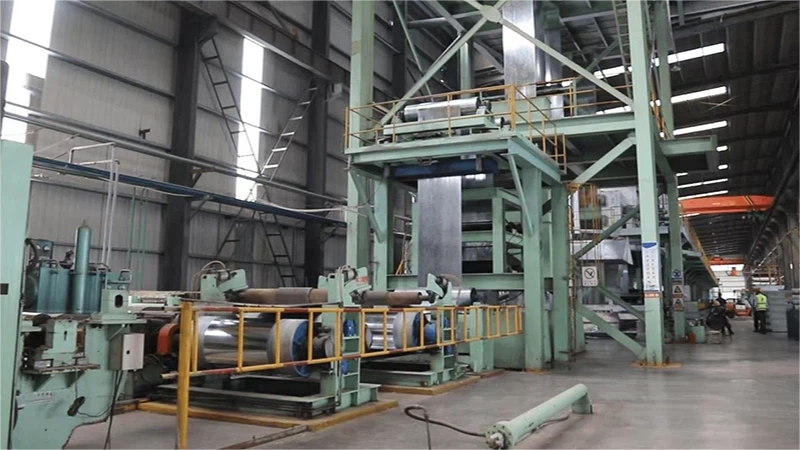
Established in 2015 and located in the Tianjin China, Promisteel, a subsidiary of Tianhe Group, is an international steel trading company with rich experience in exports. We have a stable supply chain from major domestic steel mills and a professional sales team, serving customers in more than 60 countries.
Our company provides a wide range of services to various industries including steel structures, household appliances, barrel manufacturing, shipbuilding, pipe manufacturing, gas tank storage, transformer manufacturing, kitchenware manufacturing, and food packaging. We are committed to offering high-quality and cost-effective products and services to our customers, and providing solutions to problems encountered by our customers in the long process of the international steel supply chain.

Our Certificates


