
 Español
 Türkçe
 Français
 عربي
عربي  dansk
dansk 한국어
한국어 Deutsch
 Việt Nam
 Italiano
 日本語
日本語 Português


Steel bar, referred to as "reinforcement", is a kind of steel material, which is usually used to strengthen concrete and masonry structures. It is a steel rod or wire mesh that strengthens and strengthens concrete by providing tensile strength to counteract the relatively weak tensile strength of concrete.
Rebar usually comes in a variety of diameters and can be plain or deformed. There are raised patterns or ribs on the surface of the deformed steel bar, which enhances its bond with the surrounding concrete and prevents slippage between the steel bar and the concrete. This improves the overall structural stability of the reinforced concrete.
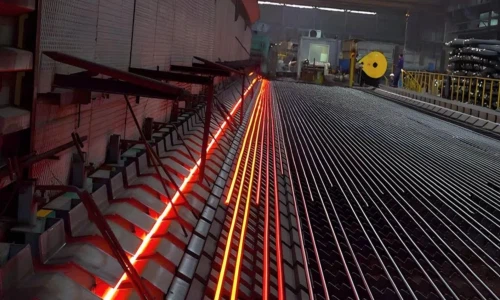
Rebar can be classified according to different criteria and characteristics. Here are some common ways to classify rebar:
Classification according to surface state:
Smooth Rebar: A smooth surface with no visible grain or ribs.
Ribbed Rebar: A surface with raised textures or ribs to improve bondability to concrete.
Classified by use:
Main reinforcement: used to bear the main load in the structure, usually a ribbed steel bar, arranged in the main force-bearing part of the concrete member.
Reinforcement: It is used to enhance the crack resistance and durability of concrete components, usually smooth steel bars, which are arranged at the secondary stress-bearing parts of the components.
Classified by shape:
Reinforcement Rod: A common round steel bar, usually used in various structures.
Reinforcement Mesh: A network structure welded by steel wires, used for reinforcement of large-area concrete members.
According to the strength of the steel bar classification:
HRB steel bar: hot-rolled ribbed steel bar with high strength and good weldability.
SRB steel bar: cold-drawn ribbed steel bar, relatively high strength, suitable for some special engineering requirements.
R steel bars: cold-drawn smooth steel bars with low strength, usually used in some non-structural parts.
Classified according to international standards:
According to the standards of different countries or regions, the naming and classification of steel bars may be different. For example, the United States generally uses ASTM standards, Europe uses EN standards, China uses GB standards, etc.
Classified by diameter:
The diameter of steel bars is usually marked in millimeters, such as 8mm, 10mm, 12mm, etc.
Classified by durability:
Corrosion-resistant steel bars: used for structures that are greatly affected by corrosive environments and have better durability.


