
 Español
 Türkçe
 Français
 عربي
عربي  dansk
dansk 한국어
한국어 Deutsch
 Việt Nam
 Italiano
 日本語
日本語 Português

Annoyed by Tiny Blemishes on Your Coated Steel? Unmasking "Cratering"
Cratering on your pre-painted steel coil happens when the paint doesn't spread out nicely and evenly. It's like tiny little craters or dimples form on the surface because the paint pulls away from certain spots. If these holes are bad enough, you'll see the bare metal underneath. This messes up how the coil looks and, more importantly, it means the paint isn't protecting the steel like it should be.
In addition to that issue, you must also be wondering what other problems might arise with color-coated steel coils.
Colour-coated plate shrinkage is more complex, involving raw materials, equipment, technology, and other aspects. The following is the analysis of the specific causes and the corresponding elimination of countermeasures

Causes of Color-Coated Steel Cratering
The formation of Cratering is typically the result of multiple interacting factors, which can be categorized into the following major types:
Contamination of the substrate (base material) surface
- Oils, silicone, waxes, or other low surface tension substances: This is the most common and primary cause of Cratering. Even trace amounts of oil, fingerprints, or silicone (from lubricants, release agents, cleaning agent residues on the production line, or even silicone molecules in the air) have surface tensions significantly lower than those of the coating. This prevents the coating from wetting these areas upon contact, causing it to be "rejected" and contract inward, forming cratering.
- Dust and particles: Dust, metal shavings, fibers, and other particles on the substrate surface or in the production environment may act as contaminants during coating, forming "obstacles" within the coating that hinder leveling and cause cratering.
- Inadequate pretreatment: If degreasing and cleaning are not thorough, residual oils or contaminants on the substrate surface can become the primary cause of cratering.
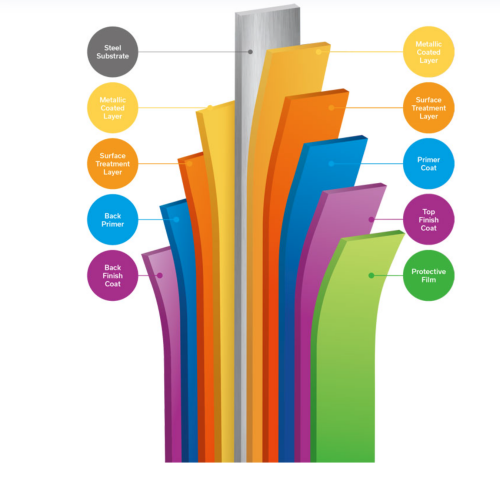
Coating-related issues
- Imbalanced surface tension of the coating: If the coating formulation is unreasonable, mismatched evaporation rates of various components (especially solvents and additives), or excessive surface tension gradients may create local surface tension differences during baking, leading to cratering.
- Uneven dispersion of pigments and fillers: Poor dispersion of pigments and fillers in the coating can form agglomerates that act as "foreign objects" in the coating film, causing the coating to shrink around them.
- Improper use of defoamers: Defoamers are typically low-surface-tension substances. If the type of defoamer is inappropriate, the dosage is excessive, or the defoamer is unevenly dispersed, it may instead cause cratering on the coating film surface.
- Incompatibility between different coatings: If the production line switches between different colors or types of coatings, residual old coatings that are not thoroughly cleaned may be incompatible with new coatings, potentially causing Craterings.
- Too low coating viscosity: Coatings with too low viscosity are more prone to rapid shrinkage when encountering contaminants, forming noticeable Craterings.

Coating process control issues
- Coating environment contamination: Oil mist, silicone aerosols, dust, and other contaminants in the production workshop air may settle on the substrate or wet coating surface before or during coating, causing contamination.
- Coating roller contamination: Oil residues, silicone residues, or other contaminants on the coating roller surface can directly contaminate the coating and steel plate surface.
Baking process issues
- Unreasonable baking temperature or heating rate: If the temperature rises too quickly, the solvent evaporates rapidly, causing the coating film surface to cure prematurely, preventing internal contaminants or bubbles from escaping; if the temperature is insufficient, the coating does not level properly, and the impact of contaminants becomes more pronounced.
- Contaminants inside the baking oven: The inner walls of the baking oven may be coated with cured paint particles or other volatile substances, which are carried by airflow to the coating surface at high temperatures, forming a contamination source.
Equipment and environmental factors
- Air circulation system issues: The air filtration system on the production line is inefficient and unable to effectively remove contaminants from the air.
- Equipment lubricant leakage: Lubricants used in mechanical equipment on the production line, such as bearings and gears, may leak and contaminate steel plates or coatings.
- Improper operator procedures: When operators handle coatings or steel plates, oils on their hands or silicone powder on gloves may become contamination sources.
How to determine the cause of Cratering?
1. Observe the characteristics of Craterings ("examine the symptoms")
The shape, size, distribution, and presence of foreign objects at the center of Craterings can provide important clues.
Shape and center of Cratering:
- Cratering with foreign objects (such as small particles, fibers, or silicone oil spots) at the center: Strongly indicates contamination on the substrate surface or environmental dust. Contaminants act as low-surface-tension points or obstacles, causing the coating to shrink around them. Carefully examining these foreign objects under a magnifying glass can help identify the source of contamination (e.g., metal shavings or dust).
- Irregularly shaped, shallow-edged, and large-area craters: May be related to unstable coating viscosity, poor self-leveling properties of the coating, or uneven application.
- Regularly shaped, deep, and dense: Typically associated with silicone contamination or oil contamination. Silicone easily spreads in the coating and forms multiple craters.
- Clear Cratering-like centers: May be due to improper use of defoamers in the coating, air bubbles in the coating, or severe contamination causing complete rejection of the coating.
Distribution of Craterings
- Striped distribution along the coating direction: May be due to defects in the coating roller (such as wear, scratches, or contamination with foreign objects) or striped contamination sources in the coating.
- Randomly distributed across the panel surface: More likely due to dust or oil mist contamination in the air, or issues with the coating itself (such as defoamers or incompatible components).
- Concentrated at the edges of the substrate: This may be related to defects at the edges of the substrate, insufficient pressure at the edges of the coating roller, or poor edge leveling of the coating.
- Appearing only at specific width positions: This typically indicates defects in the coating roller at that position or abnormalities in the coating supply system at that position.
Timing of Cratering appearance
- Appears immediately after coating and is visible before baking: Typically caused by substrate surface contamination, coating roller issues, or poor paint wetting properties.
- Appears during or after baking: More likely related to paint formulation issues (solvent evaporation, surface tension imbalance), improper baking temperature/time control, or contamination inside the baking oven.
2. Trace the production process ("investigate the history")
Based on the observed phenomena, combined with production records and process parameters, the scope can be further narrowed down.
- Check substrate pretreatment records
Are the concentration, temperature, and spray pressure of the degreasing solution normal?
Is the quality of the rinse water qualified?
Does the thickness and uniformity of the conversion coating meet standards?
Has there been recent equipment maintenance (e.g., bearing replacement, which may introduce new lubricant)?
Was the substrate contaminated before storage?
- Check coating usage
Has a new batch of coating been introduced?
Was the coating thoroughly mixed before use?
Are the coating's viscosity, solids content, and other parameters within normal ranges?
Have new additives been added, or has the additive supplier been changed?
Has the production line recently switched between different colors or types of coating? Was the cleaning thorough?
Are there any expired or improperly stored coatings?
- Check coating process parameters
Coating thickness: Are there any fluctuations? Check the online thickness gauge data to see if the coating in the Cratering areas is significantly thinner.
Baking temperature curve: Are the temperatures in each zone of the baking oven stable? Is the heating rate too fast? Check if there are any paint residues or foreign objects inside the oven.
Line speed: Are there any abnormal fluctuations?
Coating roller condition: Have the coating rollers been cleaned, replaced, or ground recently? Check the roller surface for visible defects or contamination.
- Check environmental factors
Is the workshop ventilation system functioning normally?
What is the air filtration efficiency?
Has the workshop recently conducted activities such as paint spraying or equipment lubrication that may generate oil mist or silicone contamination?
Are there any lubricant leakage points on the equipment?

3. Conduct targeted testing ("laboratory analysis")
When preliminary analysis cannot determine the cause, professional laboratory tests can be conducted.
- Coating and contaminant analysis:
Fourier Transform Infrared Spectroscopy (FTIR): Analyze foreign substances at the center of Craterings or the chemical composition of coatings in Cratering areas to determine the presence of silicone, oils, or other foreign substances.
Scanning Electron Microscopy (SEM) combined with Energy Dispersive Spectroscopy (EDS): Observe the microscopic morphology of the Craterings and analyze the elemental composition of foreign substances or the substrate surface to identify the type of contaminants.
- Coating Surface Tension Test:
Test the surface tension of the coating used and compare it with standard values to determine if the coating itself has issues.
- Wettability Test
Test the wettability of the coating on a clean substrate and on a simulated contaminated substrate to determine the coating's sensitivity to contamination.
Through the above systematic "observation-backtrack-testing" process, the fundamental cause of Craterings in color-coated steel sheets can typically be accurately identified, enabling targeted improvement measures to be implemented. This is a troubleshooting process that requires experience, meticulousness, and professional knowledge.
How to solve these issues
The following are improvement measures for "Craterings" (also applicable to other coating defects), divided into several main aspects:
I. Source control and material optimization (blocking the "entry point")
This is the most fundamental step, ensuring that the materials used are "clean" and "qualified."
- Strengthen coating supplier management
Strict review and selection: Prioritize suppliers with a good reputation, strong technical capabilities, and a well-established quality control system.
Request detailed technical data: Obtain key parameters such as surface tension, viscosity, defoamer content, and batch stability of the coating.
Establish an incoming inspection mechanism: Conduct rigorous inspections on each batch of coatings, including viscosity, solids content, color, and the presence of sediment or impurities. Simulate coating application on pilot or intermediate-scale lines to confirm flow properties and resistance to cratering.
Conduct regular supplier evaluations: Continuously monitor the supplier's supply quality and conduct regular technical exchanges to address potential issues.
Ensure proper storage conditions for coatings: Store coatings strictly according to the supplier's recommendations to avoid degradation or component settling caused by high temperatures, low temperatures, humidity, or direct sunlight. Ensure thorough mixing before use.
- Optimize substrate quality and pretreatment
Improve substrate cleanliness: This is the core of eliminating cratering. Enhance degreasing cleaning effectiveness to ensure complete removal of all organic and inorganic contaminants from the steel plate surface, including rolling oil, rust-preventive oil, fingerprints, silicone, and dust. Consider using more efficient degreasers or increasing the number of cleaning stages.
Optimizing conversion coating quality: Ensure that the chemical conversion coating (such as phosphating coating, chromating coating, or non-chromate passivation coating) forms uniformly, densely, and defect-free, while maintaining an appropriate coating thickness. Regularly monitor critical parameters such as concentration, temperature, and pH of the pretreatment tank solution.
Avoid secondary contamination of substrates: After presentation, substrates must be protected from re-contamination by airborne oil mist, dust, or human handling before entering the coating zone. Consider installing an air purification system or improving the conveying method.
II. Fine Control of Process Parameters and Equipment Maintenance (Managing the "Process")
This is at the production line level, ensuring that coatings are applied and cured correctly and uniformly.
- Strictly control the coating process
Precise control of coating thickness: This is one of the most direct factors affecting Craterings. Utilize high-precision coating machines equipped with online coating thickness gauges for real-time monitoring and automatic feedback adjustments, ensuring a stable and uniform coating thickness that meets standards.
Optimize coating roller condition:
Regular inspection and maintenance: Regularly inspect the coating rollers for wear, scratches, and surface cleanliness, and promptly clean or grind them as needed.
Ensure uniform pressure: Ensure that the pressure between the coating rollers and the steel plates is uniform and stable to avoid uneven coating caused by excessive or insufficient local pressure.
Maintain production line cleanliness: Regularly clean the coating machine, pipes, coating tanks, and other equipment to prevent oil stains, cured paint residues, dust, and other contaminants from polluting the coating or substrate.
- Optimize the baking process
Precise control of baking temperature and time: Ensure that the temperature in each zone of the baking oven is stable and uniform, and strictly follow the temperature curve recommended by the coating supplier for optimal baking conditions. Avoid excessive temperatures (which may cause coating decomposition or brittleness) or insufficient temperatures (which may result in incomplete curing or poor flow properties).
Reasonably set the heating curve: Ensure sufficient time for solvents to evaporate before the coating film surface forms a skin, preventing solvents or contaminants from being trapped inside the coating film.
Inspect the cleanliness of the baking oven: Regularly clean any cured paint particles or volatile substances adhering to the inner walls of the baking oven to prevent them from re-contaminating the wet coating film at high temperatures.
- Improve the workshop environment
Install an air purification system: Install high-efficiency air filters at the coating area and oven inlet to filter dust, particles, and oil mist from the air, reducing environmental pollution sources.
Maintain positive pressure: The coating area can maintain slight positive pressure to prevent untreated external air from entering.
Control temperature and humidity: Maintain stable temperature and humidity in the workshop environment to avoid significant fluctuations that may affect coating performance and coating results.
Through these multi-dimensional, systematic improvement measures, the probability of surface defects such as Craterings in color-coated steel sheets can be significantly reduced, thereby ensuring product quality and enhancing customer satisfaction. This requires the joint efforts of technology, management, and all employees.


