
 Español
 Türkçe
 Français
 عربي
عربي  dansk
dansk 한국어
한국어 Deutsch
 Việt Nam
 Italiano
 日本語
日本語 Português

This is one of the most underestimated risks in structural steel fabrication. Many overseas buyers still send suppliers only 2D PDF drawings, basic AutoCAD layouts, or general arrangement plans, assuming the factory can simply "follow the drawings" and start production.
But in modern steel structure projects, especially complex industrial buildings, relying only on 2D drawings is extremely risky. Because steel structures are no longer simple buildings. They involve thousands of components, complex connections, tight installation tolerances, and multidisciplinary coordination. Without proper BIM modeling and detailing, small drawing issues can quickly become massive construction problems.
📍 Deep-dive into how these thousands of components fit together in our comprehensive guide: [The Anatomy of a Pre-Engineered Metal Building (PEB)].
The Problem with Traditional 2D Drawings
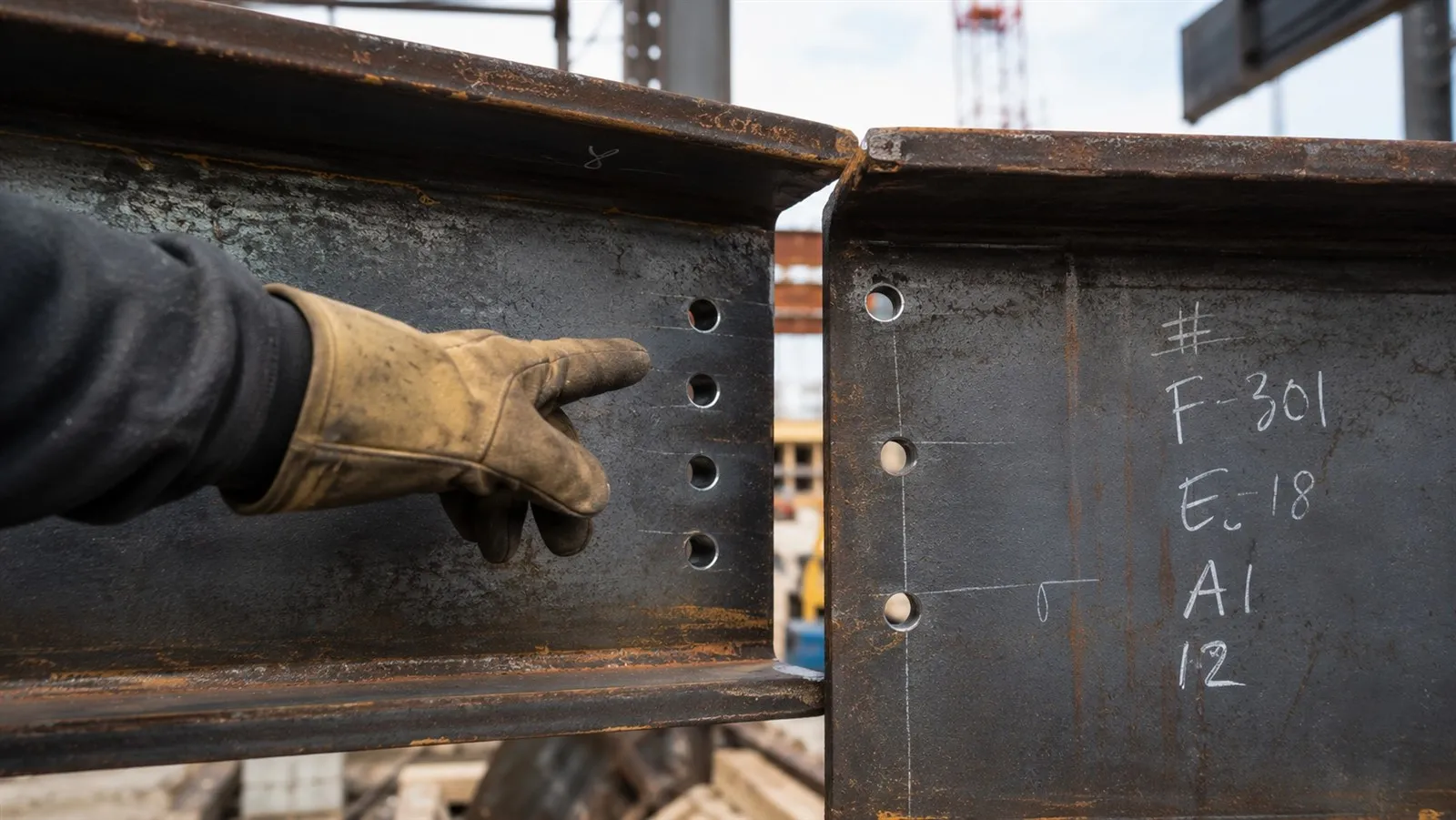
2D PDF drawings only show limited information. They often cannot fully reveal spatial conflicts, bolt interference, connection clashes, installation clearances, or pipe and equipment conflicts.
On paper, everything may look correct. But in real 3D space, the beam may physically collide with the column, the bolts may become impossible to install, or the connection plate may interfere with piping systems.
These spatial contradictions are called "clashes," and they are one of the biggest causes of site delays, re-fabrication, crane downtime, installation modifications, and budget overruns.
Why Clashes Are So Expensive
In overseas projects, fabrication usually happens thousands of miles away from the installation site. Once steel components are shipped, correcting mistakes becomes extremely difficult. Site welding increases, engineering revisions slow construction, and labor costs rise rapidly.
A single overlooked clash can trigger a cascade of site issues:
| Problem | Result |
| Misaligned holes | Site drilling |
| Beam interference | Re-cutting |
| Connection conflict |
Temporary modifications |
| Wrong clearances |
Installation delays |
| Missing tolerances |
Structural adjustment |
The cost of fixing steel on-site is often many times higher than correcting the issue during detailing.
The Biggest Mistake Buyers Make
Some buyers assume, "If the drawings are approved, production is safe." But approval of 2D drawings does not guarantee constructability.
A factory that only follows PDFs without BIM coordination may simply cut steel, drill holes, and weld assemblies without detecting hidden installation conflicts. That means the real problems are discovered only when the structure arrives at the jobsite. At that point, cranes are waiting, installation teams are delayed, project schedules are under pressure, and every hour becomes expensive.
Why BIM and Tekla Matter
Professional steel fabricators no longer rely solely on 2D drawings. They use BIM (Building Information Modeling), Tekla Structures, and 3D detailing systems to create a complete digital model before fabrication begins. This allows engineers to visualize the entire structure in real 3D space.
What BIM Actually Prevents
A proper BIM model can identify structural failures before steel is cut:
- Beam-to-Column Clashes: Identifies where members physically interfere with each other.
- Bolt Installation Problems: Flags insufficient wrench clearance, bolt conflicts, and impossible assembly sequences.
- Pipe & Equipment Interference: Especially important in power plants, industrial facilities, and petrochemical projects.
- Connection Errors: Spots misaligned plates, incorrect hole locations, and tight welding access issues.
- Installation Sequence Risks: BIM helps simulate assembly order, crane access, and erection feasibility before steel enters production.
📍 Welding access issues can lead to catastrophic internal defects on heavy plates. Read our guide on [The Hidden Risk in Heavy Structural Steel Plates and Z-Direction Testing].
Why Tekla Is Widely Used in Structural Steel
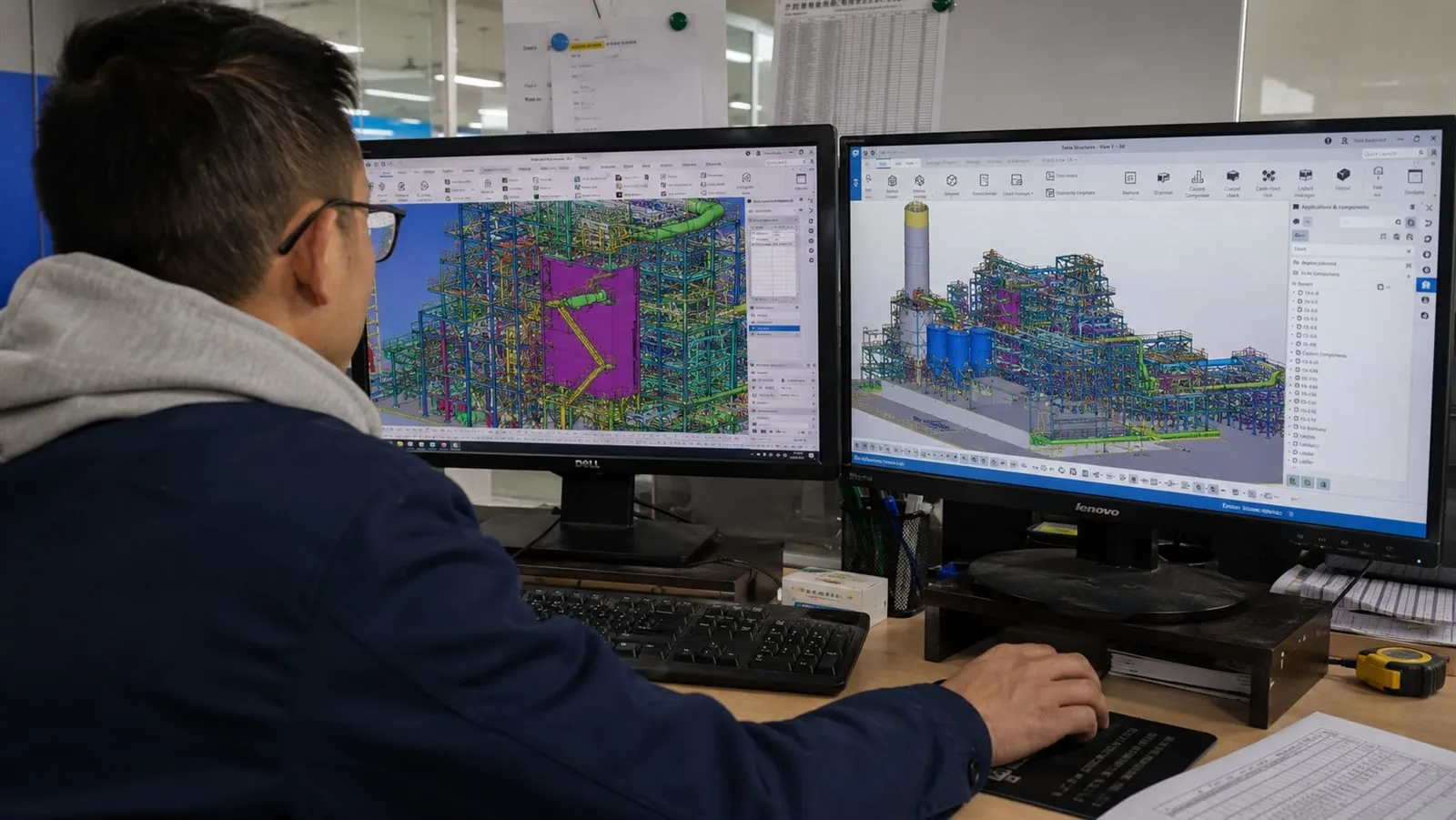
Tekla Structures has become one of the global standards for steel detailing because it provides accurate 3D modeling, clash detection, CNC production data, automatic BOM generation, and installation coordination. For complex projects, integrating Tekla dramatically reduces fabrication risk. It guarantees that precise geometrical requirements-like the true structural overlaps of Z-purlins over supports-are validated digitally.
The Hidden Cost of "Cheap Fabrication"
Some low-cost suppliers avoid BIM because it requires skilled engineers, the software is expensive, and detailing takes more time. Instead, they depend heavily on the manual interpretation of PDFs.
This may reduce quotation costs initially, but later it often creates fabrication errors, installation problems, delayed project delivery, and expensive site modifications. In reality, cheap detailing often becomes very expensive construction.
Why Overseas Projects Need BIM Even More
International steel structure projects face additional complexity:
- Long shipping times
- Limited site flexibility
- Different engineering standards
- Remote communication
- Tight schedules
Unlike local projects, overseas projects cannot easily "fix things later." That is why advanced coordination before fabrication is critical.
The Fix: Work with BIM-Capable Fabricators
Professional buyers should choose fabricators that provide Tekla detailing, BIM coordination, 3D clash detection, CNC-integrated fabrication, and shop drawing optimization before production starts. As a seasoned international trade merchant operating an advanced processing center, we integrate Tekla into our pre-fabrication workflow to guarantee site-ready components.
Questions Buyers Should Ask Suppliers
Before placing an order, ask:
- Do you use Tekla Structures?
- Can you provide a BIM model?
- How do you perform clash detection?
- Do you generate CNC data directly from the model?
- Can installation sequencing be reviewed in 3D?
These questions quickly reveal the supplier's true engineering capability.
Final Takeaway
In modern structural steel projects, fabrication is no longer just manufacturing; it is digital engineering. A supplier who only reads PDFs may produce steel exactly as drawn-while still producing components that cannot be installed efficiently.
Professional fabricators use BIM and Tekla to identify problems before steel reaches the jobsite. Because in overseas steel projects, detecting a clash in the computer costs almost nothing, but detecting it on-site can cost thousands of dollars per hour.
📍2D drawing mistakes are just one way projects lose money. Check your entire procurement strategy against our [10 Structural Steel Sourcing Mistakes That Cost Thousands].


