
 Español
 Türkçe
 Français
 عربي
عربي  dansk
dansk 한국어
한국어 Deutsch
 Việt Nam
 Italiano
 日本語
日本語 Português

Why are the magnetic polarization values specified at 800A/m for silicon steel CR GO NGO?
The specification of magnetic polarization values at 800 A/m in silicon steel is closely tied to the material's properties and its intended applications, particularly in electrical transformers and motors. Here's a breakdown:
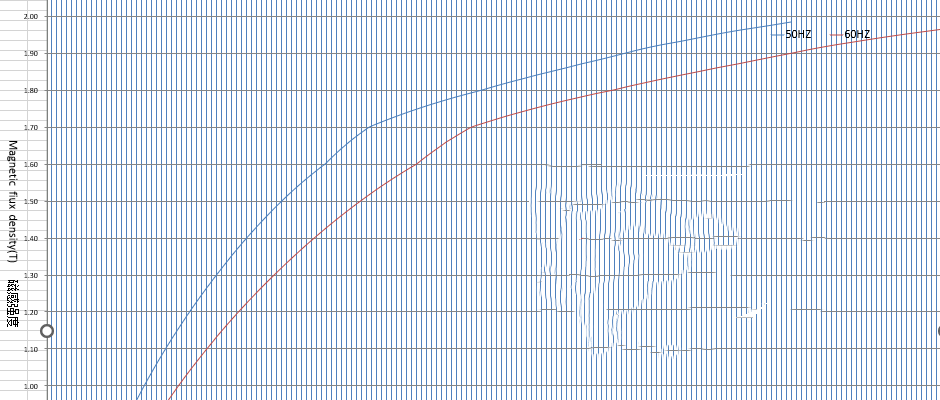
1. Operating Range and Saturation:
The deliberate and precise selection of 800 A/m meticulously reflects a profoundly strategic and carefully considered point placed within the material's intricate magnetization curve, thoroughly ensuring that the material's crucial magnetic properties are rigorously assessed and accurately evaluated during a critical phase of substantial magnetization, and yet, importantly before the material inevitably reaches the potentially performance-limiting state of deep and irreversible saturation.
2. Relevance to Applications:
This specific and detailed specification allows for the establishment of a robust performance metric that directly and accurately correlates with the material's essential ability to effectively and efficiently conduct magnetic flux during the dynamic and repetitive magnetization cycles that are inherently present in the operational cycles of transformers and motor operation.
3. Standardization and Comparison:
By establishing 800 A/m as a universally recognized benchmark and a standard reference point, a highly uniform and consistent measurement protocol is meticulously created, thereby enabling objective and impartial comparisons between various diverse silicon steel grades and substantially facilitating informed and judicious material selection for a wide range of diverse applications.
4. Hysteresis Loop Considerations:
The carefully chosen 800A/m value can be demonstrably relevant to the specific shape and characteristics of the hysteresis loop, as the magnetic polarization at this specific point on the loop can provide valuable and insightful information regarding the material's inherent magnetic losses and its overall magnetic behavior.
| Type | Thickness (mm) | Grade | GB/T 2521.2 - 2016 | Q/BQB 485 - 2021 | ||
|---|---|---|---|---|---|---|
| P1.7/50 (W/kg) | J800 (T) | P1.7/50 (W/kg) | J800 (T) | |||
| Regular Type | 0.23 | B23G110 | 1.10 | 1.82 | 1.08 | 1.85 |
| 0.27 | B27G120 | 1.20 | 1.82 | 1.15 | 1.85 | |
| 0.30 | B30G120 | 1.20 | 1.82 | 1.15 | 1.85 | |
| 0.30 | B30G130 | 1.30 | 1.82 | 1.25 | 1.85 | |
| 0.35 | B35G145 | 1.45 | 1.82 | 1.40 | 1.85 | |
| 0.35 | B35G155 | 1.55 | 1.82 | 1.52 | 1.85 | |
This table compares the magnetic performance differences between GB/T 2521.2-2016 and Q/BQB 485-2021 standards for regular-type silicon steel grades.
In summary:
800 A/m is a chosen point that provides a relevant and standardized measurement of silicon steel's magnetic polarization within its operating range.
It helps assess the material's performance in electrical devices and allows for consistent comparison between different grades.


