
 Español
 Türkçe
 Français
 عربي
عربي  dansk
dansk 한국어
한국어 Deutsch
 Việt Nam
 Italiano
 日本語
日本語 Português




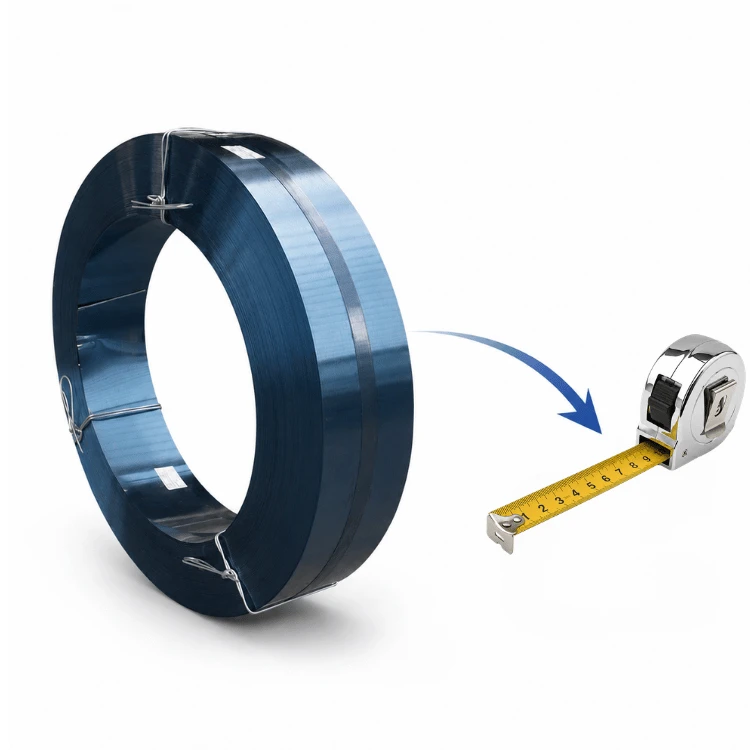
Blue Tempered Spring Steel Strip
BRAND: PROMISTEEL
GRADES: 65Mn, SK5, SAE 1075, C75S
THICKNESS: 0.10 – 2.00 mm
WIDTH: 3 – 600 mm
DELIVERY CONDITION: Cold Rolled, Hardened & Tempered (Blue Finish)
SURFACE: Blue Oxide (Tempered), Bright/Polished on request
HARDNESS: 42 – 52 HRC
TENSILE STRENGTH: 1,300 – 1,800 MPa
APPLICATION: Tape Measures, Clock Springs, Retractable Mechanisms, Precision Springs
MOQ: Confirm based on thickness/width — contact for details
Blue tempered spring steel strip is cold-rolled strip that has been hardened and tempered to produce the characteristic blue-black oxide surface and the hardness-toughness balance required for repeated flexing-used in tape measure blades, clock springs, retractable mechanisms, and stamped precision spring components. Promisteel supplies this strip in 65Mn, SK5, SAE 1075, and C75S, sourcing from qualified Chinese mills and managing quality verification - hardness consistency, surface and edge condition, thickness tolerance - and export documentation through to delivery.
Technical Specifications
Parameter | Typical Range | Notes |
|---|---|---|
Thickness | 0.10 mm – 2.00 mm | Tighter tolerance available on thinner gauges |
Thickness tolerance | ±0.01 mm to ±0.03 mm | ±0.01 mm typical below 0.5 mm |
Width | 3 mm – 600 mm | Narrow widths common for tape measure/clock springs |
Width tolerance | ±0.05 mm to ±0.10 mm | Tighter for precision slit strip |
Hardness (HRC) | 42 – 52 HRC | Application-dependent |
Tensile strength | 1,300 – 1,800 MPa | Varies with grade and tempering temperature |
Surface condition | Blue tempered oxide finish | Bright/polished available on request |
Edge condition | Slit edge, deburred | Round/rolled edge available |
Coil inner diameter | 250 / 300 / 400 mm | Confirm for your uncoiling equipment |
Coil weight | 50 kg – 1,000 kg | Configurable per order |
Standard reference | GB/T 1222, JIS G4401, AISI/SAE, EN 10132 | Confirm which standard applies to your order |
Available Grades - Comparison
Grade | Standard | Carbon Content | Key Characteristic | Typical Use Case |
|---|---|---|---|---|
65Mn | GB/T 1222 (China) | ~0.62–0.70% C, 0.90–1.20% Mn | Good hardenability via Mn addition; cost-efficient | General tape measures, retractor springs |
SK5 | JIS G4401 (Japan) | ~0.80–0.90% C | Higher attainable hardness, no major alloying | Clock springs, JIS-spec OEM supply |
SAE 1075 | AISI/SAE (USA) | ~0.70–0.80% C | Plain high-carbon, balanced hardness/toughness | General springs, US-standard documentation |
C75S | EN 10132 (EU) | ~0.70–0.80% C | Comparable to SAE 1075; EU certification | European OEM supply chains |
Selection guidance: 65Mn and SAE 1075 are largely interchangeable for general retractable mechanisms - the choice usually depends on which certification standard your customer's drawings require. SK5 suits applications needing hardness above ~50 HRC. C75S applies when EN-standard documentation is required.
Applications
Tape Measure Manufacturing
Requires hardness sufficient to hold shape when extended, but ductile enough for tip-hook forming without cracking. Typically 65Mn or SAE 1075, ~0.15–0.20 mm, 42–48 HRC.

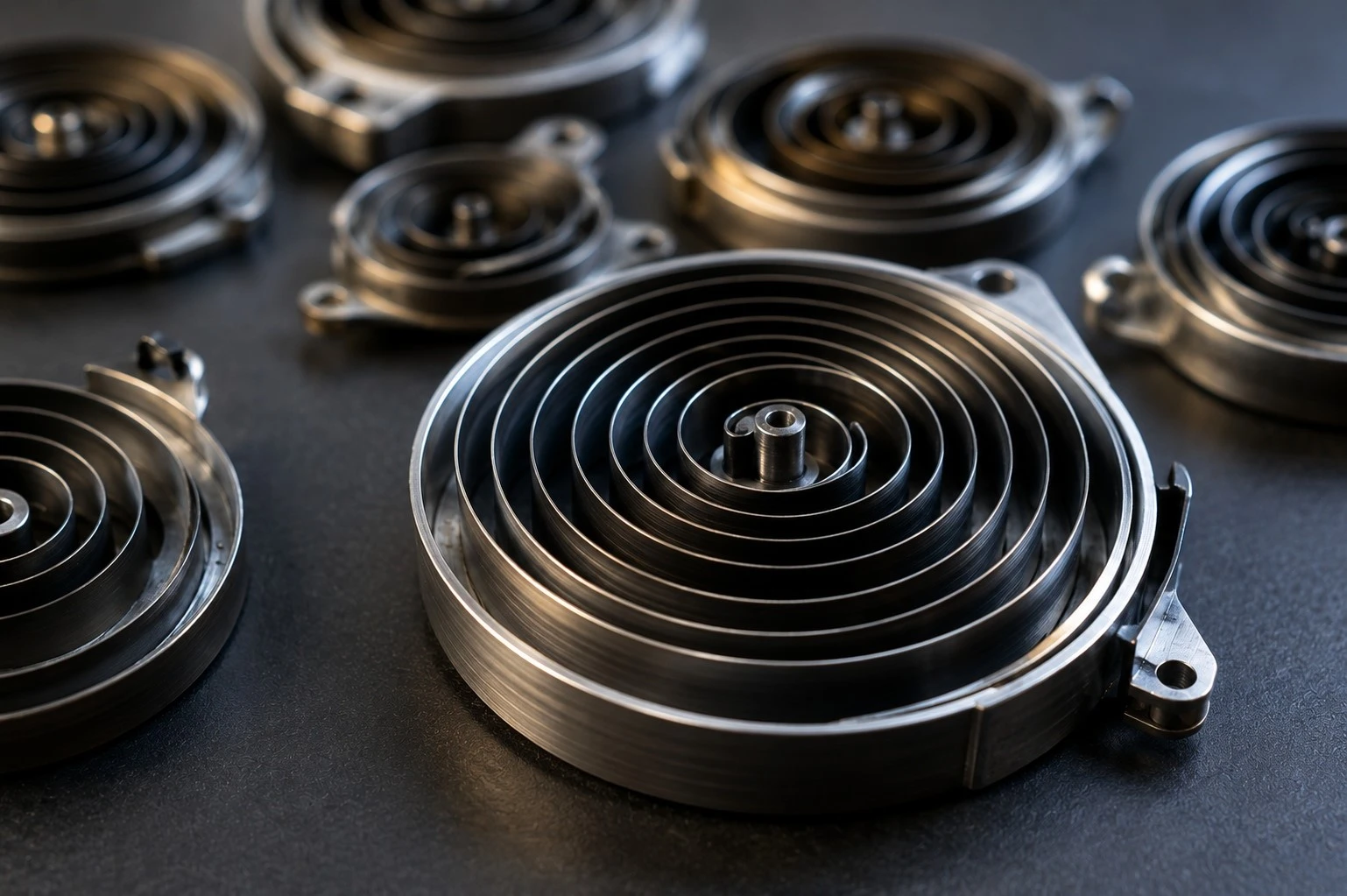
Clock Spring Manufacturing
Needs high fatigue life under continuous load. Higher hardness (48–52 HRC) is common since the strip isn't sharply formed after hardening - SK5 is frequently used here.
Retractable Mechanisms
Cable reels, retractors, and similar devices prioritize set resistance and consistent coil behavior over raw hardness, since the strip spends most of its life coiled.

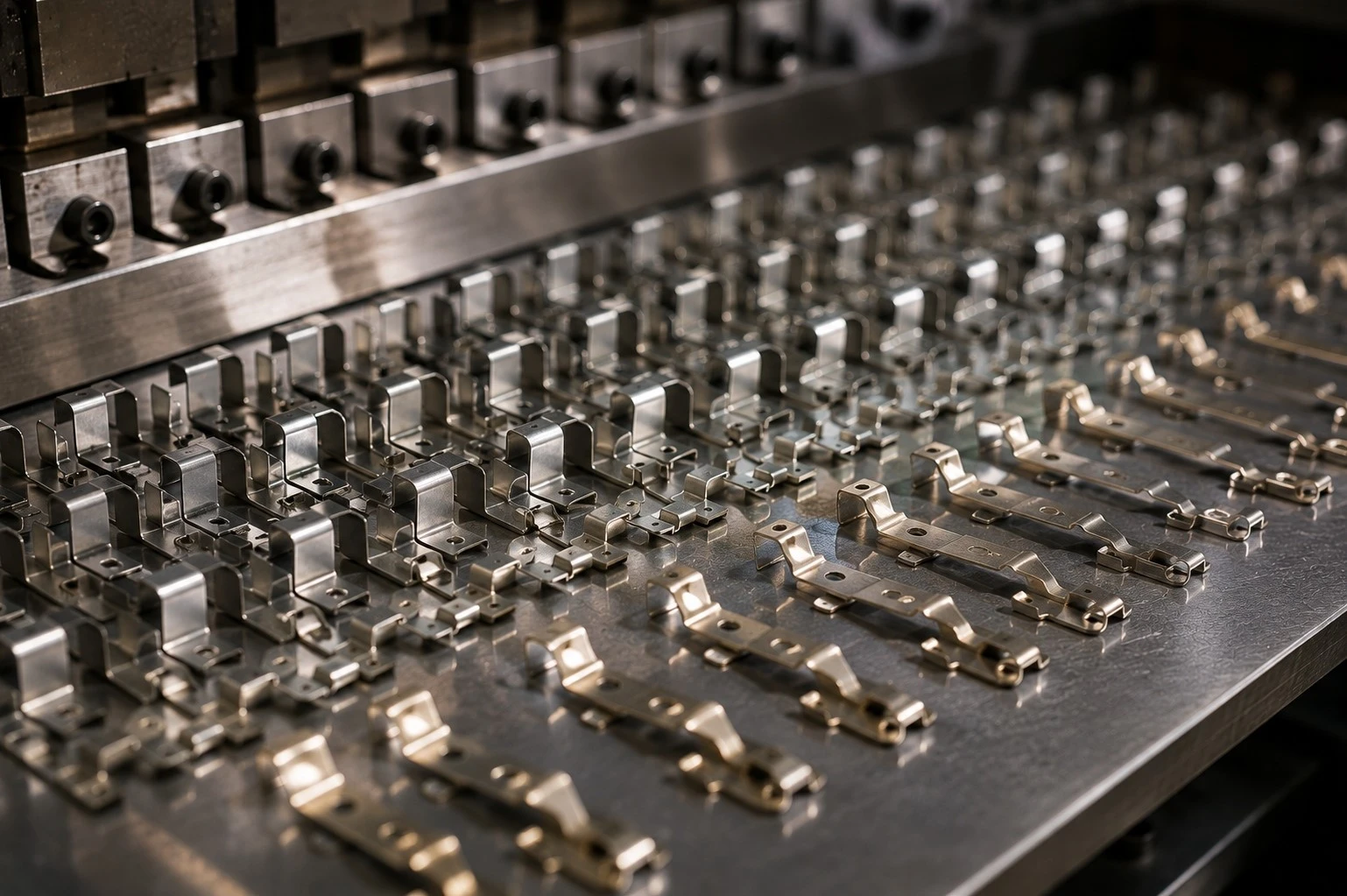
Precision Springs
Stamped contact and clip springs depend on thickness consistency and flatness - variation affects stamped part dimensions and spring rate across a production run.
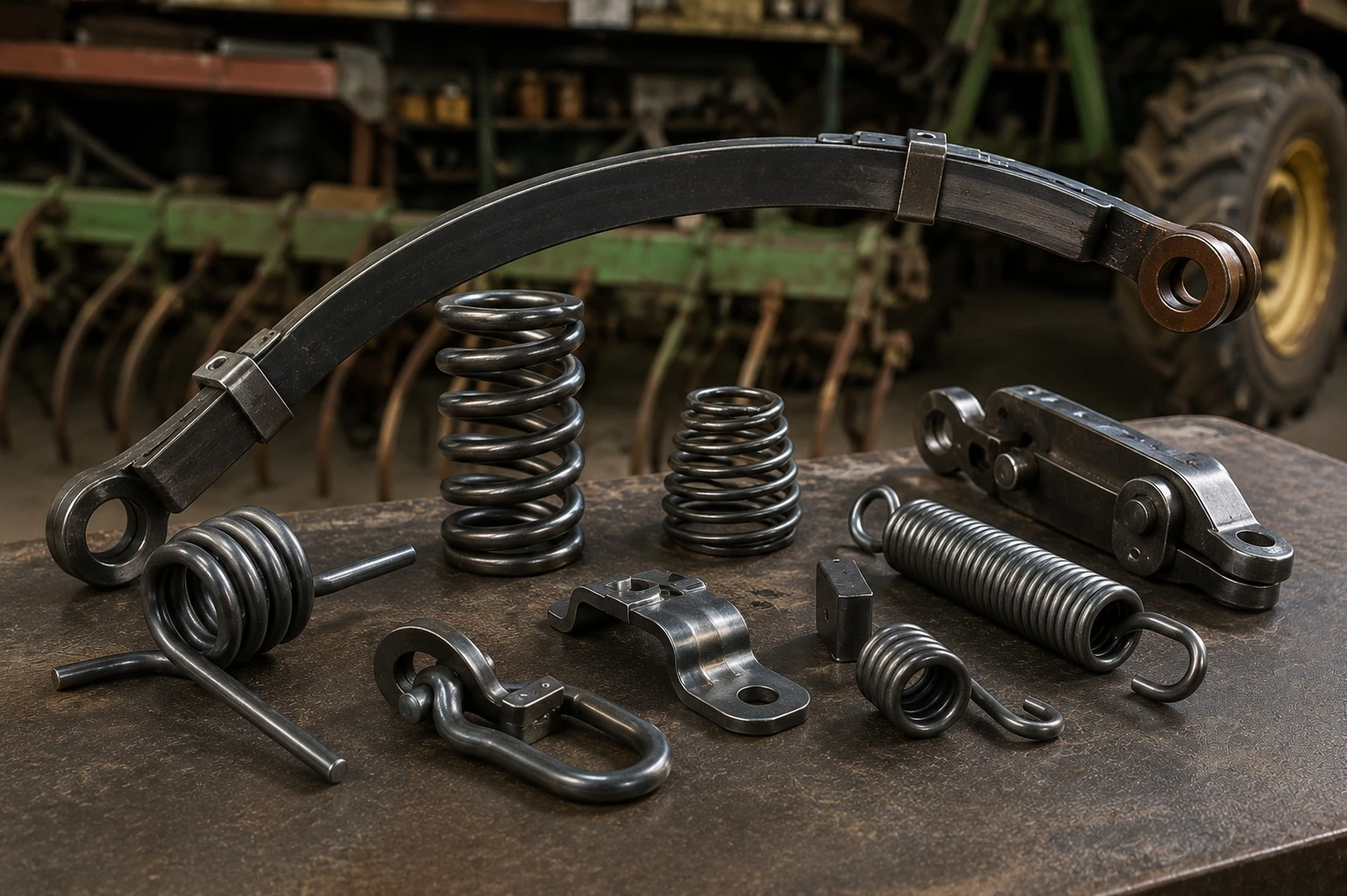
Industrial Components
Latches, snap fasteners, and agricultural springs use 65Mn for cost-effective elastic load-bearing where extreme fatigue life isn't required.
Key Features & Benefits
Fatigue Resistance
Fatigue life depends on steel cleanliness, microstructure consistency, and surface condition. For coiled springs flexed thousands of times, even hardness deviations of a few HRC across the strip can create stress points that fail first.
Hardness
Supplied in the 42–52 HRC range. Lower values suit sharp-bend forming (e.g., tape measure tip hooks); higher values suit applications needing better force retention (e.g., clock springs).
Spring Performance
Tempering at 300–450°C retains most of the hardness from quenching while removing brittleness, giving the strip the elastic "memory" to return to shape after repeated flexing.
Thickness Consistency
Tolerances of ±0.01–0.03 mm depending on gauge. Uneven thickness across the width (crown) causes uneven load distribution in wound springs.
Flatness
Affects how the strip feeds through slitting and stamping equipment. Edge wave or center buckle causes feeding issues on high-speed automated lines.
Surface Quality
The blue oxide layer indicates correct tempering temperature and adds mild corrosion resistance. Scratches, pitting, or decarburization reduce fatigue life even when bulk hardness meets spec.
Coil Quality
Covers coil set, telescoping, and edge condition after slitting - affects unwinding behavior and shipping damage risk on long transit routes.
Manufacturing Process
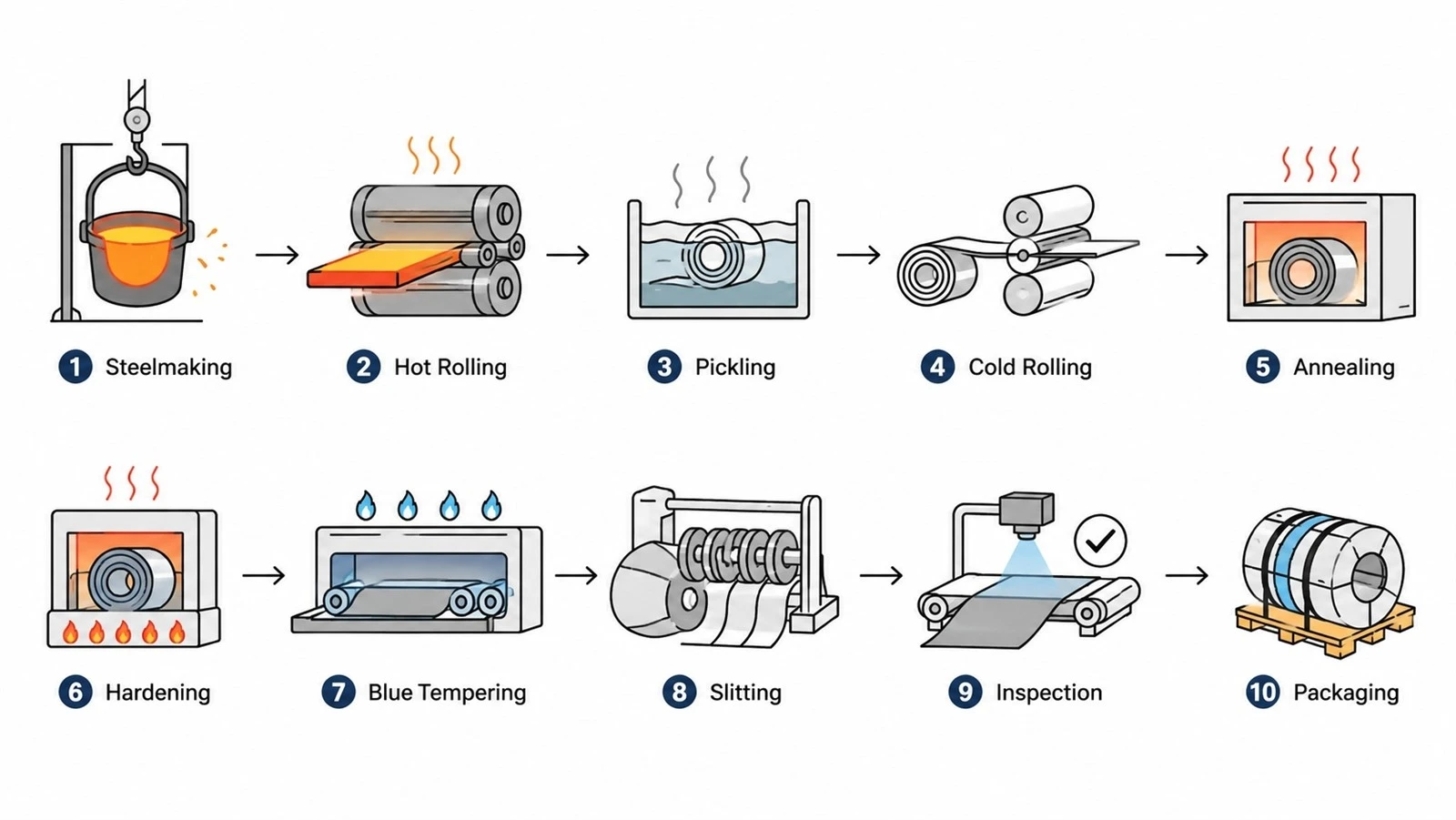
Step | Quality Focus |
|---|---|
Steelmaking | Chemical composition verified by spectrographic analysis |
Hot Rolling / Pickling | Initial grain structure set; scale fully removed before cold rolling |
Cold Rolling | Determines final thickness, width, and crown/flatness |
Annealing | Atmosphere control prevents surface decarburization |
Hardening | Quench rate uniformity controls hardness consistency across width |
Blue Tempering | 300–450°C tempering relieves brittleness; blue oxide color indicates temperature reached |
Slitting | Edge quality depends on blade sharpness/clearance - burrs cause fatigue cracks |
Inspection | Thickness, hardness (multi-point), surface, flatness, coil dimensions checked |
Packaging | Moisture-resistant wrap and edge protection for export transit |
Why Choose Promisteel
Multiple mill sourcing
-order placement matched to the mill best suited for your thickness/width/tolerance, with fallback capacity if needed.
Quality inspection
- hardness mapping, surface/edge checks, and flatness verification available beyond standard mill certificates.
Export experience
- documentation and packaging adapted to destination market and certification standard (GB/T, JIS, AISI/SAE, EN).
Flexible procurement
- order quantities, slitting widths, and coil weights configurable to your production line where mill capacity allows.
Processing capabilities
- slitting, cutting to length, and edge finishing coordinated as part of the order.
Stable supply chain
- multi-mill relationships reduce disruption risk from single-mill capacity or maintenance issues.
FAQ
Q: 1. What is the difference between blue tempered and bright (untempered) strip?
A: Blue tempered strip is hardened and tempered for toughness; untempered hardened strip is too brittle for most spring use.
Q: 2. Which grade should I choose?
A: 65Mn and SAE 1075 are largely interchangeable for general use; SK5 for higher hardness (>50 HRC); C75S for EN-standard EU supply chains.
Q: 3. What thickness tolerance is achievable?
A: ±0.01 mm below 0.5 mm; ±0.02–0.03 mm for thicker gauges, depending on width.
Q: 4. What hardness range is typical, and how is it tested?
A: 42–52 HRC via Rockwell C. For fatigue-critical orders, request multi-point hardness mapping rather than a single value.
Q: 5. Can surface finish be specified beyond standard blue oxide?
A: Bright/polished finishes are possible but depend on the mill's line setup - confirm at inquiry stage.
Q: 6. What is the MOQ?
A: Depends on thickness, width, and mill batch sizing. Share your specification for a specific figure.
Q: 7. Can strip be supplied pre-slit to custom widths?
A: Yes, slitting to width is a standard processing step - specify width, tolerance, and edge condition needed.
Q: 8. What documentation comes with shipments?
A: Standard mill test certificates; third-party inspection reports available on request.
Q: 9. How is the strip packaged for export?
A: Moisture-resistant wrap with edge protection, strapped for transit - adjustable based on destination and route.
Q: 10. What causes hardness variation within a coil?
A: Inconsistent strip speed or temperature gradients during tempering. Request hardness mapping for critical orders.
Q: 11. Can coil weight/inner diameter be customized?
A: Often yes, subject to mill capability - specify your equipment requirements.
Q: 12. What is the typical lead time?
A: Depends on whether your spec matches current production scheduling. Provide spec and quantity for an estimate.
Q: 13. Can decarburization be tested?
A: Yes, via microhardness testing near the surface - relevant for fatigue-critical applications like clock springs.
Q: 14. Does the strip need further heat treatment by the buyer?
A: No - it's already at final hardness/temper. Discuss with us if your process involves additional thermal exposure (welding, soldering).
Q: 15. What's the difference between coil set and flatness?
A: Coil set is residual curvature after winding (relevant to retractors); flatness is waviness across width/length (affects feeding through equipment).
Request Technical Specifications and a Quotation
Send us your specification - grade, thickness, width, hardness range, and tolerances - and we'll confirm mill availability, achievable tolerances, and lead time.
[Request a Quote] [Send Technical Inquiry] [Download Specification Sheet]
Hot Tags: blue tempered spring steel strip, China blue tempered spring steel strip manufacturers, suppliers
Previous
No InformationYou Might Also Like


Send Inquiry