
 Español
 Türkçe
 Français
 عربي
عربي  dansk
dansk 한국어
한국어 Deutsch
 Việt Nam
 Italiano
 日本語
日本語 Português

When buyers compare hot-dipped galvanized vs electro-galvanized roofing nails, they are usually trying to balance corrosion resistance, appearance, cost, and project environment. Both finishes add zinc protection to steel nails, but they are not the same.
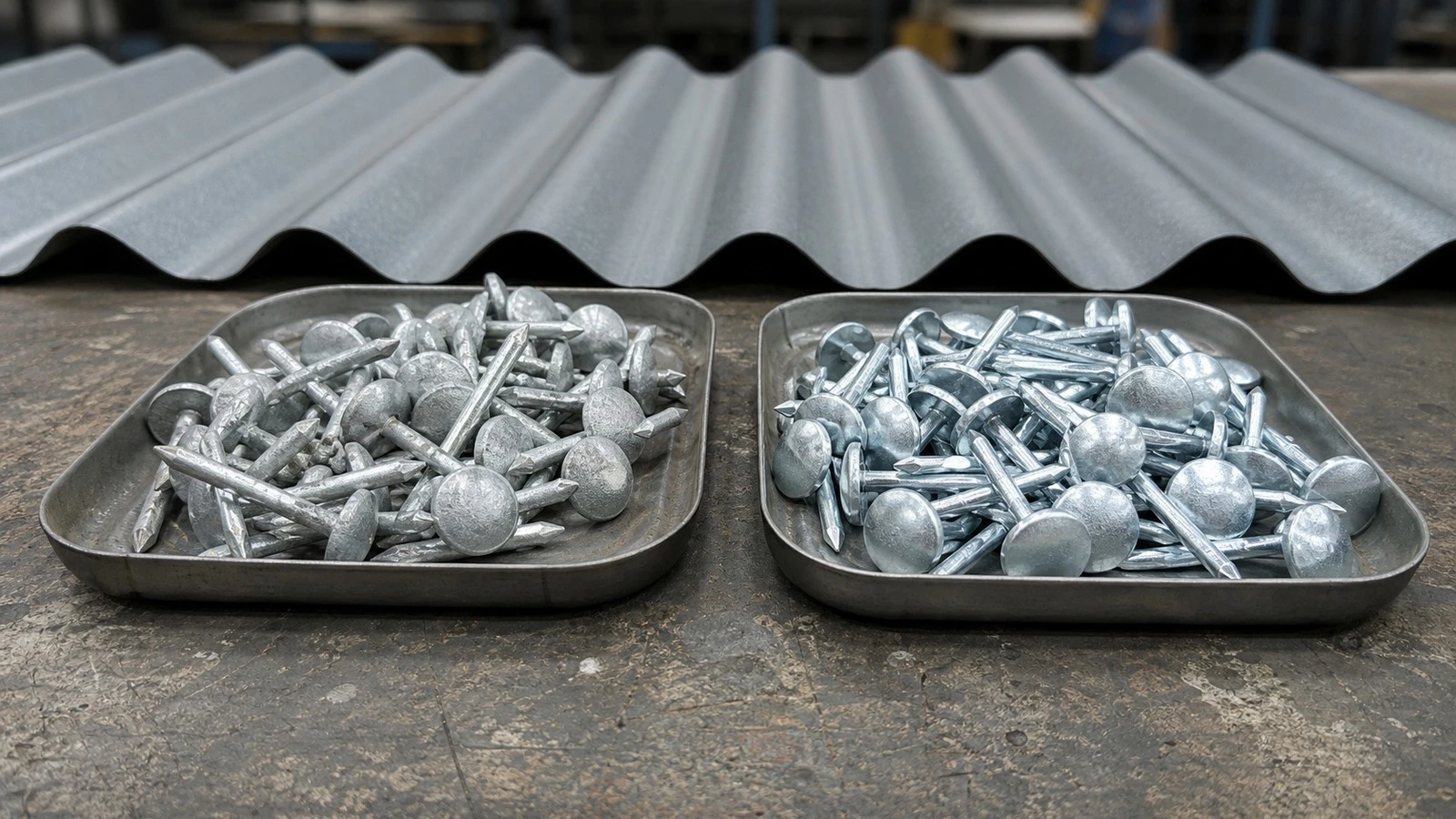
Hot-dipped galvanized roofing nails are often preferred for outdoor, humid, exposed, or coastal roofing applications because the zinc layer is generally heavier and more protective.
Electro-galvanized roofing nails usually have a smoother, brighter appearance and may be suitable for lighter corrosion requirements, indoor storage, or economy-focused markets.
For importers, roofing contractors, and hardware distributors, choosing the right galvanized finish helps reduce corrosion complaints and keeps the product matched to the target market.
 Need to choose between hot-dipped galvanized and electro-galvanized roofing nails? Send your application environment, shank type, size, finish preference, packing method, quantity, and destination port to Promisteel for specification support and quotation.
What Are Galvanized Roofing Nails?
Galvanized roofing nails are steel roofing nails coated with zinc to help resist corrosion. Roofing nails are often exposed to moisture, condensation, rain, and outdoor air, so corrosion protection is a key part of the specification.
Galvanized roofing nails can be produced in different shank styles, including smooth shank, ring shank, and screw shank. They can also be supplied with different head types, lengths, gauges, and packing methods.
The two common zinc coating methods are the following:
· Hot-dipped galvanizing
· Electro-galvanizing
The right choice depends on where the nail will be used and how much corrosion protection the buyer needs.
What Are Hot-Dipped Galvanized Roofing Nails?
Hot-dipped galvanized roofing nails are coated by dipping steel nails into molten zinc. This process creates a zinc layer around the nail surface. The coating is usually thicker than electro-galvanized coating and provides stronger corrosion resistance.
Hot-dipped galvanized nails may have a less shiny or slightly rougher surface compared with electro-galvanized nails, but they are commonly selected for demanding outdoor roofing work.
Common uses include:
· Outdoor roofing sheets
· Humid or rainy environments
· Coastal building markets
· Agricultural and industrial roofing
· Long-service roofing applications
· Projects where corrosion protection matters more than bright appearance
What Are Electro-Galvanized Roofing Nails?
Electro-galvanized roofing nails are coated with zinc through an electroplating process. The surface is usually smoother and brighter. The coating is often thinner than hot-dipped galvanizing, so electro-galvanized nails are generally used where corrosion exposure is lighter.
Electro-galvanized roofing nails can be a good choice for buyers who need a clean appearance, economical cost, and standard protection for less demanding environments.
Common uses include:
· General construction supply
· Indoor or protected storage markets
· Temporary or lighter-duty fastening
· Distribution markets where bright finish is preferred
· Applications with lower moisture exposure
Hot-Dipped vs Electro-Galvanized: Quick Comparison
| Factor | Hot-Dipped Galvanized Roofing Nails | Electro-Galvanized Roofing Nails |
|---|---|---|
| Coating Method | Dipped in molten zinc | Zinc applied by electroplating |
| Corrosion Resistance | Stronger for outdoor and humid environments | Suitable for lighter corrosion requirements |
| Surface Appearance | Duller or rougher surface possible | Brighter and smoother appearance |
| Cost | Usually higher depending on coating and specification | Often more economical |
| Best Use | Outdoor roofing, humid areas, coastal markets | General construction, protected use, economy markets |
| Buyer Priority | Durability and corrosion protection | Appearance, cost, and standard supply |
Which Finish Is Better for Outdoor Roofing?
For outdoor roofing, hot-dipped galvanized roofing nails are usually the better choice. Roof fasteners may face rain, condensation, temperature changes, and long-term exposure. A thicker zinc layer helps improve corrosion resistance and can support longer service life.
Electro-galvanized nails may still be used in some markets, but they should be selected carefully. If the roofing project is exposed to frequent moisture, coastal air, or long service expectations, electro-galvanized finish may not provide enough protection.
Which Finish Looks Better?
Electro-galvanized roofing nails often have a brighter, smoother, and cleaner appearance. This can be useful for retail packaging, hardware shelves, and customers who judge product quality by surface brightness.
Hot-dipped galvanized nails may look duller or less uniform because the zinc layer is heavier. For professional roofing buyers, this is not necessarily a problem. In many outdoor applications, stronger corrosion resistance matters more than visual brightness.
Which Finish Costs More?
Hot-dipped galvanized roofing nails often cost more than electro-galvanized roofing nails because of coating process, zinc consumption, and production requirements. However, the lower initial cost of electro-galvanized nails may not be the best value if the nails are used in a high-moisture environment and corrode too quickly.
For importers and wholesalers, price comparison should include:
· Nail material
· Length and gauge
· Head type
· Shank type
· Zinc coating method
· Packing weight
· Carton and pallet requirements
· Order quantity
A quotation is only meaningful when the full specification is clear.
How Finish Works with Shank Type
The galvanized finish protects the nail from corrosion, while the shank type affects holding power. Both matter.
For example:
· Smooth shank galvanized roofing nails are economical and easy to drive.
· Ring shank galvanized roofing nails provide stronger grip for general roofing work.
· Screw shank galvanized roofing nails offer higher withdrawal resistance for dense timber, hardwood, or heavy-duty fastening.
If the project is both exposed and mechanically demanding, buyers may need hot-dipped galvanized screw shank or ring shank roofing nails.
Buyer Checklist Before Ordering
Before choosing hot-dipped or electro-galvanized roofing nails, confirm the following:
· Is the project indoor, protected, outdoor, humid, or coastal?
· What roofing material will be fastened?
· What substrate will the nail enter?
· Is high holding power required?
· Which shank type is needed: smooth, ring, or screw?
· What length and gauge are required?
· Does the buyer prefer bright appearance or stronger corrosion protection?
· What packing format is needed for the local market?
· What order quantity and destination port should be quoted?
This information helps the supplier recommend the right finish and avoid under-specification.
Practical Recommendation
Choose hot-dipped galvanized roofing nails for outdoor roofing, humid environments, coastal markets, agricultural buildings, industrial roofs, and projects where durability is the main concern.
Choose electro-galvanized roofing nails when the project has lighter corrosion exposure, when a brighter appearance is preferred, or when the buyer needs an economical option for general distribution.
For bulk orders, send your nail type, length, gauge, shank style, head type, finish requirement, packing method, quantity, and destination port.
Promisteel can help compare finish options and provide a practical quotation.FAQ
Q: Are hot-dipped galvanized roofing nails better than electro-galvanized nails?
A: Hot-dipped galvanized roofing nails usually provide stronger corrosion resistance and are better for outdoor, humid, or coastal environments. Electro-galvanized nails may be suitable for lighter-duty or economy-focused applications.
Q: Can electro-galvanized roofing nails be used outdoors?
A: They may be used in some light-duty outdoor situations, but they are not usually the first choice for high-moisture or long-service roofing projects. Hot-dipped galvanized nails are often preferred for stronger corrosion protection.
Q: Why do hot-dipped galvanized nails look less shiny?
A: Hot-dipped galvanizing creates a heavier zinc coating, which can produce a duller or less uniform appearance. This is normal and does not necessarily mean the nail is lower quality.
Q: Does galvanizing affect holding power?
A: The finish mainly affects corrosion resistance. Holding power depends more on shank type, nail length, gauge, head type, point, and substrate material.
Q: What information is needed for a galvanized roofing nail quotation?
A: Send the required nail length, gauge, material, head type, shank type, galvanizing method, packing method, quantity, and destination port.


