
 Español
 Türkçe
 Français
 عربي
عربي  dansk
dansk 한국어
한국어 Deutsch
 Việt Nam
 Italiano
 日本語
日本語 Português

Choosing roofing nail length and gauge is one of the most important steps before ordering roofing nails in bulk. If the nail is too short, it may not penetrate the substrate properly. If it is too long or too thick, it may damage the roofing material, increase installation difficulty, or raise cost unnecessarily.
For contractors, distributors, and importers, the right roofing nail size depends on the roofing layer, substrate material, shank type, head type, surface finish, local installation habits, and market preference. This guide explains how to think through the selection before requesting a quotation.
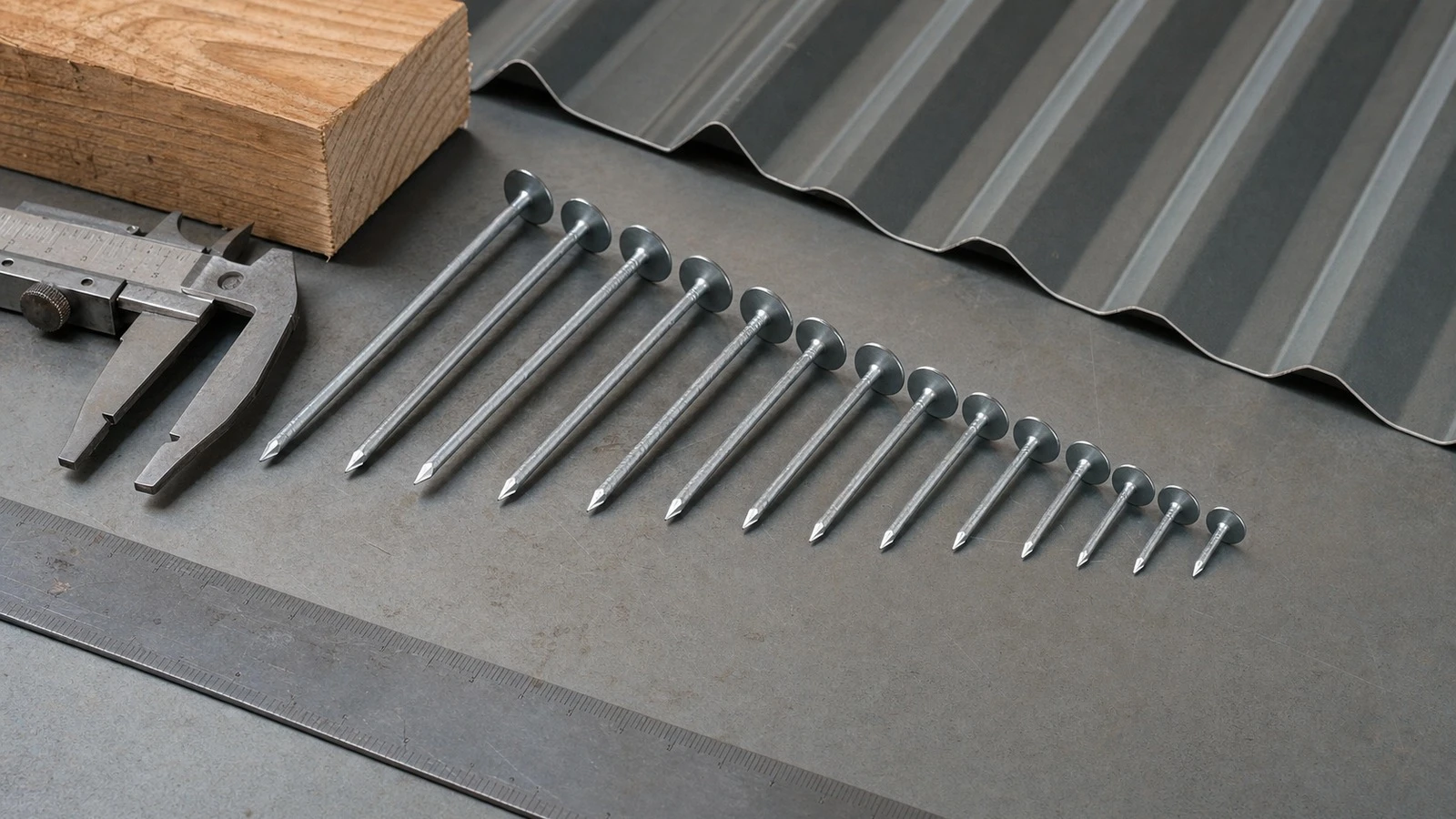
What Does Roofing Nail Length Mean?
Roofing nail length is the total length from the underside of the head to the point. Common roofing nail lengths may range from 1 inch to 4 inch, depending on application and market demand.
The nail must be long enough to pass through the roofing material and penetrate the base material securely. In many roofing applications, insufficient penetration is a major reason for loosening, uplift, or poor fastening performance.
When choosing length, consider:
· Roofing sheet or shingle thickness
· Underlayment or membrane thickness
· Insulation board thickness
· Timber or board substrate
· Required penetration depth
· Head type and washer use if applicable
What Does Roofing Nail Gauge Mean?
Roofing nail gauge refers to the wire diameter of the nail. A lower BWG number usually means a thicker wire, while a higher BWG number means a thinner wire. Common roofing nail sizes may include BWG 8, BWG 9, BWG 10, BWG 11, BWG 12, and BWG 13, depending on product type and buyer market.
Gauge affects strength, driving resistance, holding power, and cost. A thicker nail can provide more strength, but it may require more force to drive and may not be suitable for every material. A thinner nail may be easier to install and more economical, but it must still meet the holding requirement.
Roofing Nail Length Selection Guide
| Application | Length Consideration | Buyer Tip |
|---|---|---|
| Thin roofing sheet | Nail must pass through sheet and enter timber securely | Do not select only by sheet thickness; confirm substrate penetration. |
| Roofing shingles | Length should secure the shingle without damaging lower layers | Confirm local building practice and shingle thickness. |
| Rigid insulation board | Longer nails may be needed due to board thickness | Provide insulation thickness when requesting quotation. |
| Hardwood or dense timber | Length and shank type both matter | Screw shank or ring shank may improve holding power. |
| General timber roofing | Standard lengths may be suitable | Match nail size to local contractor preference. |
Roofing Nail Gauge Selection Guide
| Gauge Factor | What It Affects | Practical Note |
|---|---|---|
| Thicker Gauge | Strength and holding capacity | Useful for heavier fastening but may be harder to drive. |
| Thinner Gauge | Easier driving and lower material cost | Suitable only when holding requirements are not too high. |
| Substrate Density | Driving force and splitting risk | Dense timber may need careful point, shank, and gauge selection. |
| Shank Type | Grip and withdrawal resistance | Ring and screw shanks can improve hold without relying only on thickness. |
| Market Habit | Buyer acceptance | Importers should match local standard sizes where possible. |
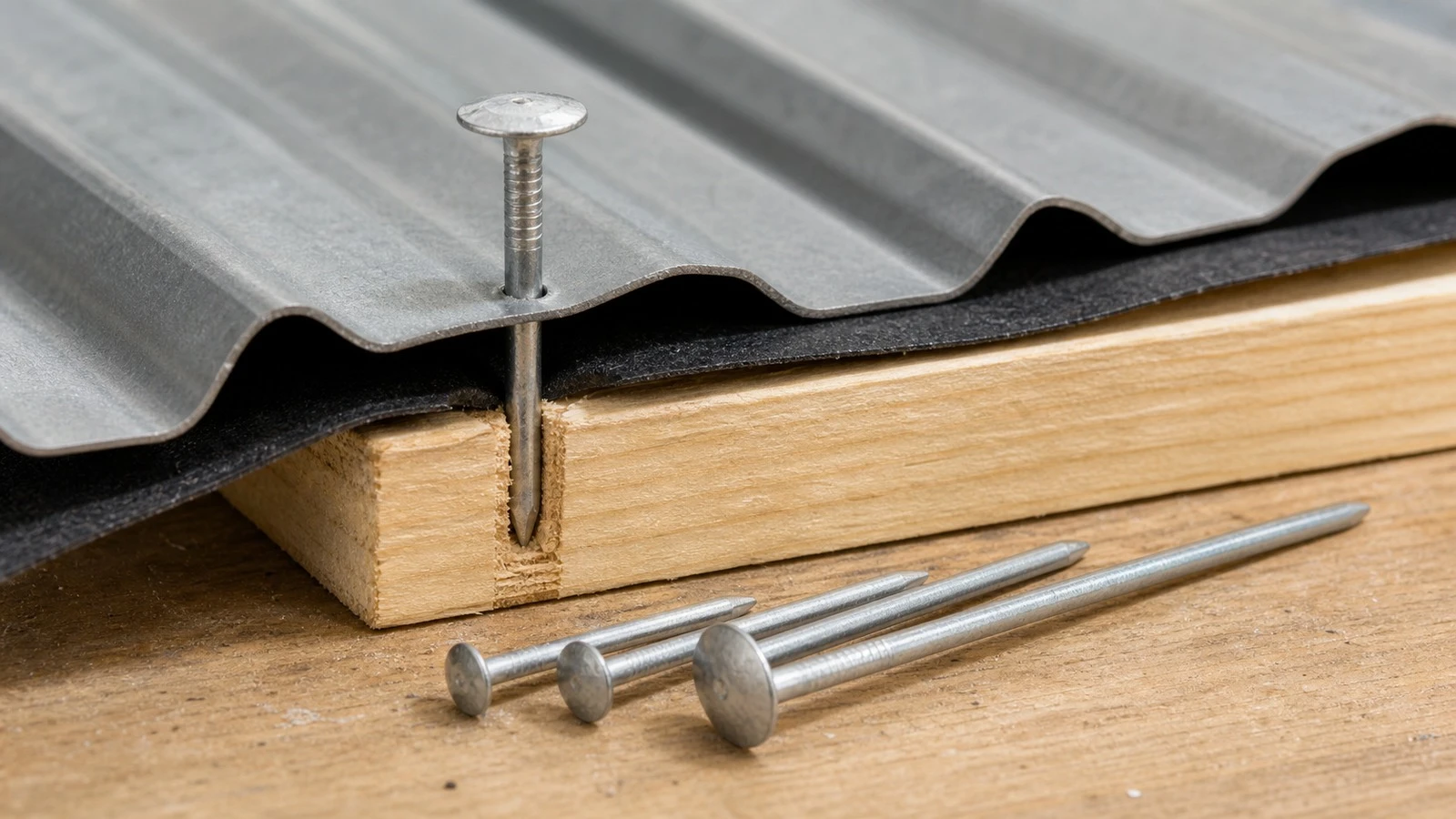
Do Shank Types Affect Length and Gauge Choice?
Yes. Shank type affects how the nail holds in the material. Smooth shank, ring shank, and screw shank roofing nails may need different selection logic even when the length and gauge are similar.
Smooth Shank Roofing Nails
Smooth shank roofing nails are easier to drive and often used for economical general fastening. Because they have less grip than ring or screw shank nails, length and correct penetration are especially important.
Ring Shank Roofing Nails
Ring shank roofing nails have annular rings that improve withdrawal resistance. They are a good option for general roofing work where stronger holding power is required.
Screw Shank Roofing Nails
Screw shank roofing nails have a spiral shank that offers stronger grip in dense timber, hardwood, and rigid boards. In high-hold applications, shank design can be as important as length and gauge.
How Finish Affects Roofing Nail Selection
The surface finish does not change the size, but it strongly affects suitability for outdoor roofing. Galvanized roofing nails are commonly used because the zinc coating helps resist corrosion.
Common finish options include:
· Electro-galvanized roofing nails for smoother appearance and lighter corrosion requirements
· Hot-dipped galvanized roofing nails for outdoor, humid, exposed, or coastal environments
· Stainless steel roofing nails for more corrosive or specialized conditions
For outdoor roofing, do not select by size alone. The wrong finish can lead to corrosion, staining, and reduced service life.
What Information Should Buyers Provide?
To choose the right roofing nail length and gauge, suppliers need more than a product name. Before asking for a quotation, prepare the following information:
· Roofing material type
· Roofing layer thickness
· Substrate material, such as timber, hardwood, board, or insulation
· Required nail length or local market size
· Gauge or wire diameter
· Head type, such as umbrella head or flat head
· Shank type: smooth, ring, or screw
· Finish: electro-galvanized, hot-dipped galvanized, or stainless steel
· Packing method and carton weight
· Order quantity and destination port
If you are not sure about the exact length and gauge, send the application details first. A reliable supplier can help narrow the options before you order.
Common Mistakes When Choosing Roofing Nail Size
Choosing Only by Price
Lower cost may come from shorter length, thinner wire, lighter coating, or weaker packaging. For roofing nails, price should be checked together with specification.
Ignoring the Substrate
The roofing material is only one part of the fastening system. Timber density, board type, and insulation thickness can all change the required nail size.
Using One Size for Every Application
Different markets and projects may need different nail sizes. A distributor may carry several lengths and gauges to serve contractors, hardware stores, and project buyers.
Forgetting Packing Requirements
For bulk roofing nails, packing weight, carton strength, pallet loading, and label requirements affect shipping, warehousing, and resale.
Practical Recommendation
For general roofing, start by confirming the roofing material thickness and substrate. For heavier fastening, dense timber, hardwood, or rigid boards, consider ring shank or screw shank roofing nails. For outdoor environments, confirm galvanized finish requirements before ordering.
Promisteel can help buyers compare roofing nail length, gauge, shank type, finish, and packaging options for project and wholesale supply.
Need help confirming roofing nail length and gauge for your order? Send your application, material thickness, shank type, finish, packing method, quantity, and destination port to Promisteel for specification support and quotation.FAQ
Q: What is the common length for roofing nails?
A: Roofing nail lengths vary by application and market. Common options may range from 1 inch to 4 inches. The correct length depends on roofing material thickness, substrate type, and required penetration.
Q: What gauge roofing nail should I use?
A: The right gauge depends on the required strength, material thickness, substrate density, and local market habit. Thicker gauges can provide more strength, while thinner gauges may be easier to drive and more economical.
Q: Are longer roofing nails always better?
A: No. A longer nail is not always better. It must match the roofing system and substrate. Oversized nails may increase cost, cause installation difficulty, or damage the material.
Q: Does a screw shank need a different size than a ring shank?
A: The length and gauge may be similar, but the shank type changes holding performance. Screw shank nails are often used where higher withdrawal resistance is needed, while ring shank nails suit many general roofing applications.
Q: What should I send for a roofing nail quotation?
A: Send the required length, gauge, material, head type, shank type, finish, packing method, quantity, and destination port. If unsure, send the roofing material and substrate details.


