
 Español
 Türkçe
 Français
 عربي
عربي  dansk
dansk 한국어
한국어 Deutsch
 Việt Nam
 Italiano
 日本語
日本語 Português

By adjusting voltage levels, transformers help to efficiently move electricity. It's an important part of our power systems. The iron core is the heart of every transformer, it transfers magnetic energy with minimal losses. Because silicon steel has excellent magnetic properties, it become the preferred material. To make transformer cores. To ensure transformers work efficiently and last a long time, we should choose the right type of silicon steel. Let's see from which aspect we should consider to select silicon steel for transformer cores.

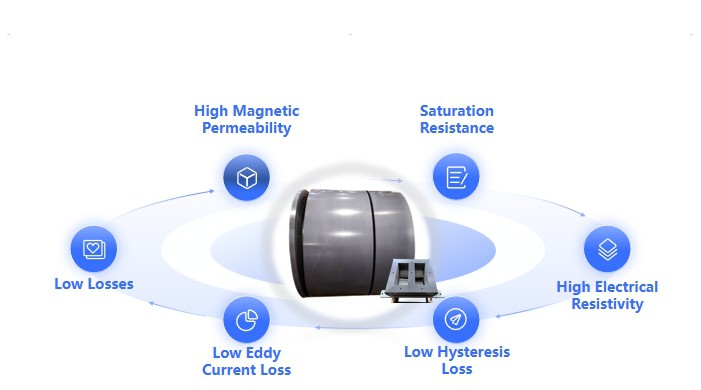
1. Magnetic Properties
- High Magnetic Permeability
Silicon steel allows magnetic energy to flow through it easily, which means less energy is lost in the process. This property helps the transformer operate more efficiently.
- Low Coercivity
Low coercivity means the material can be magnetized and demagnetized with very little energy. This keeps energy losses low, making the transformer more efficient.
2. Core Loss (Iron Loss)
- Hysteresis Loss
Hysteresis loss happens when the core material keeps getting magnetized and demagnetized. Choosing silicon steel that minimizes this energy loss ensures the transformer runs better.
- Eddy Current Loss
When electricity flows in small loops within the core material, it leads to energy waste called eddy current loss. To reduce this, manufacturers use thin layers of silicon steel with insulating coatings. High-resistivity silicon steel also helps keep these losses to a minimum.
3. Grain Orientation
- Grain-Oriented Silicon Steel (GRGO)
In CRGO, the material's internal structure is aligned, and it maximizes magnetic properties in one direction. Because it reduces energy losses and improves efficiency, CRGO ideal material for making transformer cores
- Non-Oriented Silicon Steel (CRNGO)
Non-oriented silicon steel has a more random structure and works equally well in all directions. While mainly used in motors, it can sometimes be used in certain transformer designs.

4. Silicon Content
Silicon steel usually contains 2% to 4% silicon. More silicon means better electrical resistance and fewer energy losses. Because too much silicon will make the steel brittle and hard to process, balance is necessary.
5. Thickness of Laminations
The thinner layer of silicon reduces eddy current losses by limiting the flow of unwanted electrical currents. The commonly used thickness is 0.23mm to 0.35mm.
Thinner layers of silicon steel help reduce eddy current losses because it limit the flow of unwanted electrical currents. Common thicknesses range from 0.23 mm to 0.35 mm. Although thinner laminations improve efficiency, they can also increase the manufacturing cost

6. Insulation Coating
Insulation coatings on the steel layers not only reduce energy losses by preventing electricity from flowing between them but also make steel last longer by protecting the steel from heat and oxidation.
7. Mechanical Properties
- Strength and Durability
The steel needs to be strong enough to handle the manufacturing process and daily operations without deforming or breaking.
- Flexibility
The material also needs to be flexible enough, so that it can be cut and shaped into the required sizes and designs without cracking.
8. Heat Resistance
While operating, transformers generate heat, so the core material must be heat-resistant. Good heat resistance ensures that the transformer runs reliably over its lifetime.
9. Cost and Economic Considerations
Material Cost
Although CRGO is more expensive, it provides higher efficiency and lower energy losses. This balances the cost of high-performance transformers
Manufacturing Costs
Thinner layers and advanced coatings can increase manufacturing costs. However, these features often result in better transformer performance, which can save money in the long term.
10. Environmental Factors
- Energy Efficiency
Efficient transformers help reduce energy waste and lower carbon emissions. Using high-quality silicon steel with low energy losses contributes to creating eco-friendly power systems.
- Regulatory Compliance
The material must comply with environmental and safety regulations, such as limits on hazardous substances and energy efficiency standards.
11. Supplier Reliability
Working with a reliable supplier ensures that you get consistent, high-quality silicon steel delivered on time. This helps in building transformers that meet performance and quality expectations.
12. Core Design Compatibility
The silicon steel must match the design of the transformer's core. The shape, size, and stacking method of the core influence the choice of material. Proper alignment of material properties with design ensures minimal energy losses and high efficiency.
13. How does PromiSiS® help you to choose a good CRGO
PromSiS simplifies the process of choosing high-quality CRGO silicon steel by providing expert guidance, consistent quality, and tailored solutions. By partnering with PromSis, you can ensure that your transformers deliver maximum efficiency, reliability, and durability.


