
 Español
 Türkçe
 Français
 عربي
عربي  dansk
dansk 한국어
한국어 Deutsch
 Việt Nam
 Italiano
 日本語
日本語 Português

Three of China's most important steel export markets moved against Chinese cold-rolled and coated products in the same week - while output data confirmed a sustained production pullback across the Chinese industry. Here's the full picture for steel buyers, traders, and procurement professionals.
1. Domestic Steel Dynamics
China Steel Output Contracts Across All Categories in Jan–May 2026
China's National Bureau of Statistics data for the first five months of 2026 confirms a broad, sustained decline in steel production. May alone saw crude steel output fall to 84.36 million tonnes (down 2.7% year-on-year), pig iron drop to 72.97 million tonnes (down 2.6%), and finished steel slip to 123.03 million tonnes (down 2.8%).
The cumulative picture is sharper: from January through May, crude steel totalled 415.53 million tonnes (down 3.9% YoY), pig iron 354.71 million tonnes (down 3.1%), and finished steel 592.99 million tonnes (down 1.5%). Across all major product categories, the Chinese industry's overall production posture is one of deliberate reduction - a trend that, paradoxically, is tightening domestic supply even as export-market barriers multiply. Buyers sourcing hot rolled coil, cold rolled steel, and galvanized products should factor this tightening supply backdrop into forward price expectations.
Three Chinese Mills Deliver High-End Breakthroughs
Even as aggregate output contracts, Chinese steelmakers are pushing further into premium product territory this week.
Jiuquan Iron & Steel has achieved stable rolling of 2.5mm thin-gauge titanium coils on a mixed production line combining CSP (Compact Strip Production) and conventional hot strip mill processes. The successful verification of a "steel-titanium mixed rolling" process marks a significant upgrade in flexible, high-end titanium production capability - the kind of specialty material increasingly demanded in aerospace, chemical processing, and marine applications.
Pangang has successfully developed dedicated steel grades for the home appliance sector, filling a long-standing technical gap in that product niche. Meanwhile, Egang has qualified its high-grade low-temperature vessel steel for the high-end energy equipment market - an important foothold in LNG, cryogenic storage, and related infrastructure supply chains.
These developments continue the pattern visible in recent weeks: as volume shrinks, quality and specialisation are advancing rapidly in China's steel product portfolio.
Stainless Steel: Bounded Range, No Clear Catalyst
The post-Dragon-Boat-Festival stainless steel market faces competing pressures with no obvious near-term breakout. High inventory levels and sluggish off-season downstream demand are capping the upside, while ferronickel input costs are providing a floor and a pick-up in scrap circulation is limiting the degree to which mills can push prices higher. The near-term consensus range sits at RMB 14,800–15,100 per tonne, with sideways movement the most likely scenario absent a fresh demand catalyst.
2. International Market & Policy Highlights
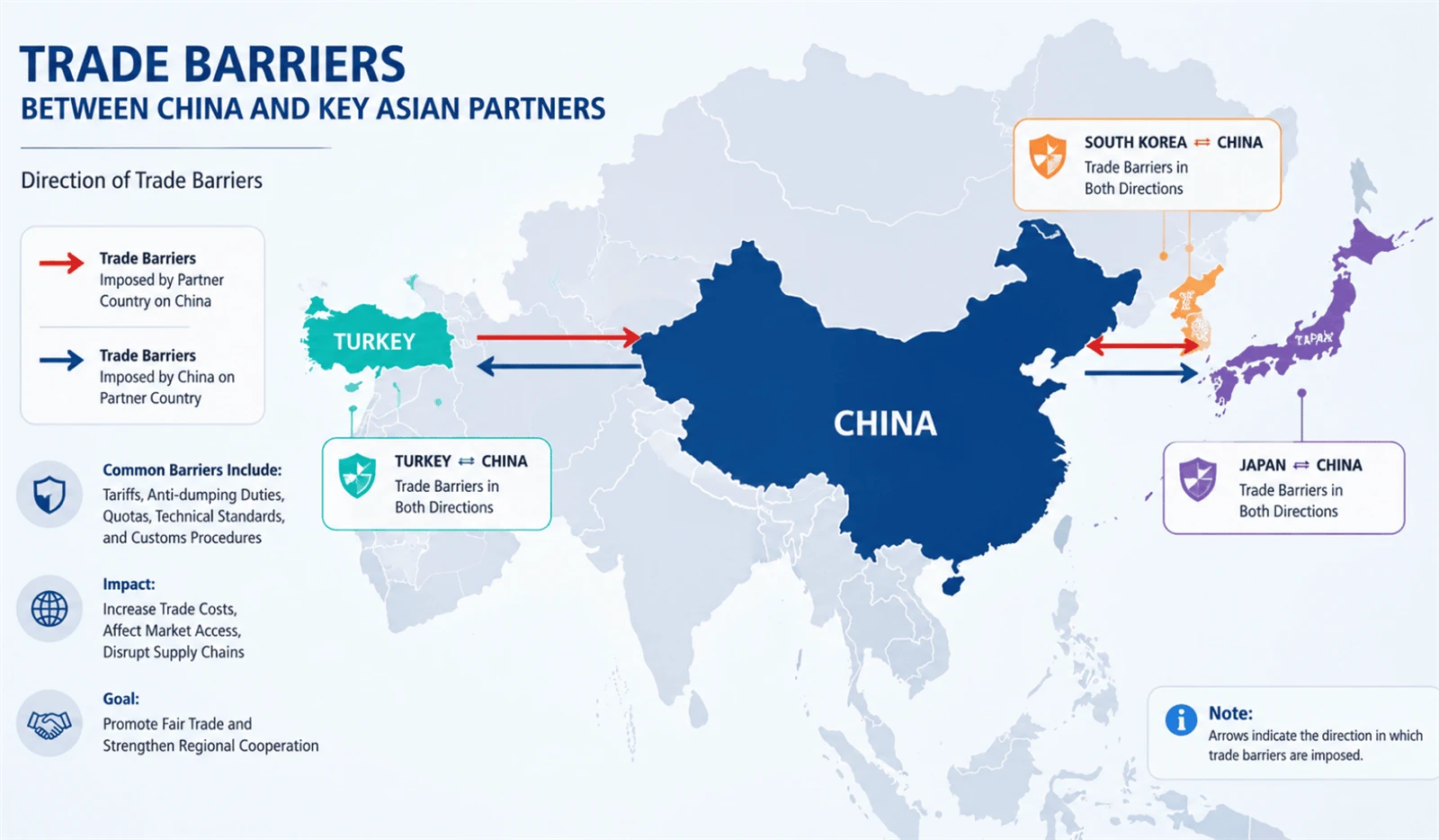
Japan, South Korea & Turkey Form a Three-Front Anti-Dumping Wall on Chinese Cold and Coated Steel
The most significant development this week for global cold-rolled and galvanized steel trade is the near-simultaneous imposition of trade restrictions by three of China's largest finished-steel export destinations.
Japan has formally initiated an anti-dumping investigation into Chinese cold-rolled coil, opening what could become a multi-year tariff proceeding for one of China's highest-volume export products.
South Korea has gone a step further and imposed provisional anti-dumping duties on Chinese galvanized cold-rolled steel - meaning higher costs are already in effect for shipments, not merely under review.
Turkey has moved furthest of all, issuing final long-term high-rate tariffs covering the entire cold and coated product spectrum: cold-rolled, galvanized, and prepainted/color-coated steel. These are final determinations, meaning the tariff regime is locked in for an extended period with no near-term review.
Together, Japan, South Korea, and Turkey represent a core cluster of China's cold and coated steel export market. The simultaneous activation of barriers across all three - at different stages of severity, but all moving in the same direction - signals a structural shift in trade flows, not a one-off regulatory event. Domestic Chinese mills will need to accelerate the reorientation of their export mix toward markets not yet subject to these restrictions, and toward higher-value product grades less susceptible to commodity-style anti-dumping actions. For buyers currently sourcing from China via these three markets, the cost and compliance picture has changed materially.
Southeast Asia Port Congestion Disrupts Delivery Timelines
Tanjung Priok Port in Jakarta, Indonesia - one of Southeast Asia's main transhipment hubs - is experiencing severe container congestion. The number of stranded containers has surged from an initial 3,100 units to approximately 10,000 units, causing significant delays across downstream Southeast Asian ports and extending delivery windows for steel and other cargo moving through the region.
For steel exporters and buyers routing shipments through Southeast Asian transhipment points, the practical implication is straightforward: build extra lead time into logistics planning now. Port turnaround uncertainty is currently high.
Mediterranean Freight Premiums Continue to Rise
On the Europe-bound corridor, freight surcharges on Mediterranean routes are still climbing, extending the cost pressure on European buyers we flagged last week. Combined with the EU safeguard tariff regime that took effect July 1, procurement cost modelling for European destinations is significantly more complex than it was a month ago.
Geopolitical Flash Points: Lebanon, Iran Channels, and Tech Market Volatility
The Lebanon situation continues to evolve: Israel has reaffirmed ongoing military operations in the south, while Iran's parliament speaker proposed a joint Iran-US framework to safeguard Lebanese territorial integrity. US officials confirmed a dedicated monitoring mechanism for the Lebanese situation, and Iran's deputy foreign minister disclosed active technical consultation channels for Iran-US follow-up negotiations - a signal that the diplomatic architecture is expanding even as ground conditions remain unstable.
On financial markets, US technology stocks fell broadly, with SpaceX seeing its valuation contract by close to USD 400 billion. China's A-share market, by contrast, is expected to see a recovery in earnings expectations. The contrast in sentiment between US tech and Chinese equity markets is worth monitoring for its indirect effect on industrial demand signals.
What This Week Means for Buyers
Two forces are now running in opposite directions and creating real pricing and sourcing complexity. On the supply side, China's output is shrinking - a foundation that should, over time, support prices. On the demand and logistics side, trade barriers in three key markets, port congestion in Southeast Asia, rising Mediterranean freight, and tightening EU rules are all increasing the cost and difficulty of getting steel to end buyers in many regions.
For procurement teams, the practical read is this: the days of smoothly routing Chinese cold-rolled or galvanized steel through Japan, Korea, Turkey, or the EU without factoring in trade remedy costs are over for the foreseeable future. Identifying alternative markets, qualifying new product grades, and building longer logistics buffers have moved from risk-management considerations to immediate operational priorities.
For complete price data - including China domestic spot and futures prices, FOB export quotes for HRC, CRC, HDG and colour-coated products, iron ore and coking coal costs, scrap benchmarks, BDI/SCFI freight indices, and the full anti-dumping and safeguard case tracker - download Promisteel's Weekly Steel Industry Report (Week 26, 2026), our comprehensive data briefing covering every major market variable in a single document.
At Promisteel, we track these market shifts in real time so our customers don't have to navigate them alone. With a robust global supply chain, rigorous quality control, and established logistics partnerships, we help buyers adapt - whether that means sourcing around trade barriers, adjusting product specs, or locking in pricing ahead of tariff changes.
Our core product range covers steel coils, sheets, pipes, tubes, structural profiles, and galvanized/coated materials, along with tailored solutions for construction, manufacturing, automotive, energy, and industrial equipment sectors.
We publish weekly market updates here so you always have current, actionable market intelligence. If you need a quote or want to discuss how this week's developments affect your sourcing strategy, reach out directly - our team responds quickly with professional, data-backed guidance.


