
 Español
 Türkçe
 Français
 عربي
عربي  dansk
dansk 한국어
한국어 Deutsch
 Việt Nam
 Italiano
 日本語
日本語 Português

How Z15-Grade Resistance is Redefining Safety in Shipbuilding and Offshore Engineering
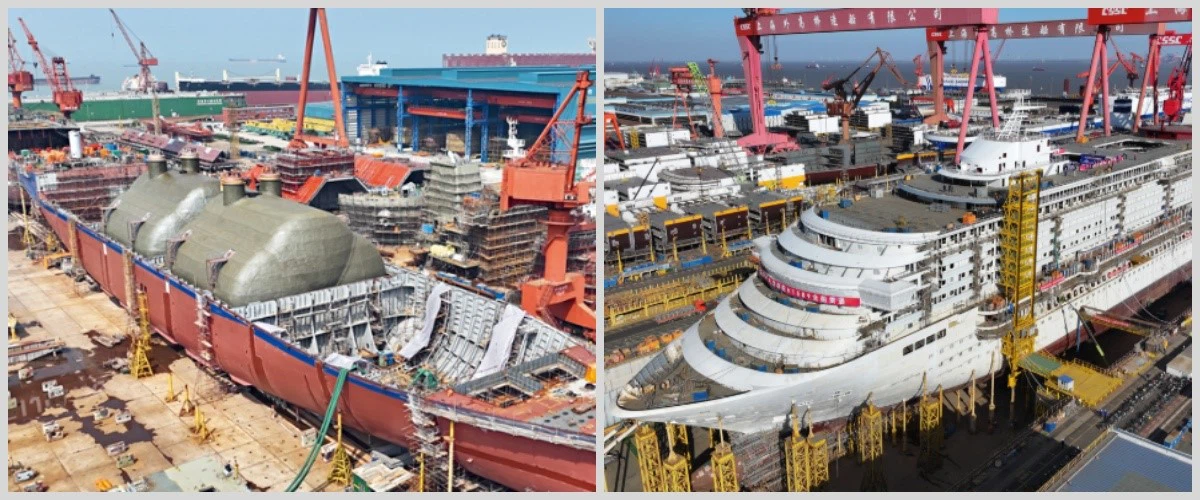
In critical sectors like offshore engineering, shipbuilding, and large-scale bridge construction, the performance of steel directly dictates the safety and lifespan of the entire structure. Today, we take a deep dive into a specialty steel engineered to withstand extreme stress: Q355NBZ15. It not only possesses the high strength characteristic of the Q355 series but also features superior resistance to lamellar tearing, signified by its "Z15" designation. This makes it the go-to choice for engineers facing the most demanding operational conditions.
In modern heavy industry, welded joints in thick steel plates are areas of the highest stress concentration and, consequently, potential points of failure. When welding-induced shrinkage stress acts perpendicular to the plate's surface (in the Z-direction), it can trigger a catastrophic failure known as "lamellar tearing." To overcome this critical industry challenge, Q355NBZ15 low-alloy high-strength structural steel was developed.
I. The Core Secret: The 'Scientific Formula' of Q355NBZ15
Q355NBZ15 is no ordinary structural steel. Its exceptional performance stems from a precise metallurgical design that strictly adheres to the GB/T 1591-2018 national standard.
Refined Chemical Composition:
- Low-Carbon, High-Manganese Design: The carbon content is strictly controlled to ≤0.20%, combined with 0.90%-1.65% manganese, establishing a foundation of excellent strength and weldability.
- Micro-alloying Technology: The strategic addition of micro-alloying elements, such as Niobium (Nb), Vanadium (V), and Titanium (Ti), acts as a powerful "grain refiner." These elements form tiny, dispersed particles within the steel, inhibiting grain growth and significantly enhancing the material's strength, toughness, and fatigue resistance.
- Exceptional Purity: The content of impurities like Phosphorus (P) and Sulfur (S) is kept at an extremely low level (≤0.035%). This minimizes internal defects and ensures the clean microstructure required for superior Z-direction properties.
- Advanced Manufacturing Process: The steel is delivered in a Normalized (N) or Normalized Rolling condition. This heat treatment process relieves internal stresses accumulated during rolling, resulting in a more uniform and fine-grained microstructure, thereby optimizing its overall mechanical properties.
II. Performance Benchmark: Just How Strong is "Z15"?
The "Z15" designation is the key performance indicator for a steel plate's resistance to tearing in its through-thickness (Z-direction). It specifically means that the reduction of area in a Z-direction tensile test must be greater than or equal to 15%.
What does this mean in practice? When a welded joint is subjected to immense Z-direction tensile forces, Q355NBZ15 can withstand them through superior plastic deformation, effectively resisting tear propagation and preventing the structure from "delaminating" from within. This property is indispensable for the critical nodes of structures like offshore oil platforms, key sections of ship hulls, pressure penstocks in hydroelectric stations, and hydraulic supports in heavy machinery.
Key Performance Data:
- Yield Strength: ≥355 MPa (for thickness ≤16mm), maintaining a robust strength of ≥275 MPa even at extreme thicknesses of 200mm.
- Tensile Strength: 470-630 MPa, a wide range that accommodates various design load requirements.
- Low-Temperature Toughness: Meets specified impact energy absorption requirements at -20°C (and lower), ensuring reliability in cold-climate service.
III. Application Guide: Mastering a High-Performance Material
Excellent materials require expert processing to unlock their full potential.
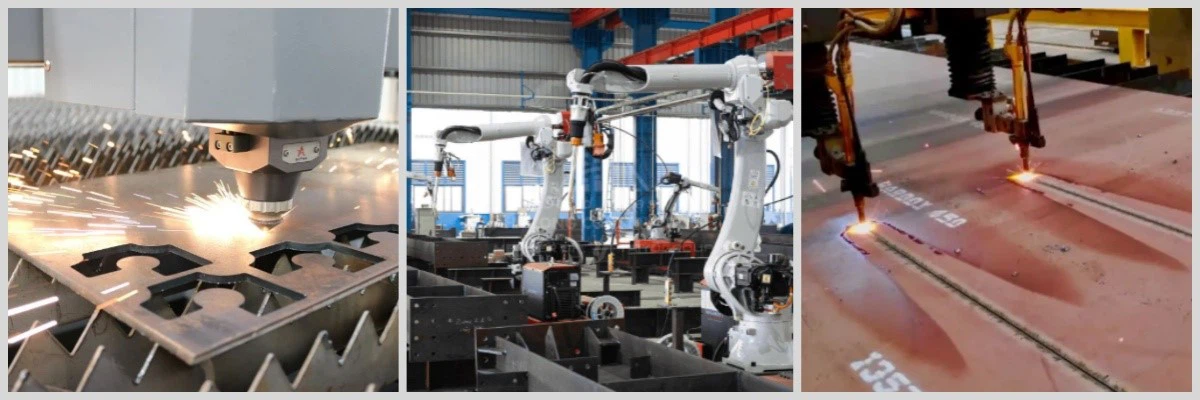
High-Precision Cutting:
- Plasma/Flame Cutting: Preheating to approximately 100°C is recommended to prevent hardening of the cut edge, which could affect subsequent fabrication.
- Laser Cutting: Ideal for plates up to 40mm thick, laser cutting produces a smooth finish that often requires no secondary processing.
Rigorous Welding Protocols:
- Low Cracking Susceptibility: With a low Carbon Equivalent Value (CEV) of ≤0.43, the steel has excellent weldability and a significantly reduced risk of cold cracking.
- Welding Consumables: Use of matching high-strength E50 series electrodes is recommended, with strict control of the interpass temperature to below 250°C.
- Nondestructive Testing (NDT): For critical welds on thick plates, Ultrasonic Testing (UT) is mandatory to ensure the internal integrity of the weld seam.
IV. Sourcing Advice: Investing in Safety and Reliability
Balancing cost and performance is crucial during material selection.
A Value-Driven Upgrade: In safety-critical zones where Z-direction performance is non-negotiable, substituting traditional Q355B with Q355NBZ15 represents a worthwhile investment. While the cost may be around 8% higher, the exponential increase in structural safety is invaluable.
Certification and Quality Assurance: Always demand the official Mill Test Certificate (MTC) from the supplier, ensuring it includes a clear test report for Z15 performance. For large-volume orders, commissioning a third-party re-inspection is a recommended best practice.
Background: The Q355 Steel Family
Q355 is a broad family of high-strength steels with numerous grades tailored for diverse engineering needs based on quality level, delivery condition, and Z-direction performance.
By Quality Grade: Q355B, Q355C, Q355D, Q355E (with progressively better impact toughness).
By Delivery Condition: Q355N (Normalized), Q355M (Thermo-Mechanically Controlled Processed).
By Z-Direction Performance: Q355...Z15, Q355...Z25, Q355...Z35 (with progressively higher lamellar tearing resistance).
Q355NBZ15 is a star performer in this family, combining excellent low-temperature toughness (N for -20°C impact test) with Z15-grade tearing resistance.
Q355NBZ15 is more than just a steel grade; it is a testament to modern engineering's relentless pursuit of ultimate safety and reliability. Through its scientific composition and precision manufacturing, it provides a definitive solution to the challenge of lamellar tearing in thick-plate welded structures, offering robust material assurance for the global shipbuilding, offshore, and heavy equipment industries.


