
 Español
 Türkçe
 Français
 عربي
عربي  dansk
dansk 한국어
한국어 Deutsch
 Việt Nam
 Italiano
 日本語
日本語 Português

Quick answer
The lowest steel shot price per ton does not always produce the lowest blasting cost. Compare the delivered cost of fresh abrasive used during a controlled period with the number of accepted parts, then review blast time, rework, fines, downtime, and maintenance under equivalent production conditions.
Three lenses for supplier comparison
Comparing steel shot suppliers? Send the current grade, delivered price, top-up rate, blast machine, accepted output and trial conditions.
Request a Cost Review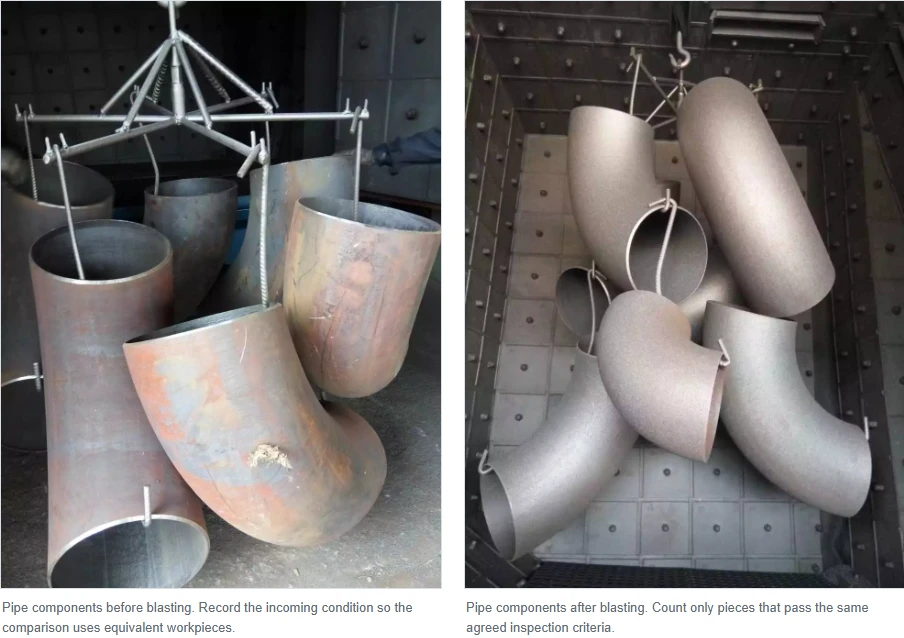
Steel shot quotations should be evaluated against measured consumption and accepted output on the actual blast line.
Contents
When a purchasing manager compares two steel shot quotations, the first number that usually gets attention is the price per ton.
Supplier A offers steel shot at a lower price.
Supplier B is slightly more expensive.
At first glance, the decision seems obvious.
But abrasive purchasing is rarely that simple.
A steel shot price per ton tells you what you pay for the material. It does not tell you how much abrasive is required to clean one acceptable part, how long the blasting machine needs to run, how much dust and fines are generated, or how much production time is lost during maintenance.
For a factory running a blast machine every day, those differences can be much more important than the original purchase price.
This is why steel shot cost per ton should not be the only number used when comparing suppliers.
A better approach is to calculate the cost of abrasive and blasting operation against the number of parts that actually meet the required quality standard.
In simple terms:
The cheapest steel shot is not necessarily the steel shot that gives you the lowest cost per cleaned part.
For coordinated sourcing and export support, visit the Promisteel homepage.
Why Is Steel Shot Price per Ton Not Enough?
Imagine two suppliers quote the following:
Supplier A looks cheaper because its purchase price is $50 per ton lower.
But Supplier B consumes less fresh abrasive during production and produces slightly more accepted parts.
If the machine runs for thousands of hours each year, that difference can become significant.
This is the basic reason purchasing teams should look beyond the quotation price.
The real question is not:
"How much does one ton of steel shot cost?"
It is:
"How much does it cost us to produce one acceptable blasted part?"
That number connects the abrasive purchase directly to production.
What Should Be Included in Steel Shot Operating Cost?
A practical comparison does not need to become a complicated accounting exercise.
Start with the costs that can be measured directly on the blasting line.
These normally include:
- fresh steel shot consumption
- production output
- accepted parts
- blasting time
- dust and fines
- machine downtime
- maintenance related to abrasive operation
Depending on the factory, labor and energy can also be included.
For an initial supplier comparison, however, the first step is to establish a consistent abrasive baseline. For specification and supplier-document checkpoints, see the cast steel shot and steel grit buyer's guide.
The important thing is to compare both suppliers under similar operating conditions.
If one supplier's steel shot is tested on a different workpiece, with a different blast time or different machine settings, the result will not tell you much.
Step 1: Establish a Baseline Before Changing Steel Shot
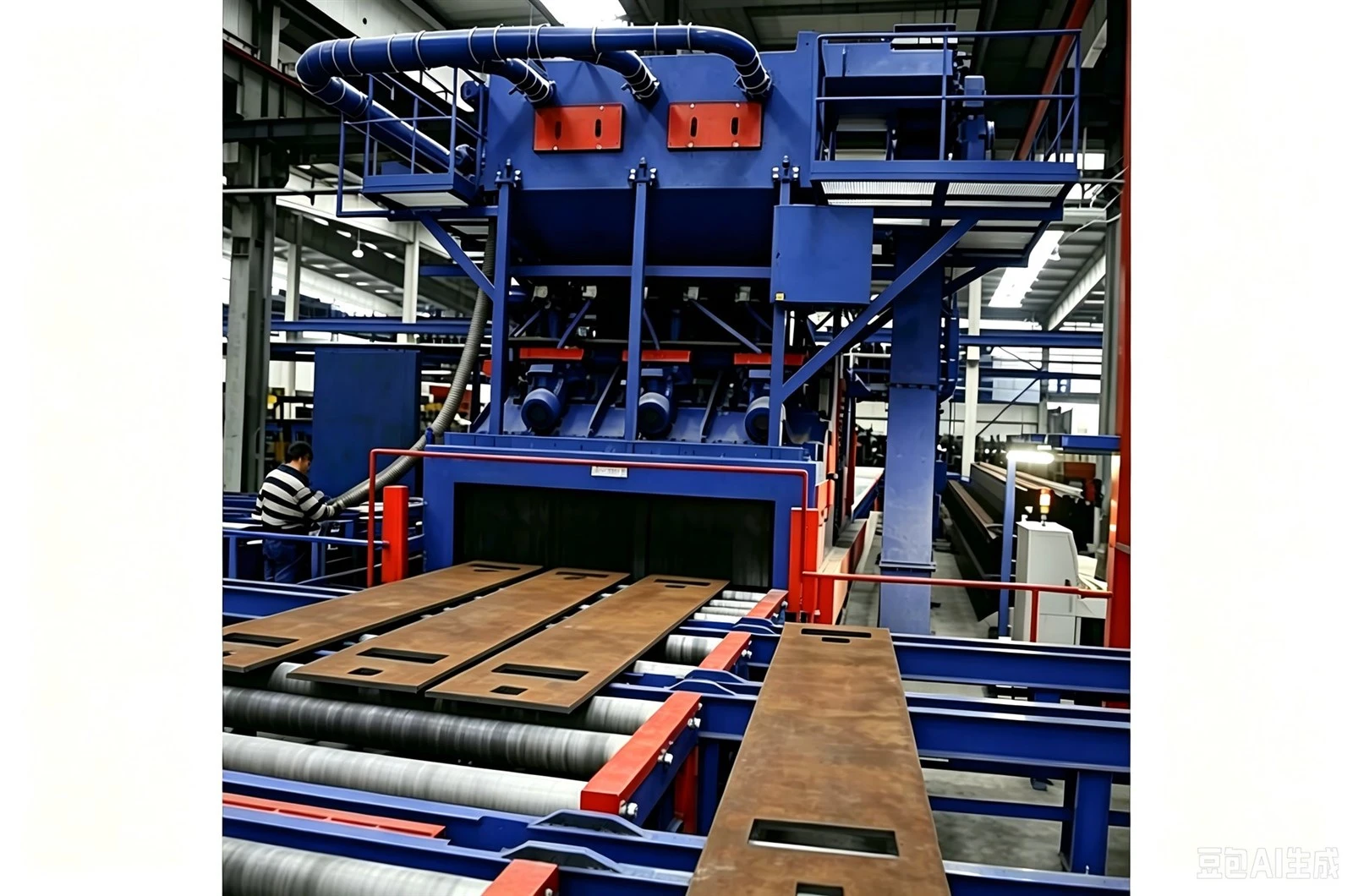
Build the baseline around five measurement groups:
- media grade and delivered cost
- fresh top-up and operating hours
- parts processed and parts accepted
- blast cycle and reblast rate
- fines, downtime and maintenance observations
Before testing a new supplier, record how the current abrasive performs.
This is one of the most useful steps in the entire comparison.
A basic baseline can include:
- Current steel shot grade
- Record the size and hardness currently being used. The practical relationship between hardness, breakdown and fines is explained in the steel shot hardness guide.
- Steel shot purchase price
- Record the actual delivered price rather than only the factory quotation.
- Fresh abrasive top-up
- Measure the number of kilograms of new steel shotadded during a defined operating period.
- Machine operating time
- Record how many hours the machine runs.
Production output
Record how many parts enter the blasting process.
Accepted parts
Record how many parts meet the required quality standard.
Average blast time
Record the normal cycle time.
Dust and fines
Monitor the amount discharged through the separation system where practical.
Downtime
Record interruptions related to abrasive handling, machine cleaning or maintenance.
The purpose is not to create a perfect financial model.
The purpose is to establish a reliable starting point.
Without a baseline, a cheaper or more expensive supplier cannot be evaluated fairly.
Step 2: Measure Fresh Steel Shot Top-Up per Hour
One of the most useful operating numbers is kg of fresh steel shot added per hour. For context on how round media behaves in recirculating wheel-blast systems, read the round steel shot for wheel blasting guide.
Suppose a machine operates for eight hours.
During that shift, the operator adds 480 kg of fresh steel shot.
The average top-up rate is:
480 kg ÷ 8 hours = 60 kg/hour
This number can then be compared with another supplier.
For example:
Supplier B has a higher purchase price.
But its lower top-up rate may change the economics.
At the hourly level:
Supplier A: 80 kg × $0.80/kg = $64/hour
Supplier B: 60 kg × $0.85/kg = $51/hour
In this simplified example, the more expensive steel shot actually costs less in fresh abrasive per operating hour.
That is exactly the kind of result that a price-per-ton comparison can miss.
Of course, this calculation should only be used when the two trials produce comparable cleaning results.
Abrasive consumption cannot be considered separately from quality.
Step 3: Look at Output, Not Just Machine Hours
A blasting machine running for eight hours does not necessarily produce the same amount of saleable production under different abrasive conditions.
This is where output per hour becomes important.
Suppose Supplier A's steel shot allows the machine to process 800 parts during an eight-hour shift.
Supplier B's abrasive allows 880 parts.
Even if both machines technically run for the same amount of time, the production result is different.
The reason could be:
- shorter blast cycles
- more stable cleaning
- fewer reblasts
- fewer rejected parts
- less operator intervention
This is why the useful unit of comparison is often the cost per acceptable part, rather than cost per machine hour.
What Are "Accepted Parts"?
An accepted part is a workpiece that meets the required quality standard after blasting.
This distinction matters.
Suppose a machine processes 1,000 parts.
If 990 pass inspection, the useful output is 990 accepted parts.
If another process produces 950 acceptable parts from the same 1,000 incoming pieces, the two abrasive systems should not be considered equivalent simply because they both processed 1,000 parts.
Abrasive selection can affect cleaning consistency.
If a part needs to be blasted again because contamination remains, the real production cost increases.
The machine is doing the same work twice.
The operator spends more time on the part.
Energy is consumed again.
Additional abrasive is consumed.
Production capacity is also reduced.
That is why the number of accepted parts belongs in the cost comparison.
Step 4: Measure Blast Time per Part
Blast time is another useful number.
Suppose a component normally requires 90 seconds in the blast machine.
After changing the abrasive and validating the process, the required cycle drops to 80 seconds while maintaining the same surface result.
That may appear to be a small improvement.
Across a high-volume production line, it is not necessarily small.
Even a modest reduction in cycle time can increase the number of parts that can be processed during a shift.
The important point is that the test should not reward a faster abrasive if it achieves that speed by producing an unacceptable surface.
The acceptance criteria should be defined first.
Then compare:
Time required to produce an acceptable part.
That is much more meaningful than simply asking which abrasive cleans faster.
What About Dust and Fines?
Dust and fines are sometimes treated as a secondary issue.
For a production plant, they should not be ignored.
Repeated blasting causes abrasive breakdown.
The resulting fines need to be separated and removed from the system.
If a steel shot trial generates noticeably more fines, the additional material does not simply disappear.
It may affect:
- abrasive consumption
- separator loading
- dust collection
- housekeeping
- filter maintenance
- working mix stability
This does not mean that "less fines" automatically means "better steel shot."
Some breakdown is normal, and the correct amount depends on the application and operating conditions.
The useful question is:
Does the abrasive maintain the required blasting result with an acceptable level of breakdown and consumption?
If the answer is yes, the abrasive may be economically attractive even if its purchase price is not the lowest.
How Does Downtime Affect Steel Shot Cost?
Downtime is easy to overlook because it may not appear on the steel shot invoice.
But production managers know how expensive an idle machine can be.
Consider a blast line that normally processes a large number of components every hour.
If the machine stops because of:
- excessive abrasive buildup
- separator problems
- dust-related maintenance
- abnormal media consumption
- screen cleaning
- unexpected equipment wear
the factory loses production time.
Not every downtime event can be attributed to steel shot.
That is important.
The purpose of this calculation is not to blame the abrasive for every maintenance problem.
Instead, when comparing two abrasive systems, record whether one produces noticeably different operating conditions.
For example, if one steel shot produces a more stable working mix and requires less frequent intervention, that operational difference has economic value.
A Simple Steel Shot Cost Comparison
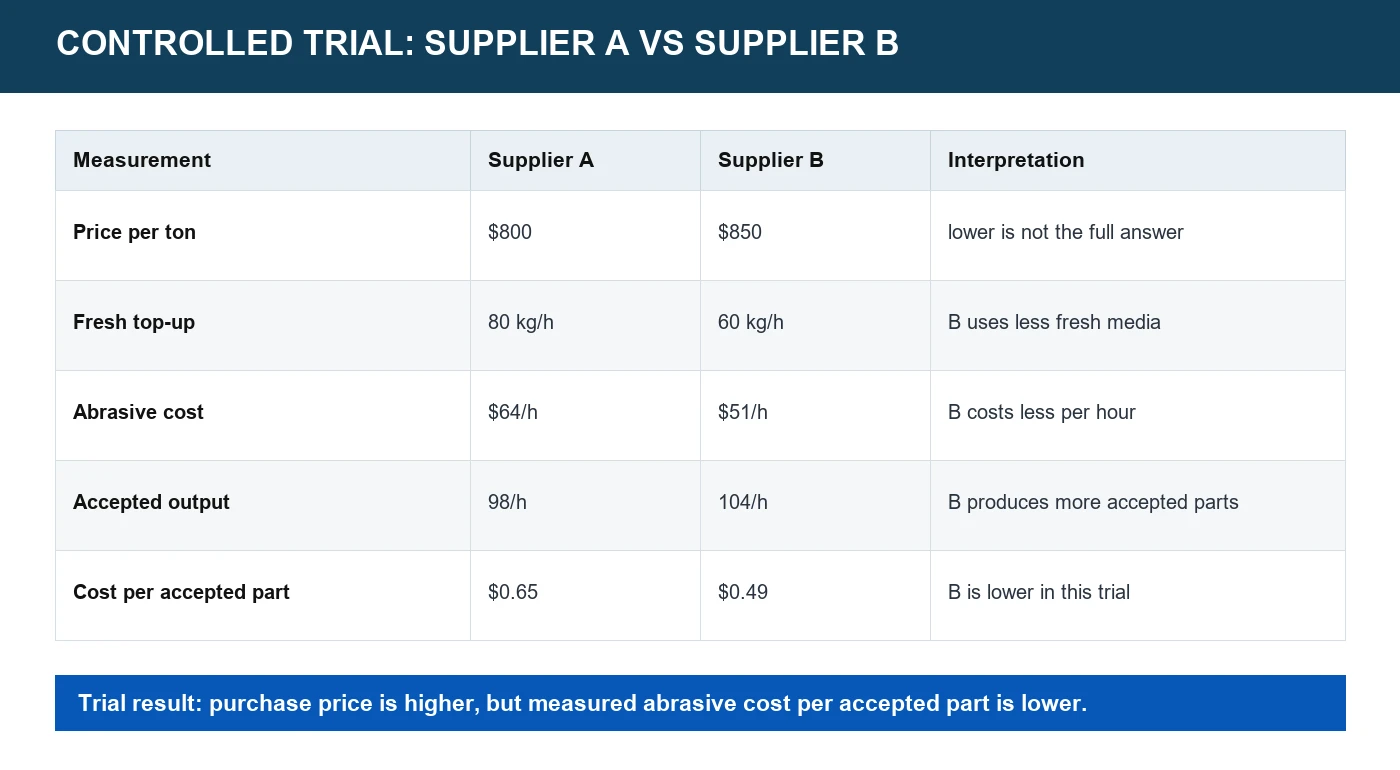
Illustrative trial data from the article: Supplier B has a higher price per ton but a lower measured abrasive cost per accepted part.
| Measurement | Supplier A | Supplier B |
|---|---|---|
| Steel shot price | $800/ton | $850/ton |
| Fresh shot top-up | 80 kg/hour | 60 kg/hour |
| Abrasive cost/hour | $64 | $51 |
| Output | 100 parts/hour | 105 parts/hour |
| Accepted parts | 98/hour | 104/hour |
| Average blast time | 36 sec | 34 sec |
| Fines level | Higher | Lower |
| Production interruptions | More frequent | Less frequent |
The following example shows how a factory can compare two suppliers.
Supplier B has the higher steel shot cost per ton.
But it produces a lower fresh abrasive cost per hour and more accepted parts.
If the trial data is reliable, Supplier B may have the lower operating cost.
The purchasing decision should therefore not be based on the $50/ton difference alone.
How Do You Calculate Cost per Accepted Part?
The calculation can be kept simple.
Start with fresh abrasive cost:
Fresh steel shot consumption per hour × steel shot cost per kilogram
Then divide that by the number of accepted parts produced per hour.
For example:
Supplier A:
80 kg/hour × $0.80/kg = $64/hour
98 accepted parts/hour:
$64 ÷ 98 = approximately $0.65 abrasive cost per accepted part
Supplier B:
60 kg/hour × $0.85/kg = $51/hour
104 accepted parts/hour:
$51 ÷ 104 = approximately $0.49 abrasive cost per accepted part
In this example, Supplier B costs more per ton but less in abrasive cost per accepted part.
That is a much more useful number for a production-oriented purchasing decision.
The calculation can then be expanded to include electricity, labor, downtime and maintenance if the factory has reliable data.
Why Should You Compare the Same Production Conditions?
Abrasive trials can easily become misleading.
Suppose Supplier A is tested on relatively clean steel while Supplier B is tested on heavily scaled material.
The resulting consumption numbers cannot be compared fairly.
The same applies if:
- blast wheel speed changes
- abrasive flow changes
- workpiece geometry changes
- blast time changes
- machine maintenance occurs between tests
- different working-mix conditions are used
For a useful comparison, keep the main variables as consistent as possible.
Ideally, use:
- the same machine
- the same workpiece
- the same production conditions
- the same acceptance criteria
- comparable working-mix conditions
- similar trial duration
Only then can the abrasive itself be evaluated with reasonable confidence.
Should You Compare One Shift or One Week?
A single shift can provide useful information, but it may not be enough for a purchasing decision.
Abrasive performance changes as the working mix develops.
A new batch of steel shot may behave differently during the first few hours than it does after prolonged recycling.
For this reason, a longer trial is often more informative.
The appropriate duration depends on the machine and production volume.
A high-volume plant may generate meaningful data quickly.
A lower-volume operation may need more time.
The objective is to capture normal production rather than a short-term snapshot.
A good trial should answer:
Does the abrasive remain economically attractive under normal operating conditions?
What Should Purchasing Departments Ask Steel Shot Suppliers?
Instead of asking only:
"What is your price per ton?"
consider asking:
- What shot sizes are available? Use the cast steel shot size selection guide when defining comparable trial grades.
- What hardness range do you supply?
- What is the expected operating application?
- Can you provide a product specification and COA?
- What information do you need about our machine?
- Can you support a production trial?
- What data should we record during the trial?
- Can you help evaluate consumption?
- How should the working mix be monitored?
A supplier who understands the application should be interested in the customer's production conditions, not just the quantity of steel shot required.
Review the available size, hardness and packing information on the cast steel shot product page before defining a supplier trial.
When Is the Lowest Steel Shot Cost per Ton Actually the Best Choice?
Sometimes it is.
If two products produce essentially the same:
- consumption
- output
- cleaning result
- downtime
- fines
- maintenance requirements
then the lower purchase price becomes much more important.
There is nothing wrong with buying the less expensive product when the operating results are genuinely equivalent.
The problem is assuming that they are equivalent before testing.
For a high-volume blasting operation, a small difference in abrasive consumption can outweigh a relatively small difference in purchase price.
That is why a trial should come before a major change whenever the economic difference is meaningful.
What If the More Expensive Steel Shot Lasts Longer?
"Longer life" is useful only when it can be measured.
A supplier may describe a product as having excellent durability.
That is worth investigating, but it should not replace production data.
Ask:
- How many kilograms of fresh shot are required to process a defined production volume?
That number is easier to compare.
For example:
Supplier A requires 600 kg to process 10,000 acceptable parts.
Supplier B requires 450 kg for the same production volume.
If the surface quality and production conditions are comparable, the consumption difference is meaningful.
The question is no longer which product "lasts longer."
The question becomes:
How much abrasive do we actually consume to produce 10,000 acceptable parts?
That is a number a purchasing manager can use.
A Practical Formula for Comparing Steel Shot Suppliers
For a simple first-stage comparison:
Abrasive Cost per Accepted Part =
(Fresh Steel Shot Used × Steel Shot Price per kg) ÷ Number of Accepted Parts
For a more complete production-cost model, you can add:
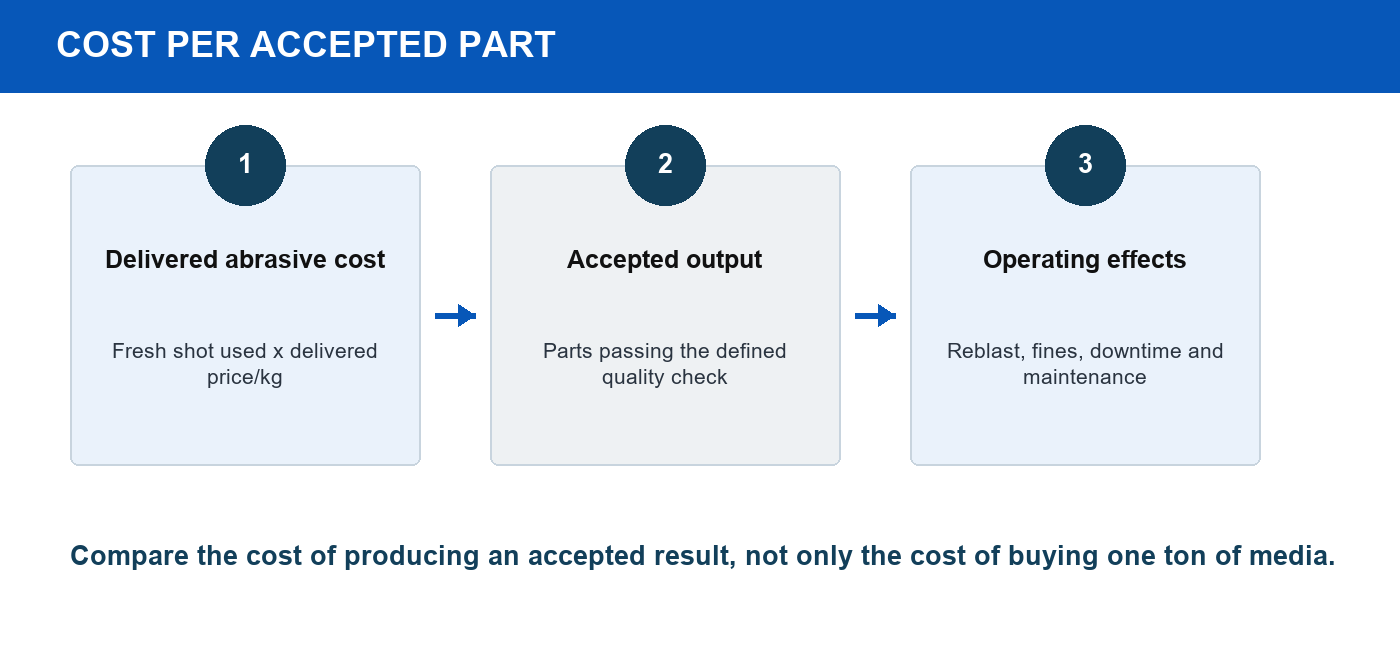
Start with delivered abrasive cost divided by accepted output, then add operating effects only when the data is measured consistently.
Abrasive cost + energy + labor + maintenance + downtime cost
and then divide the total by the number of accepted parts.
The exact model depends on the factory.
The important principle remains the same:
Measure the cost of producing the result, not simply the cost of purchasing the input.
Steel Shot Supplier Comparison Checklist
Before changing suppliers, collect the following information from both trials:
- Steel shot size
- Steel shot hardness
- Price per ton
- Delivered cost
- Fresh shot consumption per hour
- Total fresh shot used during trial
- Machine operating hours
- Number of parts processed
- Number of accepted parts
- Average blast time
- Reblast rate
- Fines and dust observations
- Separator condition
- Downtime
- Maintenance requirements
- Final surface quality
Then compare the two suppliers using the same calculation method.
For a wider comparison of round and angular metallic abrasives, use the steel shot and steel grit category page.
Frequently Asked Questions
How do you calculate steel shot cost per accepted part?
Divide the delivered cost of fresh steel shot consumed during the measurement period by the number of accepted parts produced in the same period. Record reblasts and rejects separately so they do not inflate the accepted-output figure.
How long should a steel shot supplier trial run?
A full production week often gives more representative evidence than a single short shift, but the appropriate duration depends on throughput, abrasive inventory and the time required for the working mix to stabilize.
Does a higher steel shot price mean a lower operating cost?
Not automatically. A higher-priced product may reduce consumption, fines or downtime, but that benefit must be measured under comparable machine and workpiece conditions.
Which variables must remain constant during a supplier comparison?
Keep the workpiece mix, blast machine, wheel speed or pressure, abrasive flow, exposure time, separator settings and acceptance criteria as consistent as practical.
Final Takeaway
Steel shot cost per ton is an important purchasing number, but it is only the beginning of the calculation.
A lower quotation does not automatically mean a lower production cost.
For a serious comparison, look at the complete operating picture:
- Purchase price → kg/hour top-up → blast time → output → accepted parts → fines → downtime → total operating cost
A supplier offering steel shot at a higher price per ton may still deliver a lower cost per acceptable part if the abrasive consumption is lower and production remains stable.
Likewise, a cheaper product may be the better choice if testing proves that its performance is equivalent.
The key is to measure rather than assume.
For high-volume users, the most useful question is not:
"Which steel shot is cheapest per ton?"
It is:
"Which steel shot gives us the lowest repeatable cost for producing an acceptable part?"
That is the number that connects abrasive purchasing with real manufacturing economics.
If you are comparing steel shot suppliers, changing abrasive grades, or trying to reduce your current blasting cost, a controlled production trial can provide much better information than comparing quotations alone.
To review your current consumption data and trial conditions, contact the Promisteel team.
Compare the Result, Not Only the Quotation
Promisteel can review steel shot size, hardness, delivered cost, machine conditions, current consumption and accepted output before a controlled production trial.
Contact PromisteelDiscuss on WhatsApp


