
 Español
 Türkçe
 Français
 عربي
عربي  dansk
dansk 한국어
한국어 Deutsch
 Việt Nam
 Italiano
 日本語
日本語 Português

Verify heavy steel fabrication capacity through evidence, not a factory description alone. Match workshop layout, lifting and processing equipment, documented available output, dimensional limits, welding and NDT controls, material traceability, certification scope and export documentation to the exact order tonnage, component geometry, standard and shipment schedule.
Capacity evidence status
Auditing a heavy steel supplier? Send drawings, component weights, applicable standards, inspection scope, order tonnage and target shipment milestones.
Request a Capacity Review
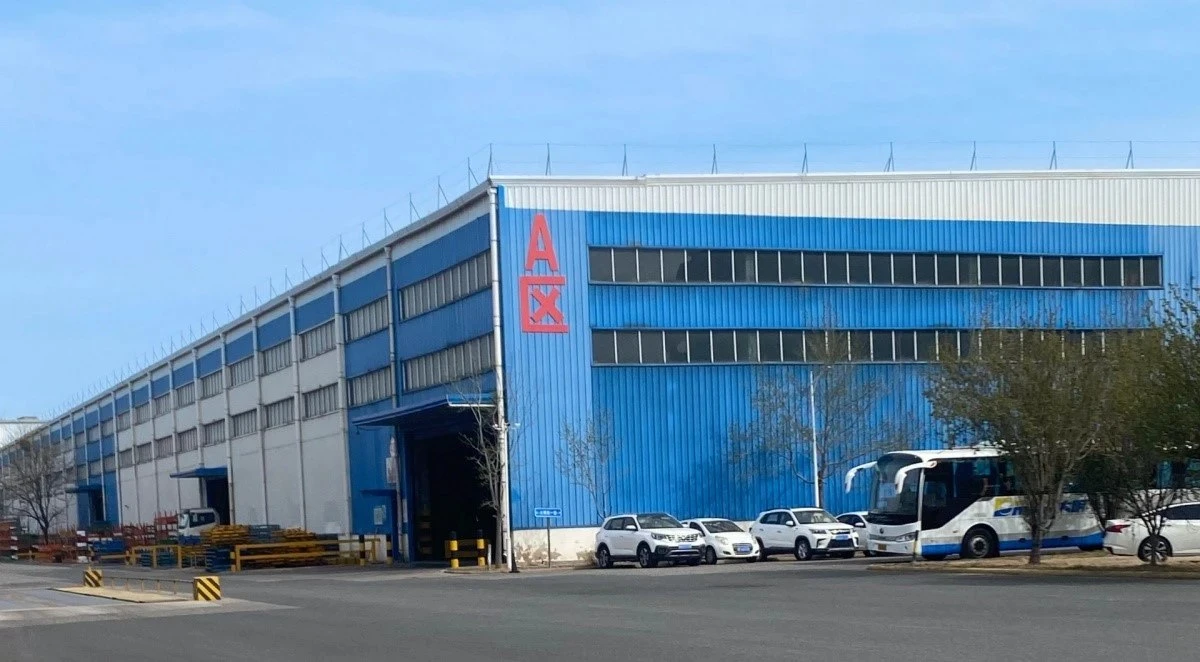
Factory scale is only a starting point; buyers should verify the production route, available workload, equipment and project-specific controls.
Contents
In overseas steel procurement, many industrial projects run into avoidable trouble because buyers do not verify real heavy steel structure fabrication capacity before awarding orders. Project owners, general contractors and distributors often focus on price and accept a factory introduction at face value, even when the supplier lacks the required processing capability. A low quote can hide outsourced production, inconsistent fabrication, untested welds or a delivery plan that does not match the construction schedule.
Light steel frames for small warehouses and heavy beams, thick box columns or crane-supporting structural frames do not create the same production risk. These primary load-bearing components affect overall safety, fit-up and durability. A supplier may claim heavy steel capability without a dedicated workshop, suitable equipment or a stable production team. This article provides a practical audit framework for checking manufacturing capability before contract award. For the engineering difference between primary framing options, compare Box Columns vs. H-Beams before defining the audit scope.
Why Fabrication Capacity Beats Low Pricing in Heavy Steel Projects
In cross-border procurement, the lowest price should not be evaluated separately from factory capacity. A supplier without sufficient equipment, controls or available production time may skip checks, substitute unapproved materials or outsource core processing. For overseas buyers, the result can be rework, failed inspections, customs or documentation delays and idle installation teams. Heavy structural steel requires production conditions and verification controls appropriate to the project standard.
Practical Risks of Working With Low-Capacity Factories
Third-party outsourcing of core work: Many steel trading firms and small factories take heavy steel orders they cannot produce independently. They outsource fabrication to random local workshops with inconsistent standards. You lose full control of quality, material traceability, and production progress, with no way to unify component quality across your whole project.
Uncontrolled dimensional errors: Long heavy beams and thick-walled box columns depend on accurate cutting, drilling, assembly and straightening. Excessive reliance on manual processing can increase tolerance variation. Small deviations may accumulate and make site assembly more difficult, leading to field correction and additional cost.
Hidden welding risks: Load-bearing welds must follow the approved welding procedure and the inspection plan required by the project. If the specified NDT is skipped or inconsistently applied, internal defects may remain undetected during a visual factory inspection.
Unavoidable delivery delays: Factories without independent heavy steel production lines mix light steel and heavy steel orders together. This causes serious production bottlenecks. Once order backlogs build up, your heavy steel components will be pushed back for weeks, ruining your pre-planned construction timeline.
For investors and contractors with fixed project delivery deadlines, these capacity flaws turn manageable construction plans into costly, delayed projects. A simple pre-order factory capacity check can help you avoid most of these cross-border procurement pitfalls. Before treating a low quotation as a capacity advantage, review what influences fabricated structural steel cost per ton and normalize the commercial scope.
Real-World Capacity Verification Standards for Heavy Steel Fabrication
A supplier can place "heavy steel fabrication" on a website or brochure, but the claim should be tested against evidence. For large beams and columns, verify the factory conditions, equipment use, documented output, quality controls and current workload against the project requirements. The checkpoints below provide a practical audit structure. Use the supplier's factory processing center page as a starting point, then verify each claim with project-specific records and live evidence.
Independent Heavy Steel Production Workshop Layout
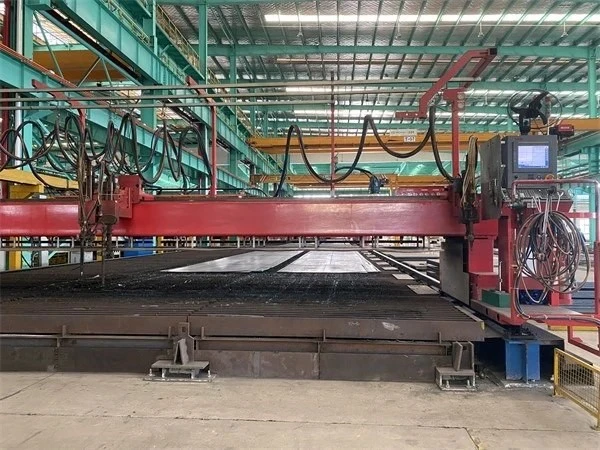
Verify that the proposed workshop route has enough space, lifting access and controlled material flow for the actual components.
Processing heavy structural components requires spacious, high-clearance workshop space. Thick steel plates, over-length beams, and large box columns cannot be processed in cramped, mixed workshops. Factories that combine light steel production, heavy steel fabrication, and product storage in one area cannot guarantee processing precision and stable quality.
- Separate production zones exclusively for heavy steel component processing, free from light steel order interference
- Sufficient floor space to fully lay out long beams and columns for straightening, dimension checking, and layered quality inspection
- Fixed professional working bays for box column assembly, deep welding, and surface anti-corrosion treatment
If the factory has no clearly divided functional zones, ask how it controls material flow, dimensional inspection, welding, surface treatment and product segregation. A mixed layout is not automatically disqualifying, but the supplier should demonstrate that the selected arrangement can protect quality and delivery for the specific heavy-steel order.
Must-Have Heavy-Duty Processing Equipment
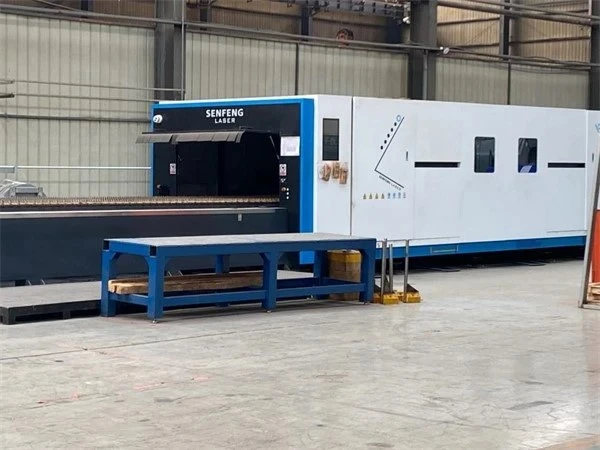
Equipment presence is only the first check; confirm rated range, maintenance records and routine production use.
Basic manual tools may be sufficient for simple parts, but heavy structural fabrication normally requires suitable lifting, cutting, drilling, welding, blasting and straightening equipment. Verify that the equipment is available, maintained and used in routine production-not staged temporarily for an audit.
- Heavy-duty overhead cranes with rated capacity appropriate to the component: Used to lift and move thick or long members while controlling handling risk and deformation. Confirm the crane rating against the heaviest fabrication and assembly lift.
- CNC automatic beam processing lines: Ensures accurate drilling, cutting, and sizing, eliminating assembly gaps caused by manual operation errors.
- Automatic submerged arc welding equipment: Supports consistent welding of suitable long seams when used with qualified procedures, trained operators and the required inspection plan.
- Industrial shot blasting equipment: Removes rust and mill scale and prepares the surface for the specified coating system. Verify the required cleanliness, profile and coating procedure rather than assuming one universal finish.
- Hydraulic straightening presses: Corrects minor bending deformation during welding and assembly to keep all heavy components within standard tolerance ranges.
Many unqualified suppliers rent professional equipment temporarily for client visits. You can ask for daily operation records and real workshop production videos to verify long-term stable equipment usage. For further context on fabrication routes, see Rolled vs. Welded H-Beams in Steel Structures.
Authentic Monthly Production Tonnage
Monthly output should be treated as a project-fit metric, not a universal qualification threshold. Buyers should compare documented available capacity with order tonnage, component complexity, required batch sizes, current backlog and shipment milestones. Shipping records, production logs and completed-project evidence can help test a capacity claim.
- Documented monthly heavy-steel output and available capacity that support the required batch-delivery schedule
- Clear processing limits for maximum beam length, column size, and steel plate thickness to match different project requirements
- A documented production-loading plan with reserved windows and contingency capacity for the order period
Small workshops often boast high output online but cannot provide real shipping cases and finished product proof. Always verify actual project experience before confirming cooperation. Capacity evidence should also be checked against the steel structure project timeline from inquiry to shipping so production windows match contractual milestones.
Export-Level Quality Control & Compliance Capability
Complete equipment and high output only represent basic production capacity. Cross-border heavy steel projects have stricter quality and document requirements. Many domestic factories can produce heavy steel structures but lack standardized export QC systems and document processing experience, easily causing overseas inspection failures and customs holds. For inspection timing, see why SGS and BV inspections should start before fabrication ends rather than only after container loading.
In-House NDT Inspection & Full-Procedure QC
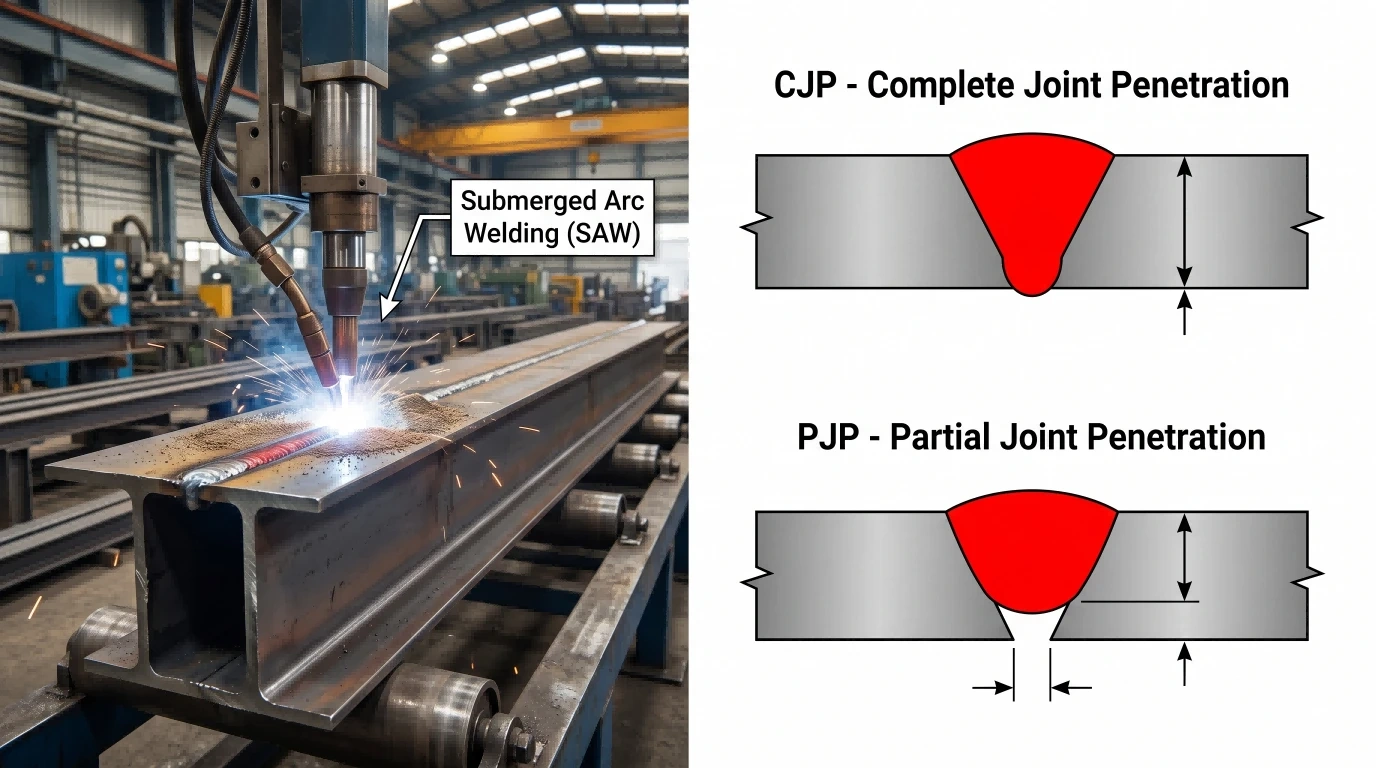
Welding method, joint design, qualified procedures and traceable inspection records must agree with the project specification.
Critical load-bearing welds require the NDT methods and acceptance criteria defined by the applicable code, drawings and inspection plan. Whether testing is performed in-house or by an approved third party, verify personnel qualifications, equipment calibration, procedures, reports and traceability across production batches. A practical companion reference is the steel fabrication MTC and NDT quality-control guide.
- Access to the ultrasonic, radiographic or other NDT methods required by the project, supported by qualified personnel and controlled procedures
- Full-time QC teams conducting dimension inspection and quality checks after cutting, welding, straightening, and painting
- Complete material traceability, with MTR certificates strictly matching each steel batch
Standard Export Document & Certification Support
Even with top-tier fabrication capacity, incomplete export documents will block your shipment at the destination port. Qualified export factories must have complete international certifications and professional document teams. Before comparing proposals, define what should be included in the steel structure scope of supply so certificates, inspections, coating, packing and documents are not treated as hidden extras.
- Current ISO 9001 certification where required, with certificate validity, issuing body and scope verified
- ISO 3834 welding quality requirements and EN 1090 execution certification where required by the target market or project specification, with the relevant scope and execution class confirmed
- Professional staff to prepare project-specific inspection reports, packing lists, and customs clearance documents
Typical Red Flags of Unqualified Heavy Steel Factories
Based on years of export experience, these obvious warning signs can help you quickly rule out unreliable suppliers during early communication and audits:
- Avoids answering specific questions about monthly output, equipment parameters, and real project cases
- Refuses to provide workshop video tours and real-time production verification
- Quotes materially below comparable market offers without a documented explanation for material, fabrication, inspection, coating, packing or freight assumptions
- Slow lead time for small-batch orders despite claimed high production capacity
- No professional engineering team for heavy steel structure design and drawing optimization
Conclusion
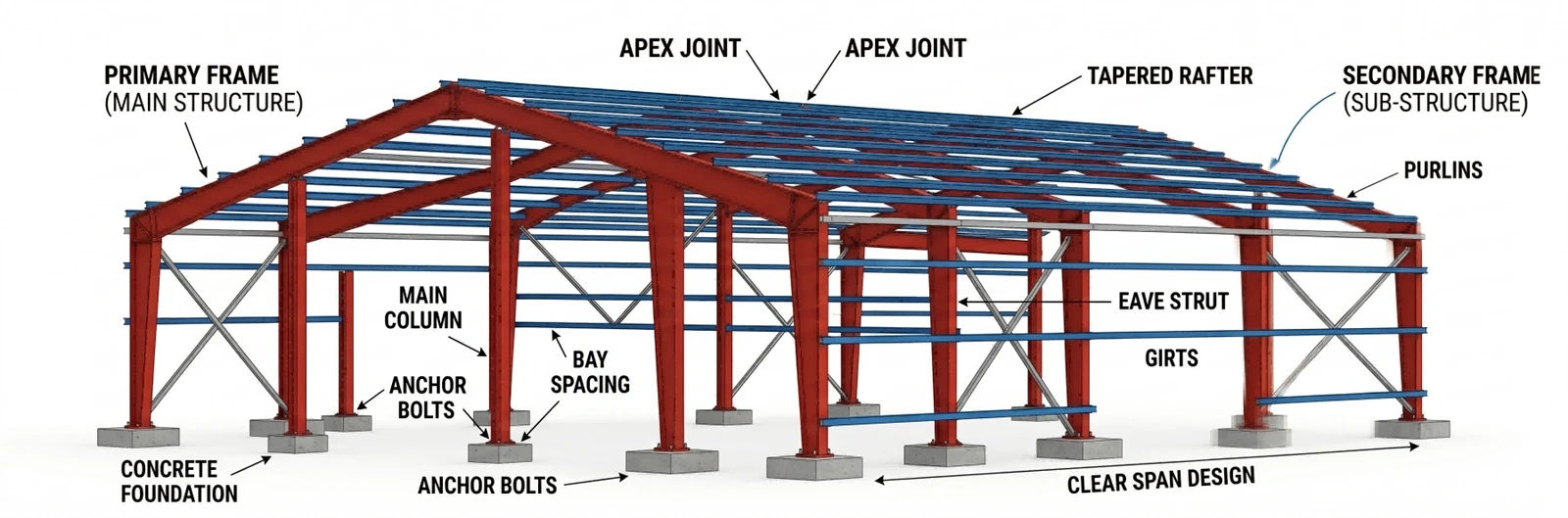
Capacity verification should follow the actual primary framing, component geometry, connections, and shipment sequence.
Verifying heavy steel structure fabrication capacity is a core part of pre-order due diligence for overseas industrial projects. Price alone is not a reliable qualification standard. Workshop conditions, processing equipment, available capacity, quality controls and export-document support should all be verified against the project scope. Requesting evidence before contract award reduces safety, fit-up, delivery and commercial risk. Start the technical inquiry with the drawings required for an accurate steel structure fabrication quote, then align oversized-member packing and shipment with the structural steel export logistics planning guide.
Get Reliable Heavy Steel Fabrication for Your Global Project
When evaluating Promisteel for heavy steel beams, box columns or industrial structural components, request project-specific evidence for the proposed production route. This may include workshop and equipment records, production-loading information, inspection arrangements, certification scope, document samples and relevant export cases. Final capability should be confirmed against the approved drawings, applicable standard, order quantity and delivery plan.
Submit the project drawings, component dimensions, material grade, design or execution standard, welding and NDT requirements, coating system, order tonnage and shipment schedule through the inquiry form on www.promisteel.com. The technical and commercial review can then be based on a defined scope rather than a general capacity claim.
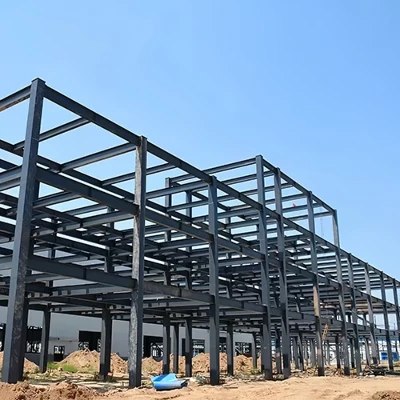
Confirm capability against approved drawings, order tonnage, inspection requirements and the contractual shipment plan.
Heavy Steel Factory Audit Checklist
| Audit area | What to verify | Evidence to request | Main risk controlled |
|---|---|---|---|
| Workshop | Space, clearance, zoning and material flow | Live video, floor plan, current work in progress | Handling, mixing and inspection gaps |
| Equipment | Rated capacity, process range, maintenance and actual use | Nameplates, maintenance logs, operation records | Bottlenecks and tolerance variation |
| Capacity | Available output versus order tonnage and milestones | Backlog, production plan, completed shipment records | Batch and delivery delay |
| Welding & NDT | Applicable WPS/PQR, personnel and inspection plan | Qualifications, calibration and traceable reports | Undetected weld defects |
| Materials | Grade, heat number and component traceability | MTR/MTC and traceability register | Material substitution or mismatch |
| Compliance | Required certificate scope and export documents | Current certificates and sample document package | Inspection or clearance failure |
Frequently Asked Questions
How can buyers verify a factory's heavy steel capacity?
Match workshop layout, equipment ratings, current workload, completed output and available production windows to the actual order. Ask for live production evidence and records rather than relying on one headline tonnage figure.
Is there a universal minimum monthly output for a qualified factory?
No. The relevant question is whether documented available capacity can support the component complexity, batch sizes and shipment milestones of the specific project. A smaller qualified line may fit one order, while a higher-volume project may require substantially more reserved capacity.
Which equipment should a heavy steel fabrication audit cover?
Review lifting capacity, CNC cutting and drilling, welding equipment, straightening, shot blasting and coating capability. Confirm equipment ranges, maintenance and actual daily use against the largest and heaviest component.
Should NDT be performed in-house?
Not necessarily. In-house or approved third-party NDT can be acceptable when the project permits it. What matters is qualified personnel, calibrated equipment, controlled procedures, required coverage, acceptance criteria and traceable reports.
Which certifications should an overseas buyer verify?
Verify the standards required by the destination market and project, such as ISO 9001, ISO 3834 or EN 1090 where applicable. Check certificate validity, issuing body, scope, location and the relevant execution class rather than accepting a logo on a brochure.
What should be included in an RFQ for heavy beams and columns?
Provide drawings, material grade, component dimensions, applicable standard, welding and NDT requirements, coating system, tolerances, order tonnage, packing needs and shipment milestones. These details allow capacity and pricing to be reviewed against a defined scope.
Verify the Proposed Production Route
Promisteel can review component geometry, material grades, fabrication scope, NDT, coating, packing and delivery milestones against the proposed factory route.
Contact PromisteelDiscuss on WhatsApp


