
 Español
 Türkçe
 Français
 عربي
عربي  dansk
dansk 한국어
한국어 Deutsch
 Việt Nam
 Italiano
 日本語
日本語 Português

Quick answer: A complete steel structure scope of supply should define the physical steel package, engineering and quality documents, inspection and packing requirements, technical support, the agreed delivery boundary, and explicit exclusions. Each line should be marked included, excluded, optional, or buyer-supplied so competing quotations can be compared on the same basis.
Every year, steel-structure suppliers receive incomplete RFQs from factory owners, general contractors, fabricators, and overseas distributors. Many buyers send short, high-level requests without defining exact deliverables, which creates costly misunderstandings. A well-defined steel structure scope of supply eliminates guesswork, controls project budgets, and helps keep ⏳ steel structure project timelines predictable.
Vague inquiry text such as "quote me a 5,000 m² steel workshop" hides dozens of unresolved points. Does the price cover only the main steel frames? Are cladding panels, anchor bolts, and erection drawings included? Who arranges ocean freight, import clearance, or replacement for components damaged because of inadequate packing? Unless every supplier prices the same boundary, a low headline price may simply reflect a smaller package.
This guide breaks the scope into physical components, non-material deliverables, logistics responsibilities, and exclusions so you can prepare a complete steel structure RFQ and receive comparable commercial proposals.
Why an Ambiguous Scope of Supply Hurts Cross-Border Steel Projects
International steel-structure transactions carry more coordination risk than local purchasing. Long lead times, ocean transit, customs formalities, and remote job sites leave little room for mid-project correction.
Budget creep from unlisted accessories
Most first-time buyers focus on beam and column tonnage while overlooking lower-value but essential items. Anchor bolts, purlins, bracing, self-drilling screws, sealing trims, and touch-up materials may be omitted from an initial quote. Added later, these items increase total cost and can disrupt production or shipping plans.
Shipment delays caused by missing documentation
Import, approval, installation, and handover documents vary by destination and project. If the RFQ does not specify drawing sets, material test reports, inspection records, certificates, marking lists, and packing lists, the buyer may need to chase documents after the goods have already shipped. That can delay clearance, receiving inspection, or erection.
On-site conflicts over responsibility boundaries
Disputes arise when the contract does not state who handles packing, loading, damage claims, technical guidance, replacement parts, and erection support. A written responsibility matrix makes the supplier's handoff point visible before problems surface.
What Physical Components Should the Steel Structure Order Included?
Break tangible goods down line by line. Avoid blanket phrases such as "all steel materials for the building." Cross-check each category against the drawings and bill of quantities, then mark its commercial status.
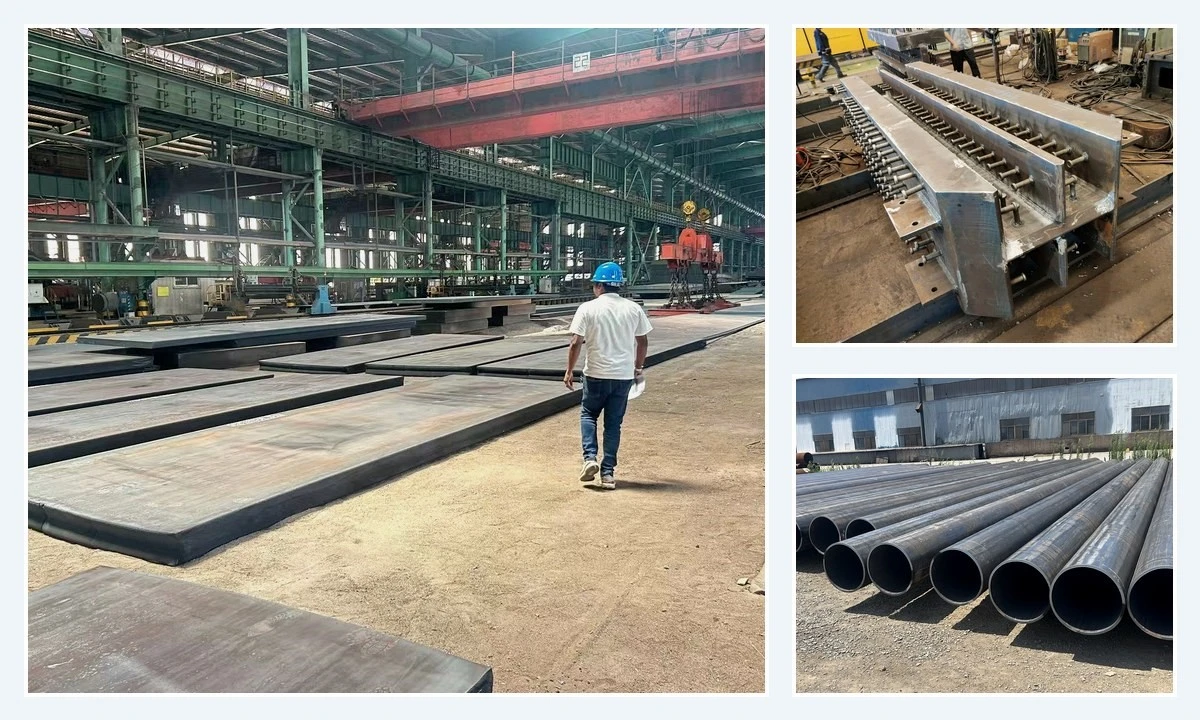
Primary load-bearing steel frame
The primary frame forms the structural backbone, but the scope still needs precise definitions:
- Fabricated columns, beams, rafters, trusses, crane beams, or other primary members shown on the agreed drawings.
- Steel grade and applicable standard, such as Q355B, S355JR, ASTM A572 Grade 50, or the project-specified equivalent.
- Built-up welded sections versus hot-rolled profiles, including any agreed substitution rules.
- Stiffeners, end plates, base plates, splice plates, gussets, connection plates, and factory-drilled holes.
- Surface preparation and coating system, including primer type, color, nominal dry-film thickness, or galvanizing requirements where applicable.
- Quantity or weight basis, contractual tolerance, and the method used to reconcile final fabricated weight.
- Piece marks and component numbering that match the approved drawings and packing list.
Do not assume connection plates or base plates are automatically included merely because ⏳ custom-fabricated main beams and columns are listed.
Secondary structural members
Secondary steel stabilizes the building and supports the envelope. Common scope items include:
- Roof purlins and wall girts, including section type, material grade, thickness, and coating specification.
- ⏳ Horizontal and vertical bracing, tie rods, sag rods, knee braces, and associated connection parts.
- Eave struts, gable posts, framed openings, and other secondary framing accessories.
- Ladders, catwalks, platforms, handrails, or safety rails where they appear in the project package.
If any secondary items are supplied by another trade, identify that boundary in both the scope and the drawings.
Building envelope and cladding systems
Cladding creates major pricing variance. State whether the quotation covers a bare structural frame or a complete weather-tight package:
- Roof and wall panels: single-skin sheets or insulated sandwich panels, with profile, thickness, coating, insulation type, and color requirements.
- Ridge caps, flashings, corner trims, closures, gutters, downpipes, and rainwater accessories.
- Framing or supplied units for personnel doors, rolling shutters, windows, louvers, and overhead industrial doors.
- Sealants, butyl tape, foam closures, self-drilling screws, and other weatherproofing accessories.
Fasteners, anchors, and consumables
- High-strength structural bolting assemblies, including grade, standard, nuts, washers, and coating.
- Foundation anchor bolts, templates where required, nuts, washers, and setting information.
- Cladding screws, rivets, and accessory fasteners.
- Agreed spare quantities for erection losses, site adjustment, or future maintenance.
- Touch-up paint, packers, shims, grout-related interfaces, or field-welding consumables only where explicitly included.
Fasteners have a low unit value but a high schedule impact. Specify them by assembly and quantity, not by a generic phrase such as "all bolts."
Which Documents, Inspections, and Services Belong in the Scope?
Physical steel is only part of the order. Drawing, quality, inspection, packing, and support deliverables carry real project value and should appear in the same scope matrix.

Drawing and technical documentation package
State the required deliverable, file format, review status, language, and due date. Depending on the contract and design responsibility, the package may include:
- General arrangement, interface, and foundation reference drawings.
- Fabrication or shop drawings for approval before production.
- Erection drawings and connection details for site assembly.
- Bill of materials, piece-mark list, bolt list, and ⏳ container-by-container packing list.
- Material test reports or mill test certificates traceable to the supplied steel batches.
- Welding procedure and welder qualification records, NDT reports, coating reports, dimensional inspection records, and certificate of conformity where required.
- Project- or market-specific compliance records, such as EN 1090-related execution documentation when contractually applicable.
Buyer check: Confirm who owns structural design, connection design, detailing, local code approval, and revision control. "Drawings included" is not specific enough.
Factory inspection, packing, and loading standards
- Inspection and Test Plan (ITP), approval points, witness or hold points, and the party paying for third-party inspection.
- Pre-shipment inspection scope, acceptance criteria, release note, photo records, and treatment of non-conforming items.
- Bundling, separators, end protection, coating protection, package marks, lifting points, and any moisture protection.
- Container type or vessel method, ⏳ loading plan, blocking, bracing, and lashing responsibilities.
- ⏳ Remedy for missing parts or damage caused by non-compliant factory packing , including evidence and claim timing.
Technical support boundaries
- Written erection guidance and drawing clarification.
- Remote technical support during site assembly, including response times and working hours.
- On-site engineer or supervisor attendance, if required, with travel, accommodation, visa, insurance, daily rate, and duration clearly priced.
- Post-shipment document support, spare-part process, and warranty communication channel.
Most exporters treat overseas site attendance as a separately priced service. State the ⏳ included level of on-site technical support
rather than relying on an assumption of unlimited assistance.
How Should Delivery, Liability, and Exclusions Be Defined?
A complete scope also states where the supplier's obligation ends. Separate supplier and buyer responsibilities, identify the nominated place or port, and connect the scope to the purchase contract.
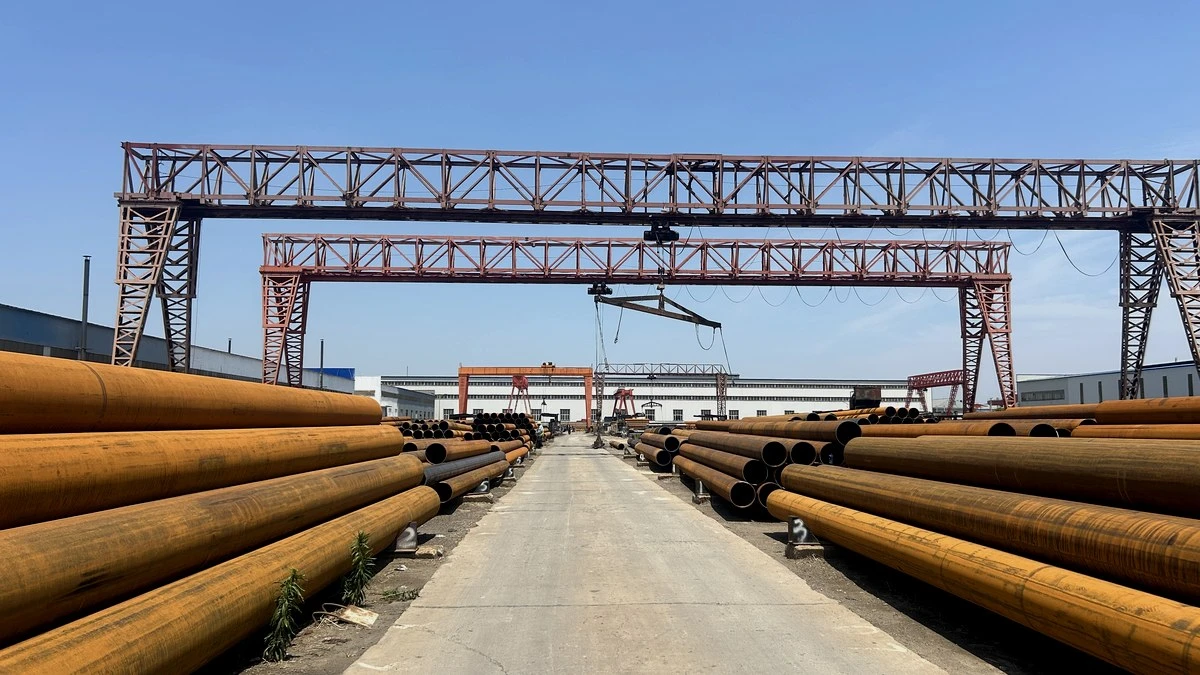
Delivery boundary
State the agreed Incoterms® rule and edition, the named place or port, required shipping documents, ⏳ target shipment window, and any seller-arranged transport. Cost, risk, insurance, export clearance, import clearance, unloading, and inland delivery responsibilities vary by rule and contract. Avoid shorthand assumptions such as "CIF means delivered to site" or "FOB includes all port charges." Ask the parties' logistics teams to verify the final wording.
Items often excluded from a steel structure supply package
Exclusions vary by project, but the contract often needs to address:
- Site survey, geotechnical investigation, permits, and local authority approvals.
- Earthworks, concrete foundations, reinforcement, grout, embeds, and anchor-bolt installation unless explicitly assigned.
- On-site erection labor, cranes, access equipment, temporary works, and field welding.
- Mechanical, electrical, plumbing, fireproofing, and equipment supports not shown in the supplier's package.
- Import duties, taxes, destination charges, demurrage or detention, unloading, and inland transport unless the agreed delivery term or contract assigns them to the supplier.
- Site storage, protection after delivery, and repair of damage caused after the contractual risk transfer point.
Documenting exclusions is as important as listing included goods. It exposes trade interfaces before award instead of during erection.
A Practical Steel Structure Scope of Supply Matrix
| Scope category | Define in the RFQ / PO | Status | Buyer check |
|---|---|---|---|
| Primary steel | Members, grade, standard, plates, connections, coating, piece marks | Included / excluded / optional | Match drawings and BOQ |
| Secondary steel | Purlins, girts, bracing, eave struts, framed openings | Included / excluded / buyer-supplied | Identify trade interfaces |
| Cladding | Panel build-up, trims, gutters, openings, sealants, screws | Frame only / complete envelope | Compare like-for-like bids |
| Fasteners & anchors | Structural bolts, anchor bolts, templates, spares, consumables | Included quantity and grade | Check every connection system |
| Engineering | Design responsibility, drawing set, formats, approval cycle, revisions | Included service / separate fee | Name the responsible party |
| Quality documents | MTRs, WPS/PQR/WPQ, NDT, coating and dimensional records | Required / as applicable | Tie documents to ITP |
| Inspection | Hold points, third party, release criteria, reports, NCR process | Buyer / supplier cost | Schedule before packing |
| Packing & loading | Bundle method, marks, protection, container type, lashing | Supplier responsibility to named point | Agree evidence and claims |
| Delivery | Incoterms® rule/edition, named place, dates, documents, insurance | Per contract | Do not rely on shorthand |
| Support | Remote response, erection guidance, site attendance, warranty | Included hours / separate fee | Set response time |
| Exclusions | Civil work, erection, permits, taxes, destination handling, storage | Explicitly excluded | Assign each interface |
How to Write a Complete Steel Structure RFQ
- Prepare the project basics: building dimensions, grid and bay layout, intended use, site location, design code, and wind, snow, seismic, crane, equipment, or process loads.
- Issue the latest drawings and specifications. State whether they are for quotation, approval, or construction, and identify the responsible designer.
- List each physical component and mark it included, excluded, optional, or locally sourced.
- Define materials, fabrication standards, welding and inspection requirements, tolerances, and surface protection.
- Name every drawing, certificate, quality record, and packing document required, including format and timing.
- Set packing, marking, inspection, loading, Incoterms® rule and edition, named place or port, and shipment window.
- Define technical support, spare parts, warranty, and the process for missing or damaged components.
- Attach an explicit exclusions and responsibility matrix, then require suppliers to identify every deviation in their quotation.
A quotation based on this framework is easier to evaluate because the commercial total, the deliverables, and the interfaces are visible. It also helps you identify suppliers that have priced a narrower package or have not addressed key project requirements.
FAQ
Q: What is a steel structure scope of supply?
A: It is the contractually defined list of goods, documents, services, delivery responsibilities, and exclusions that form the supplier's package. It should be detailed enough for all bidders to price the same boundary.
Q: Are anchor bolts normally included in a steel structure order?
A: Not always. Some suppliers include anchor bolts, templates, nuts, and washers; others treat them as optional or buyer-supplied. The RFQ should state the quantity, grade, coating, template requirement, and setting information.
Q: Does a steel structure quotation include cladding?
A: It may cover a bare frame or a complete envelope. Define the roof and wall panel build-up, trims, rainwater goods, openings, sealants, and fasteners so the price comparison is meaningful.
Q: Which documents should be delivered with fabricated steel?
A: Common deliverables include approved shop and erection drawings, bills of material, piece-mark and packing lists, material certificates, inspection reports, and project-specific welding, NDT, coating, or conformity records.
Q: Should third-party inspection be included in the scope?
A: If required, define the inspection agency, hold or witness points, acceptance criteria, reporting, schedule, and who pays. Arrange inspections before production and packing milestones, not after loading.
Q: How do buyers compare steel structure quotations fairly?
A: Issue the same drawings, specifications, scope matrix, document list, inspection requirements, and delivery boundary to every bidder. Require a priced list of exclusions, options, assumptions, and deviations.
Conclusion: Make the Scope a Commercial Control Document
Vague RFQs are an avoidable risk in cross-border steel-structure procurement. A robust steel structure scope of supply aligns buyers and exporters on material lists, documentation, service limits, packing, delivery boundaries, and excluded work. It protects capital from unexpected additions and helps project teams maintain the procurement and erection schedule.
Do not rely on verbal agreements or a one-paragraph purchase description. Itemize primary frames, secondary steel, cladding, fasteners, drawing packages, inspection records, packing standards, logistics responsibilities, and exclusions. Require each supplier to confirm compliance or list deviations before contract award.
Prepare Your Itemized Steel Structure RFQ
Preparing a steel structure order and need help defining the full supply package? Send Promisteel your project location, building parameters, loads, drawings, required standards, delivery destination, and target schedule. Our engineering and export team can review the inputs, identify missing scope points, and prepare an itemized proposal for your project.
Next step: Submit your project requirements through Promisteel's website inquiry form.


