
 Español
 Türkçe
 Français
 عربي
عربي  dansk
dansk 한국어
한국어 Deutsch
 Việt Nam
 Italiano
 日本語
日本語 Português

Choosing suitable abrasive media is one of the most important decisions in any surface-preparation process. When you need to remove rust from structural steel, clean foundry castings, prepare pipelines for coating, or improve the fatigue performance of metal components, the media choice directly affects cleaning quality, operating efficiency, cost and the final surface result.
Steel shot and steel grit are two widely used metallic abrasives. Although both can be used in blast-cleaning systems, their particle shape, hardness, cutting action and final surface result can lead to different choices for different applications. That is why steel shot vs. steel grit remains an important question for manufacturers, fabricators, coating contractors and industrial buyers.
So here is your answer in a nutshell:
- Steel shot is commonly selected for general cleaning, lighter rust or mill scale, and a more uniform surface finish. For fatigue-critical shot peening, use only media and process controls approved in the customer's specification.
- Steel grit is commonly selected for heavy rust, thick coatings and applications that require a rougher anchor profile before coating.
The choice of the better option should be based on these three factors:
- Type of contamination you want to remove
- Desired surface profile
- Type of the blasting equipment
Instead of trying to determine which abrasive is "better," determining which abrasive will be suitable for your application will be more important.
For an overview of Promisteel's supply and services, visit Promisteel.
Steel Shot vs. Steel Grit: At a Glance
| Feature | Steel shot | Steel grit |
|---|---|---|
| Particle shape | Round | Angular |
| Cleaning action | Impact | Cutting |
| Surface finish | Smooth | Rough / Anchor profile |
| Rust removal | Moderate to good | Strong on heavy rust / scale |
| Paint removal | Limited to moderate | Strong cutting action |
| Shot peening | Suitable with approved media and procedure | Not suitable |
| Dust generation | Process-dependent | Process-dependent |
| Abrasive life | Typically longer | Depends on grade and recovery |
| Recyclability | High, with a stable working mix | High, with controlled recovery |
| Typical equipment | Wheel blast | Air blast & wheel blast |
| Best for | General cleaning / specified peening | Descaling / coating preparation |
For buyers comparing blasting media, this table will provide a quick reference guide. However, it is crucial to understand why these differences exist before purchasing abrasives.
What is steel shot?
Steel shot is a metallic abrasive produced by atomizing molten steel to create small spherical particles. These particles are heat-treated and tempered to ensure consistent hardness, toughness, and resistance to wear.
Unlike mineral abrasives designed to break down quickly, steel shot is designed to be recycled over and over again. In most automated blasting applications, a single batch of steel shot can be used for many blasts, making steel shot one of the most economical abrasives to use.
Steel shot is spherical and transfers energy primarily through impact rather than cutting. It can remove rust, scale and other contamination with less cutting action than angular grit; the final result still depends on the media grade, machine settings and workpiece.
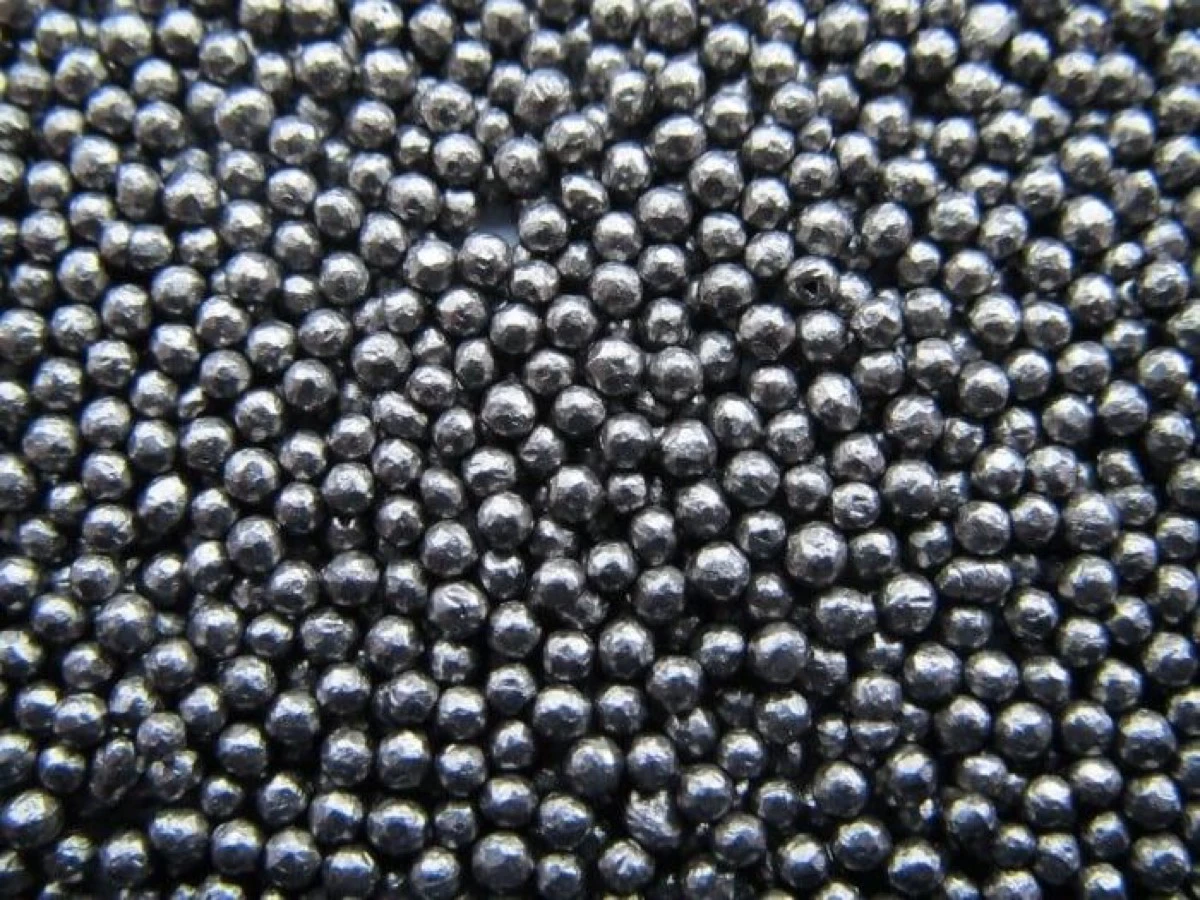 Figure 1. Round steel shot media: spherical particles are selected for impact-led cleaning and controlled processes.This impact mechanism allows steel shot to be particularly effective.
Various Uses of Steel Shot
Steel shot finds applications in a number of ways.
- Using steel shot for the cleaning of the surface of steel plates
- Steel shot is used to remove any thin layer of rust, mill scale
- To clean castings in the foundry industry
- In cleaning the forged metal parts
- It is used for the making of auto components
- Performing shot peening on gears, springs & shafts
- Manufacturing of wheeled vehicles made of aluminum and steel
- Manufacturing of steel pipes
- Finishing of surfaces
See the Cast Steel Shot product page for grade and packing information.
Understanding Steel Grit
Steel grit is produced by crushing steel shot into angular particles with sharp edges.
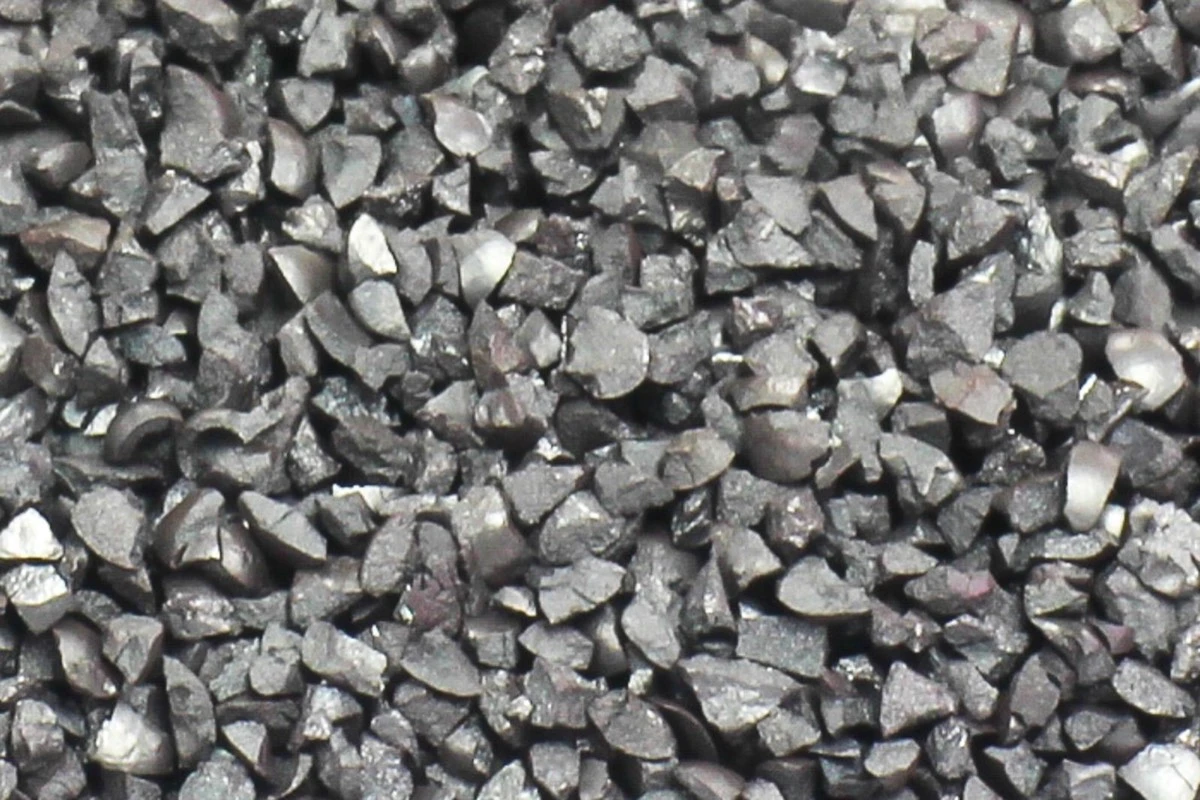 Figure 2. Angular steel grit media: sharp particle edges support cutting action in descaling and coating preparation.
Even though the raw material for the steel grit is taken from the steel shot, it behaves differently.
Instead of primarily impacting the surface, it cuts through heavy rust, thick coatings and stubborn weld slag.
The sharp angular edges can help create the surface profile required by a paint or epoxy coating system.
Poor surface preparation can contribute to coating failure. Steel grit is therefore often considered where the process requires effective cleaning and a defined anchor profile.
Common Uses of Steel Grit
Some common uses for steel grit are:
- In shipbuilding
- In offshore structures
- For bridge maintenance
- For fabrication of steel structures
- To manufacture wind towers
- To manufacture pipes for oil and gas
- For the manufacture of heavy machinery
- For refurbishing railcars
- To remove paint or coating from the surface
- To prepare surfaces before galvanizing
See the Cast Steel Grit product page for grade and packing information.
Significance of Particle Shape
Particle shape is one of the major differences between steel shot and steel grit.
The significance of particle shape cannot be overstated, as it is what distinguishes steel shot from steel grit.
As a simple physical feature, particle shape plays a key role in the overall process of blasting as it heavily influences cleaning effectiveness and surface quality.
Steel shot is characterized by round particles, which enable it to act like steel balls.
When particles travel at high speed, they strike the surface of the object causing continuous energy transfer with every impact.
The impact produces the following effects:
- Dirty materials are removed
- Lower cutting action than angular grit, when the process is correctly selected
- A more even surface result, subject to media grade and machine settings
- A relatively uniform finish where the application calls for it
- In controlled shot peening, approved shot media can induce compressive residual stress
The fact that the particles do not have sharp edges makes the steel shot wear down gradually instead of breaking.
Steel grit, on the contrary, has angular particles.
The sharp edges work like numerous cutting tools.
Instead of bouncing off the surface, they cut through the contaminants and make the surface rough.
This method is used because it has the following positive effects:
- The rough surface is cleaned more effectively
- Heavy contamination may be removed more efficiently
- Coating adheres extremely well
- A suitable working mix can help support profile consistency
- The coating system can achieve the specified mechanical key when the full preparation process is controlled
Steel grit can lose angularity and generate fines during repeated reuse. Compare the full operating cost-including cleaning rate, media top-up, dust and recovery-not only price per ton.
Cleaning Action vs. Cutting Action
Understanding the difference between impact cleaning and cutting cleaning helps explain why the two abrasives yield different results.
Steel Shot: Impact Cleaning
Steel shot cleans the surfaces primarily through the way it makes the contaminants get hit.
This is similar to repeated impact by many small steel hammers. The media can dislodge contamination with less cutting action than grit, but the final surface must always be validated on the actual workpiece.
Steel shot can be a practical choice for:
- For cleaning reusable steel components
- For maintaining dimensional precision
- For substrate preparation requiring smooth surface
- For specified shot-peening processes that require approved media and controls
Steel Grit: Cutting Cleaning
Steel grit acts similarly to a precision cut instrument.
This type of abrasive takes the shape of edges and sharp angles thus making scraping, cutting, and breaking of the debris possible.
Due to it, it is possible to:
- Remove thick mill scale much faster
- Remove old paint
- Clean welding seams properly
- Make deeper surface profile
For structures exposed to serious corrosion in marine or industrial conditions, steel grit can be considered where the required cleanliness and coating profile call for angular cutting action. Confirm the result through a process trial.
Cleaning Process and Outcomes
The cleaning method determines the end surface profile.
Surface Finish by Steel Shot
Steel shot commonly supports the following characteristics, depending on the grade and process:
- Even finish
- Low surface roughness
- Homogenous brightness
- Dust level depends on media breakdown and recovery settings
- Limited cutting action when the process is correctly selected
These characteristics can make steel shot a practical choice for manufacturers seeking a more even finish, controlled dimensional change or a specified peening process.
Surface Finish by Steel Grit
Steel grit implies:
- Rough anchor profile
- A profile appropriate for coating adhesion
- Potentially improved coating performance when the complete system is correctly applied
- A mechanical key for compatible coating systems
- Corrosion protection that depends on the complete coating system
In demanding coating work, achieving the specified anchor profile is usually more important than a decorative appearance.
Size and Hardness: Getting the Right Specification
Choosing the right abrasive is about knowing the necessary size and hardness apart from the type of the abrasive.
Steel Shot Size
Steel shot sizes are commonly designated using the SAE "S" series.
| Grade | Typical Diameter (Approx.) | Typical Application |
|---|---|---|
| S70 | Very Fine | Precision cleaning, light finishing |
| S110 | Fine | Thin steel parts, light descaling |
| S170 | Medium-Fine | General cleaning |
| S230 | Medium | Structural steel, castings |
| S280 | Medium | General-purpose blasting |
| S330 | Medium-Coarse | Automotive, shot peening |
| S390 | Coarse | Heavy-duty cleaning |
| S460 | Coarse | Large steel fabrications |
| S550 | Heavy | Thick mill scale removal |
| S660 | Extra Heavy | Heavy castings |
| S780 | Largest | Maximum impact energy |
From practical experience:
・Fine-grade shot yields a smoother finish and penetrates hard-to-reach narrow crevices with ease.
・Coarser shot generates higher impact energy, which works much better when stripping heavy mill scale.
Steel Grit Grade
Steel grit sizes are commonly designated using the SAE "G" series.
| Grade | Typical Application |
|---|---|
| G10 | Heavy rust removal |
| G12 | Thick coatings |
| G14 | Shipbuilding |
| G16 | Steel fabrication |
| G18 | Structural steel |
| G25 | General surface preparation |
| G40 | Standard coating preparation |
| G50 | Fine blasting |
| G80 | Precision cleaning |
| G120 | Light finishing |
Larger and more angular particles generally produce more aggressive cutting action; confirm the selected size with a line trial.
Hardness
It is also important to know the hardness of the abrasive.
Hardness guidance:
- GP, GL and GH are commonly used supplier labels, but their exact definitions can vary.
- State the agreed HRC range and test method in the purchase specification.
- Select hardness against cleaning action, abrasive life, dust and the recovery system-not the label alone.
Picking an overly hard abrasive might boost cleaning efficiency, but it often cuts short abrasive service life and accelerates equipment wear. It is critical to choose abrasives whose hardness fits your blasting machine, workpiece material and target production requirements.
Wheel Blast vs. Air Blast: Which Abrasive Offers Better Performance?
Your blasting setup plays a major role when choosing suitable abrasives.
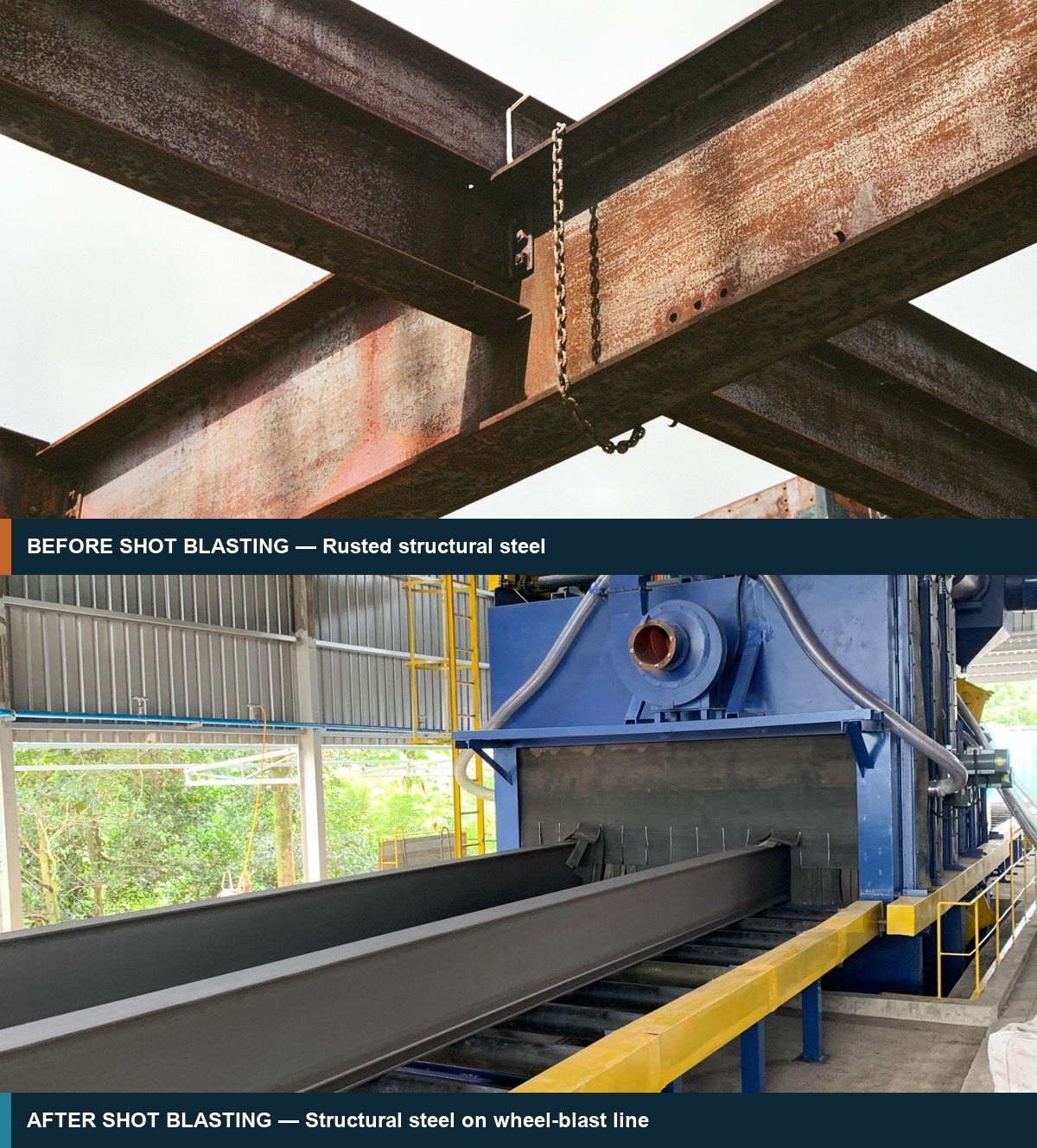
Steel Shot in Wheel Blast Systems
Wheel blast machines leverage centrifugal force to drive abrasives at high velocity. Such automated equipment sees frequent use in foundries, steel service centers and high-output manufacturing operations.
Thanks to its spherical form, steel shot can withstand repeated impacts in a wheel-blast system; performance depends on the grade, working mix and separator condition.
Its main advantages are listed below:
- Extended abrasive lifespan
- Reduced media usage
- Reliable cleaning quality
- Excellent production efficiency
- Lower running costs
For continuous production lines, steel shot can be cost-effective when the process benefits from its working mix and reuse behaviour.
Steel Grit in Air Blast Systems
Air blast systems employ compressed air to drive abrasives, offering operators more flexibility to adjust blasting angle and power.
The angular shape of steel grit particles helps it excel in these systems:
- Quickly clear heavy corrosion
- Efficiently remove outdated coatings
- Penetrate weld seams and uneven surfaces
- Form steady anchor profiles for coating application
For field maintenance, ship repair, bridge renovation and large steel structures, steel grit can be considered where the process requires strong cutting action and a specified coating profile.
Expert Tip: Steel shot and steel grit are both compatible with wheel blast and air blast machines. When making your choice, focus on required surface texture, contamination conditions and production targets, instead of only considering your blasting equipment.
Which Industries Favor Steel Shot or Steel Grit?
Requirements for surface preparation differ from one industry to another. The table below offers a handy guide to choosing the proper abrasive.
| Industry | Recommended abrasive | Why |
|---|---|---|
| Foundry | Steel shot | Efficient cleaning with minimal surface damage |
| Automotive components | Steel shot | Ideal for shot peening and fatigue improvement |
| Spring manufacturing | Steel shot | Creates compressive stress for longer service life |
| Steel plate processing | Steel shot | Fast descaling and uniform finish |
| Shipbuilding | Steel grit | Removes heavy corrosion and creates anchor profile |
| Bridge maintenance | Steel grit | Improves coating adhesion for long-term protection |
| Wind tower manufacturing | Steel grit | Required for heavy-duty protective coating systems |
| Pipeline fabrication | Steel grit | Produces the roughness specified by coating standards |
| Heavy equipment manufacturing | Steel grit | Effective paint and scale removal |
Many companies with multiple product lines maintain inventories of both steel shot and steel grit, enabling them to change abrasives to match different project needs.
Looking Beyond Price: Focus on Cost Per Cleaning Cycle
Many purchasing teams fall into a simple but costly trap: evaluating blasting abrasives by nothing more than their per-ton asking price.
A low upfront material cost is deceptive, as it rarely guarantees lower day-to-day operational spending over time.
Seasoned industry buyers take a far more holistic approach. Rather than fixating on raw material pricing, they focus on the real cost generated per complete cleaning cycle, which depends on a full set of operational variables:
- Extended abrasive service life in continuous operation
- How efficiently the abrasive can be recycled and reused
- Stable and reliable surface cleaning quality
- Real-world production speed and throughput
- Long-term wear and tear on blasting equipment
- Excess dust produced throughout blasting work
- Manpower and labor expenses for each task
- Power and energy consumption during operation
Steel grit has a different value proposition. It can lose angularity and generate fines during repeated reuse, but its cutting action may improve removal of heavy corrosion or scale. Compare actual blasting time, media top-up, dust and accepted output during a controlled trial.
At the end of the day, the cheapest abrasive on paper is rarely the most economical option in practice. The ideal choice is always the one that delivers the lowest total cost of ownership across your entire workflow.
How to Choose Between Steel Shot and Steel Grit?
Use the following decision guide to simplify your selection.
Step 1: What are you removing?
Heavy rust → Steel Grit
Light rust or mill scale → Continue
Step 2: What surface finish do you need?
Smooth, clean finish → Steel Shot
Rough anchor profile → Steel Grit
Step 3: Will the surface be coated?
Yes → Steel grit may be preferred when the coating system requires an anchor profile.
No → Steel Shot is often sufficient.
Step 4: Are you performing shot peening?
Use an approved shot-peening media and procedure; do not use grit for conventional shot peening.
Step 5: Is media life your priority?
Steel shot is often selected where longer recycling life and lower long-term media consumption are priorities.
When Should You Run a Trial?
It's always wise to carry out a practical production trial, even after you've settled on a suitable abrasive type for your operations. This simple step brings huge practical value and helps avoid unnecessary operational risks in formal production.
Before placing bulk orders and fully rolling out new abrasives, running a field trial lets you confirm whether your chosen material can truly match your on-site production standards and practical needs. It serves as a critical verification step to rule out mismatches between theoretical parameters and real working conditions.
It is important to assess the following key metrics throughout the trial process:
- Overall cleaning speed for regular workpieces
- Final surface cleanliness after blasting treatment
- Consistency and quality of the anchor profile
- Actual abrasive consumption volume in real operation
- Recycling stability and reusable performance
- Dust generation levels during blasting
- Degree of equipment wear after continuous operation
- Coating adhesion strength (relevant for coated workpieces)
Additionally, testing abrasives of different particle sizes or hardness levels during trials often unlocks tangible improvements. This simple practice can effectively boost overall production efficiency and further cut down long-term operational costs for blasting workflows.
Common Buying Mistakes to Avoid
Many procurement staff make a very one-sided mistake when selecting blasting abrasives. Most only focus on two basic indicators: particle size and raw material price. This narrow judging standard makes them ignore a host of key factors that actually determine blasting quality and long-term operational efficiency.
If you want to keep steady surface treatment results and control overall production costs, it's vital to avoid these frequent and avoidable purchasing mistakes:
- Choosing steel shot for construction and refurbishment projects that demand a precise, customized anchor surface profile
- Applying steel grit for conventional shot peening work, despite the material being unsuited for this specific process
- Evaluating abrasive quality and cost-effectiveness solely based on bulk purchase price, without accounting for full-cycle operating expenditures
- Failing to check whether the abrasive's hardness matches on-site blasting equipment and actual processing conditions
- Placing large-quantity orders directly without running real production tests beforehand
- Buying unqualified abrasives with unstable quality and irregular particle size distribution
Working alongside an experienced, reputable abrasive supplier can greatly help businesses stay away from these common procurement errors. Professional suppliers can provide tailored selection advice based on actual production needs, ensuring consistent, reliable blasting performance for daily manufacturing operations.
Compare available options on the Steel Shot & Steel Grit category page.
Buyer Checklist
Before locking in any formal purchase order, it's critical to clarify all key details with your abrasive supplier. Taking the time to ask targeted, practical questions eliminates unnecessary uncertainty and ensures the abrasives you invest in truly match your on-site blasting workflows. The following key points are essential to confirm ahead of procurement:
- What type of abrasive is best adapted to my unique blasting and surface preparation workflows?
- Which particle size will deliver the most consistent, high-quality results for my specific production and surface standards?
- How do I pick the right abrasive hardness grade to pair with my equipment and processing objectives?
- What kind of anchor surface profile can I realistically achieve with this abrasive material?
- Which agreed specifications, test methods and batch documents will support this order?
- What sort of recycling durability and service lifespan can I expect when using this abrasive with my existing blasting equipment?
- Do you provide complimentary sample testing services and professional technical support after product delivery?
- Having clear, definitive answers to all these questions makes it much easier to select a practical, budget-friendly abrasive option that fits your daily operational needs perfectly.
Key Takeaways
When wrapping up the core knowledge of metallic abrasive selection, a handful of practical, field-tested principles stand out to guide real-world production choices:
- Steel shot and steel grit are both metallic blasting media, but their particle shape and process fit differ, so they often serve different industrial roles.
- Steel shot works primarily through impact and is commonly used for routine cleaning, descaling and specified shot-peening processes where a more even surface result is required.
- With sharp, angular particles, steel grit provides cutting action and is commonly selected for heavy rust, mill scale and coating-preparation work where the process requires an anchor profile.
- Abrasive selection is never determined by a single factor. Particle size, hardness grade, equipment type and actual production demands all work together to decide the best material for each project.
- It's unwise to judge abrasive value merely by upfront purchase costs. Factories should evaluate overall efficiency based on full-cycle cleaning expenses to accurately measure long-term economic returns.
- Conducting on-site production trials is still the most trustworthy way to optimize blasting quality, stabilize processing results and cut down ongoing operational costs.
FAQ
Q: Can steel shot fully replace steel grit in blasting work?
A: Complete substitution is not viable for every application. Steel shot is commonly used for general cleaning and specified peening work, while steel grit can be selected where the coating system requires a rougher, textured surface. Confirm the process requirement before changing media.
Q: Which abrasive offers a longer service life?
A: Steel shot often offers a longer reusable life because its spherical particle shape can withstand repeated impact. Actual recycling life depends on grade, machine settings, separator condition, and the working mix.
Q: Which abrasive speeds up rust removal the most?
A: Because of its cutting action, steel grit can remove heavy rust and thick mill scale efficiently in suitable processes. Validate speed and surface result on the actual workpiece.
Q: Is mixing steel shot and steel grit a viable practice?
A: Some blast lines operate with a mixed working media. Any mix should be validated against the machine, separator, and required surface result; it should not be treated as a default recommendation.
Q: Is steel grit naturally harder than steel shot?
A: This is a common misunderstanding. Both abrasives are produced in multiple hardness grades. Their performance differences come from customized hardness matching and particle shape variations, rather than an inherent hardness gap between the two materials.
Q: How do I confirm the right abrasive for my blasting process?
A: The best material choice depends on multiple practical factors: surface contamination severity, required anchor profile standards, coating specifications, and your existing blasting equipment. For uncertain working conditions, on-site production testing and professional supplier consultation are the safest and most effective solutions.
Need Help Selecting the Right Steel Abrasive?
No two blasting projects are exactly alike, and the abrasive you pick plays a pivotal role in overall production efficiency, subsequent coating performance, and long-term operational cost control. Picking a mismatched material can easily lead to subpar surface results and unnecessary cost waste.
Whether your work involves cleaning industrial castings, prepping large steel structures for painting and coating, eliminating severe corrosion on industrial pipelines, or fine-tuning the efficiency of automated wheel blast production lines, our team can provide tailored solutions. We offer targeted steel shot and steel grit recommendations fully aligned with your unique working conditions and project goals.
Feel free to reach out to our team to talk through your specific blasting applications, access professional technical guidance, or apply for test samples for on-site verification.
Send an inquiry for a practical starting recommendation.


