
 Español
 Türkçe
 Français
 عربي
عربي  dansk
dansk 한국어
한국어 Deutsch
 Việt Nam
 Italiano
 日本語
日本語 Português

Cast steel shot can prepare steel before coating when its impact cleaning action produces the cleanliness and surface profile required by the coating system. It is often suitable for controlled descaling in automated lines. Angular grit may be more appropriate for heavy corrosion, thick old coatings, or a deeper specified profile. Validate the choice on the actual workpiece and machine.
Evaluating abrasive for a coating line? Send the workpiece condition, machine type, coating system, and required surface profile.
Request a Technical RecommendationWhatsApp +86 185 2641 3298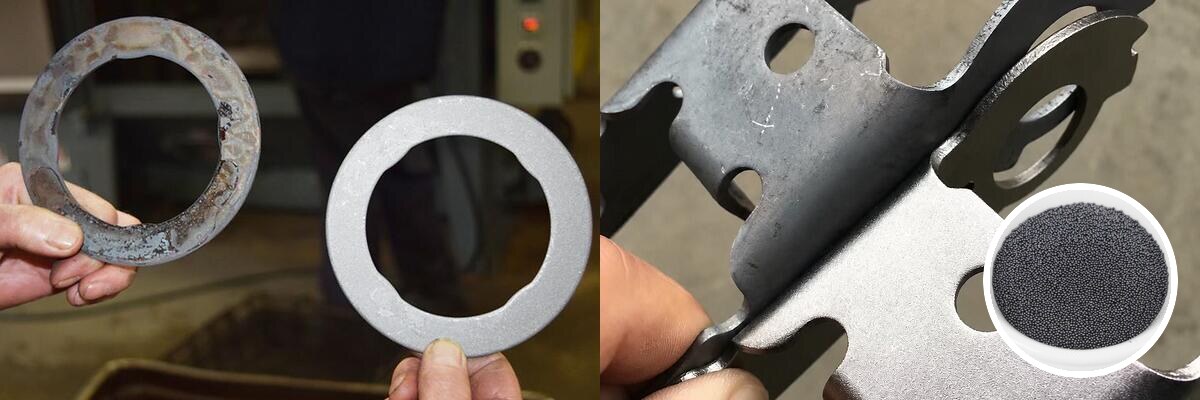
Cast steel shot for controlled cleaning and surface preparation before industrial coating.
Contents
Preparing steel before painting sounds straightforward.
Remove the rust. Clean the surface. Apply the coating.
In an actual production environment, however, the gap between "clean steel" and a surface that is truly ready for coating can be much larger than it first appears.
A steel component may look clean after blasting but still have an unsuitable surface profile, residual dust, loose contamination, or a blasting condition that does not match the coating system.
This is where cast steel shot for surface preparation needs to be considered carefully.
Steel shot can be an effective abrasive for descaling and cleaning steel before coating, particularly in controlled production environments. Its spherical particles deliver repeated impact rather than the aggressive cutting action associated with angular steel grit.
But that does not mean steel shot should automatically be used for every coating application.
The coating manufacturer, required cleanliness level, surface profile, steel condition and blasting equipment all need to agree.
Can Cast Steel Shot Be Used Before Coating?
Yes, in suitable applications.
Cast steel shot is commonly used to remove mill scale, oxidation, light rust, and other surface contamination from steel components before subsequent processing.
Its spherical shape produces an impact-oriented blasting action. This can leave a relatively uniform surface compared with the more aggressive cutting action of angular steel grit.
That characteristic can be useful when the coating system does not require a highly aggressive anchor profile.
However, there is an important distinction:
Cleaning a steel surface and preparing it for a specific coating are not necessarily the same thing.
A surface can be visually clean and still fail the requirements of the coating system.
For example, a coating manufacturer may specify a particular cleanliness standard and surface profile range. If the blasted surface is too smooth, too rough, contaminated with dust, or otherwise outside the coating manufacturer's requirements, the coating may not perform as expected.
So the correct question is not:
"Can steel shot clean this steel?"
A better question is:
"Can this steel shot, under controlled blasting conditions, produce the surface required by the coating system?"
That distinction is important for both production engineers and purchasing teams.
What Condition Is the Steel in Before Blasting?
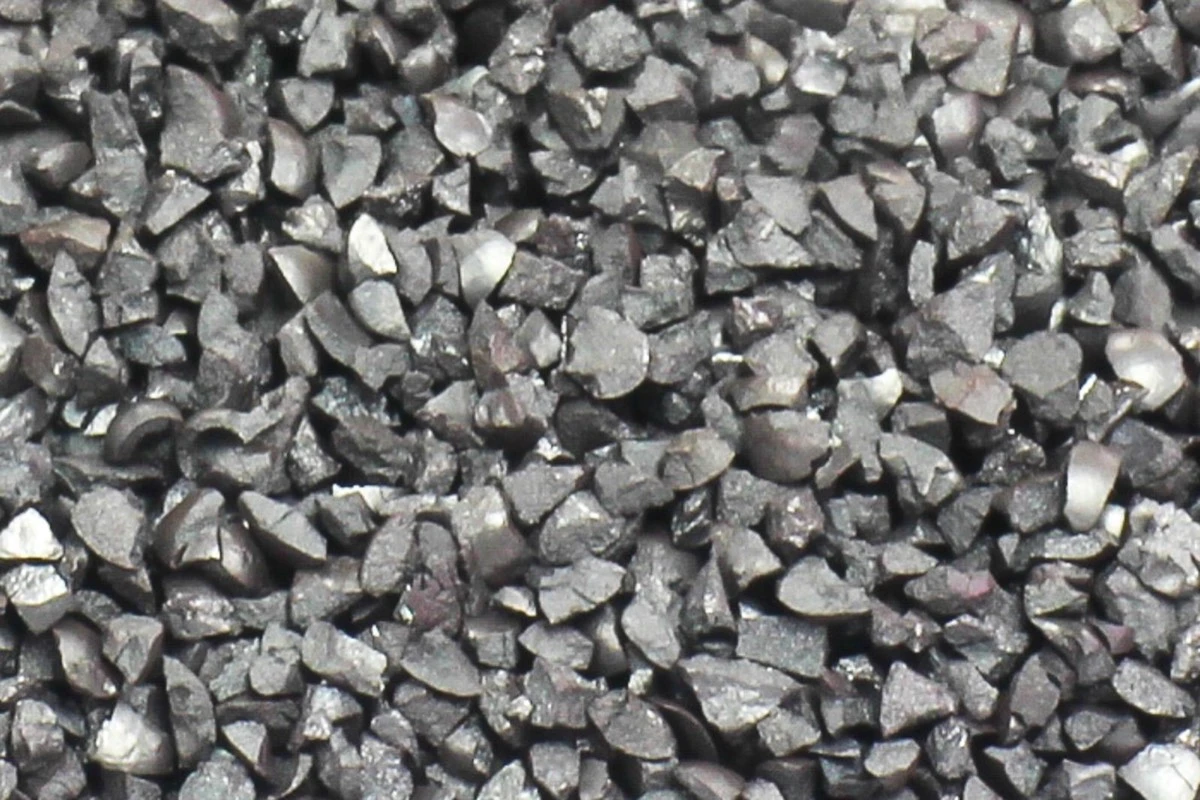
Cast steel shot should be evaluated against the actual substrate condition and contamination.
Abrasive selection should begin with the steel itself.
Not every steel surface arrives at the blasting line in the same condition.
You may be dealing with:
- light surface oxidation
- mill scale
- moderate rust
- heavy corrosion
- old coating residue
- welding contamination
- oil or grease
- dust and shop debris
The condition of the substrate affects how much work the abrasive has to do.
For relatively clean steel with light scale, a suitable grade of cast steel shot may provide efficient cleaning without unnecessarily aggressive surface cutting.
Heavy corrosion or thick layers of old coating are a different problem.
In those cases, angular steel grit may be a better starting point because its edges provide a stronger cutting action.
This is one reason abrasive selection should take place before the purchase order rather than after the blasting problem appears.
A supplier should ideally know what contamination is actually present on the workpiece.
A photograph of the unblasted steel can sometimes be more useful than a simple message saying, "We need abrasive for painting."
What Level of Surface Cleanliness Do You Need?
Standards note: Project specifications commonly reference ISO 8501-1 visual preparation grades or an applicable
AMPP/SSPC surface-preparation standard. Use the exact standard, grade and edition stated by the project. Visual cleanliness does not by itself verify soluble salts, dust, or surface profile.
Surface cleanliness is one of the first things to clarify before choosing blasting media.
Different coating systems and projects can require different levels of preparation.
The target may involve removing:
- loose rust
- mill scale
- old coatings
- visible contamination
- oxidation products
- other surface residues
For industrial coating work, cleanliness should be defined using the applicable project specification or coating manufacturer's requirements rather than relying on visual judgment alone.
This matters because "looks clean" is not a technical acceptance criterion.
Two operators may look at the same blasted steel and reach different conclusions.
A documented standard provides a common reference for:
- production
- quality control
- the coating contractor
- the abrasive supplier
- the final customer
For procurement teams, this also makes abrasive trials easier to evaluate.
Instead of saying, "The new shot looks good," the team can ask:
Did the blasted surface meet the agreed cleanliness requirement?
That is a much more useful question.
Why Does the Coating Supplier's Requirement Matter?
Abrasive suppliers know how abrasives behave.
Coating manufacturers know what their coating systems require.
These are related but different areas of expertise.
If a particular epoxy, zinc-rich primer, or protective coating requires a specific surface condition, that requirement should be established before selecting the blasting process.
The abrasive should then be evaluated against that requirement.
For example, if the coating manufacturer specifies a surface profile range, the blasting team needs to determine whether the selected shot size and hardness, together with machine settings, can consistently produce that profile.
If the requirement cannot be achieved reliably with round shot, switching to angular grit may be more appropriate.
This is why a good abrasive recommendation should not be based solely on the sentence:
"We are blasting steel before painting."
The supplier should also know:
- what coating will be applied
- what cleanliness standard applies
- whether a surface profile is specified
- whether the process is automated
- what blasting machine is being used
- what result the current abrasive produces
What Surface Result Does Cast Steel Shot Produce?
Standards note: Where a numeric profile is required, agree the measurement method as well as the target range. ISO 8503-5, for example, describes a replica-tape field method for measuring the profile of abrasive blast-cleaned steel.
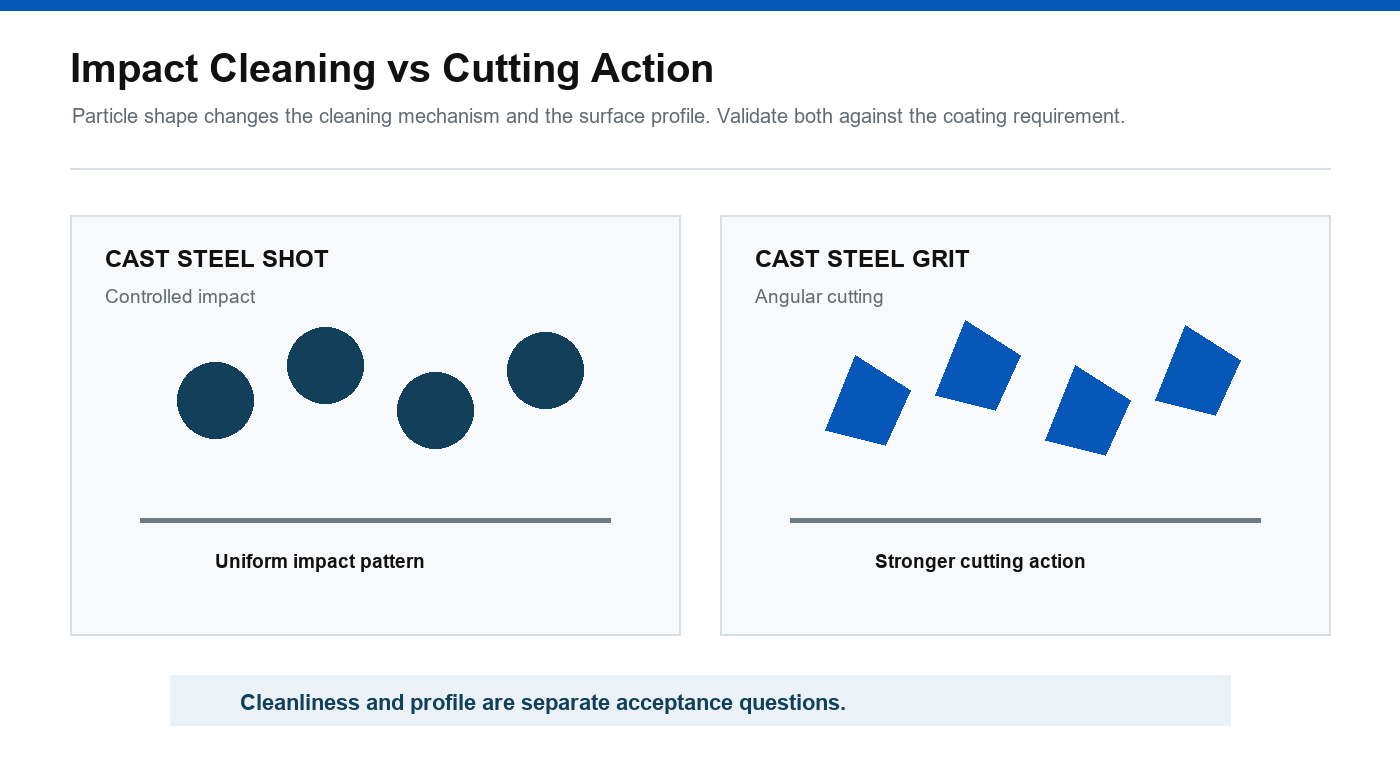
Explanation graphic: round shot is impact-oriented; angular grit provides stronger cutting and profiling action.
The shape of the abrasive has a major influence on the final surface.
Cast steel shot is spherical.
When accelerated toward the workpiece, the particles strike the steel and rebound. This creates an impact-dominated cleaning mechanism.
Steel grit, by contrast, has angular edges and produces more cutting action.
For coating preparation, that difference matters.
If the coating system requires a relatively controlled surface texture, steel shot may be suitable.
If the coating needs a deeper anchor profile, angular grit may be the more practical choice.
The objective should not be to make the steel surface as rough as possible.
A deeper profile is not automatically better.
The profile needs to be appropriate for the coating system.
Too little profile may reduce mechanical keying.
Too much profile can also create problems, including unnecessary coating consumption and difficulties achieving the required coverage.
The target is a controlled profile that matches the coating specification.
Does Steel Shot Always Create a Smooth Surface?
Not exactly.
This is another area where oversimplified descriptions can cause purchasing mistakes.
Steel shot generally produces a more controlled impact pattern than angular grit, but the final surface is influenced by much more than particle shape.
Important variables include:
- shot size
- hardness
- blast wheel speed
- abrasive flow rate
- blasting angle
- exposure time
- workpiece material
- existing surface condition
- working mix
A coarse shot operated at high intensity can produce a very different result from a fine shot used under controlled conditions.
Therefore, it is better to describe steel shot as impact-oriented and generally less cutting than grit, rather than promising one fixed surface finish.
How Does Shot Size Affect Coating Preparation?
Particle size changes the way the abrasive interacts with the steel.
Smaller shot provides a different impact pattern from larger shot.
Fine shot can be useful when the contamination is relatively light or when the workpiece has detailed areas that require controlled treatment.
Coarser shot delivers greater individual particle mass and can be more useful when heavier scale must be removed.
But selecting the largest available shot simply because the steel has to be coated is not a sound approach.
Consider three questions:
What needs to be removed?
Light oxidation does not require the same impact as thick mill scale.
What surface profile is required?
The coating specification should determine the target rather than the abrasive supplier's product range.
What machine is being used?
The same nominal shot size can behave differently in different machines.
For example, an automated wheel blast line may use a very different shot specification from a manual air-blast cabinet.
This is why the shot size should be selected as part of the complete process.
What Machine Settings Should Be Controlled?
Even a correctly selected abrasive can produce inconsistent results if the machine is not properly adjusted.
For wheel blasting, important variables may include:
- blast wheel condition
- wheel speed
- abrasive flow
- blasting time
- workpiece position
- media recovery
- separator adjustment
The blast wheel determines how much energy is transferred to the abrasive.
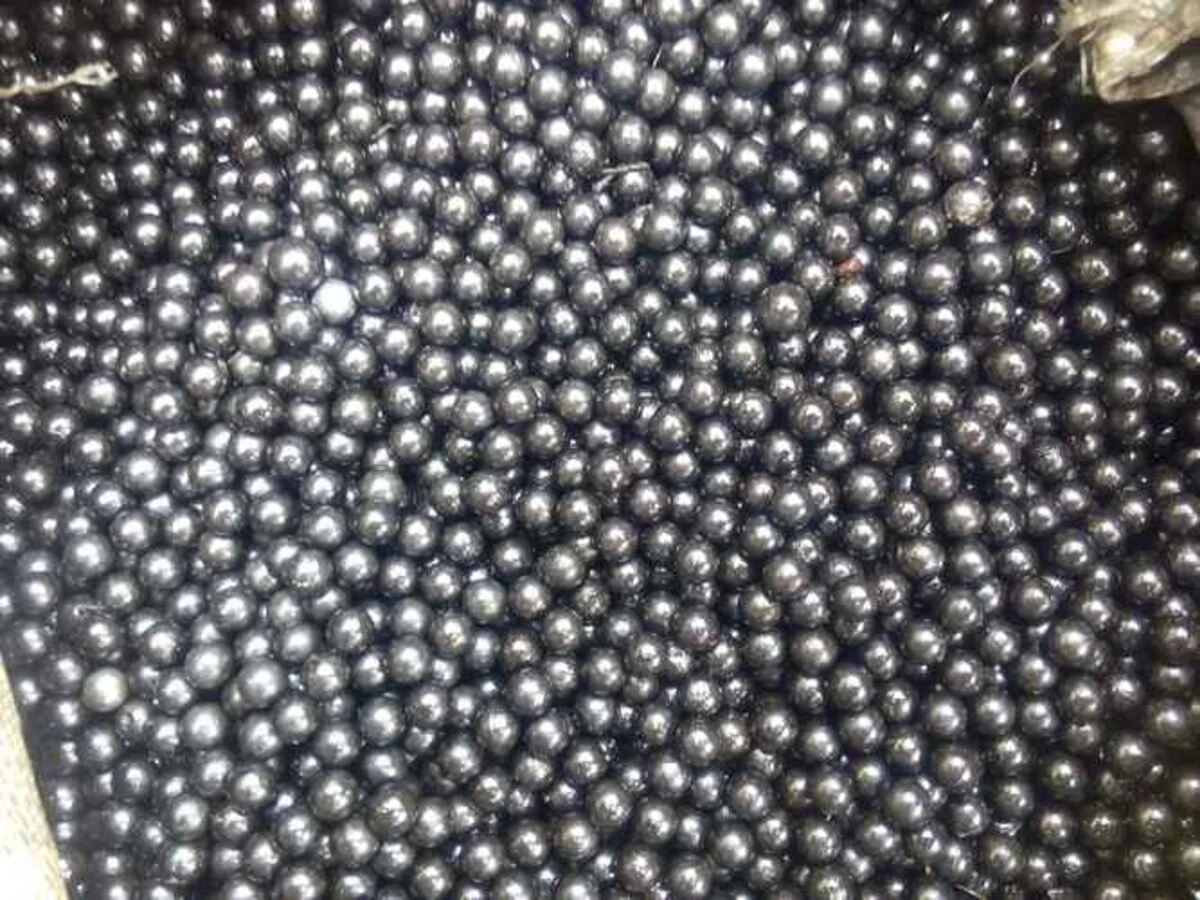
Machine condition and process settings should be checked together with the abrasive grade.
If the wheel is worn or the operating conditions change, the abrasive stream may no longer behave as expected.
A common mistake is to compensate for a machine problem by changing the abrasive.
For example, if cleaning has become slower, the operator may immediately order a larger or harder shot.
That may not solve the real issue.
The wheel may need maintenance.
The abrasive flow may be incorrect.
The working mix may contain too many fines.
The separator may not be functioning correctly.
Before changing the product specification, check the process.
Why Is the Working Mix Important Before Coating?
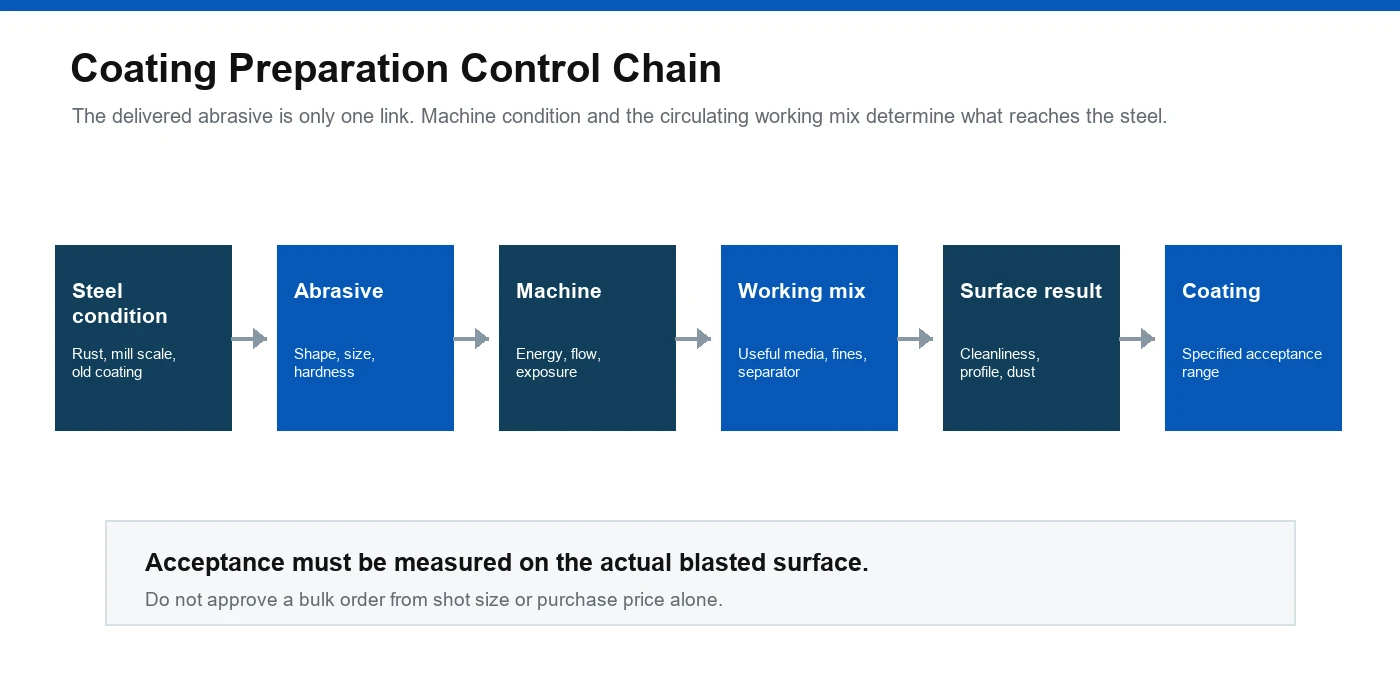
Explanation graphic: the actual coating result depends on the complete process, not only the fresh abrasive grade.
A blasting machine rarely operates with 100% new steel shot.
After repeated cycles, some particles remain usable while others become smaller or break down.
The machine's recovery and separation system removes unsuitable material and returns usable abrasive to circulation.
This creates a working mix.
The working mix affects the consistency of the blasting result.
If it becomes unbalanced, the surface may change even though the operator has not changed the nominal shot grade.
For coating preparation, that can be a serious problem.
One production batch may achieve the required cleanliness and profile, while a later batch produces a different result.
This is why production teams should monitor:
- new shot addition rate
- fines generation
- separator performance
- particle size distribution
- surface condition
- blasting time
The abrasive specification printed on the delivery document describes the new media.
The working mix describes what is actually hitting the steel.
Those are not always the same thing.
Can Steel Shot Be Used for Both Cleaning and Coating Preparation?
Yes, but the process needs to be validated.
There is no reason to assume that an abrasive suitable for general cleaning will automatically meet every coating specification.
A good production process should establish a clear relationship between:
Steel condition → abrasive specification → machine settings → surface result → coating requirement
If the process is stable, the same settings can often be repeated across production batches.
If the surface requirement changes, the blasting process may need to change with it.
For example, switching from a general protective paint to a more demanding coating system could require a different surface profile or cleanliness level.
That should trigger a process review rather than simply continuing with the existing shot specification.
When Is Steel Grit a Better Choice?
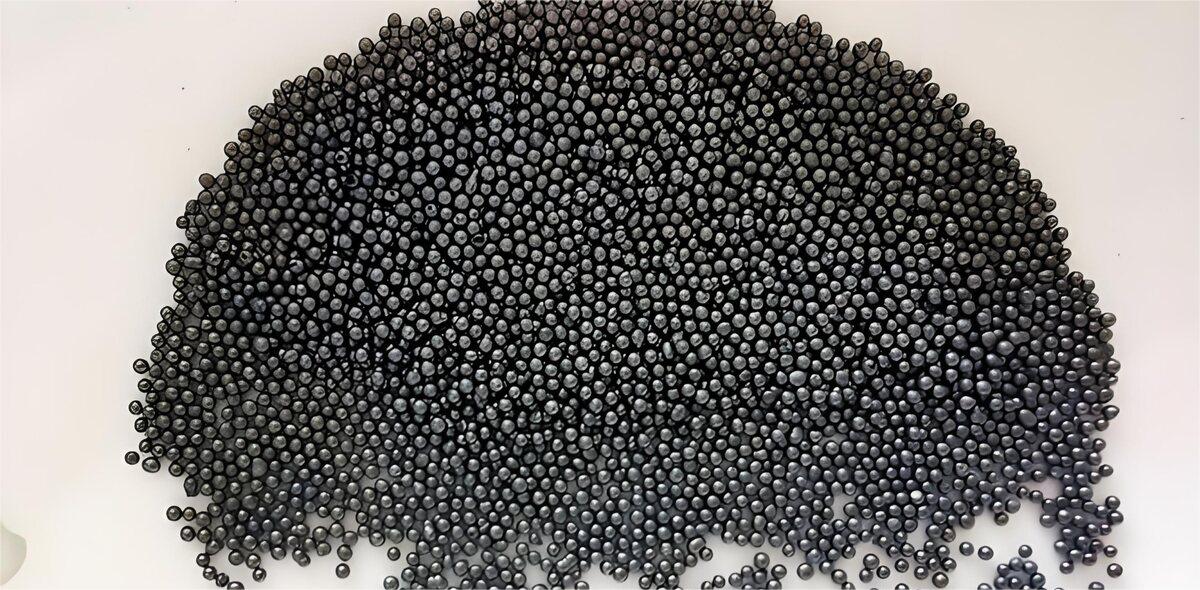
Angular cast steel grit provides stronger cutting action for demanding removal and profiling tasks.
There are coating applications where steel grit makes more sense.
If the steel has:
- heavy rust
- thick mill scale
- multiple old coating layers
- strongly adhered contamination
the cutting action of angular grit may remove the material more efficiently.
Grit can also be useful when a deeper anchor profile is specifically required by the coating system.
This does not make grit "better" than shot.
It simply means the abrasive geometry matches the task more closely.
A useful way to think about the choice is:
Steel shot = controlled impact cleaning
Steel grit = more aggressive cutting and profiling
The coating specification determines which side of that equation is appropriate.
How Should You Validate Cast Steel Shot Before a Large Order?
A production trial is one of the safest ways to validate a new abrasive.
This is especially important when:
- changing suppliers
- changing shot size
- changing hardness
- changing the coating system
- modifying blast equipment
- dealing with a new steel grade
- trying to reduce abrasive consumption
The trial should use actual production workpieces whenever possible.
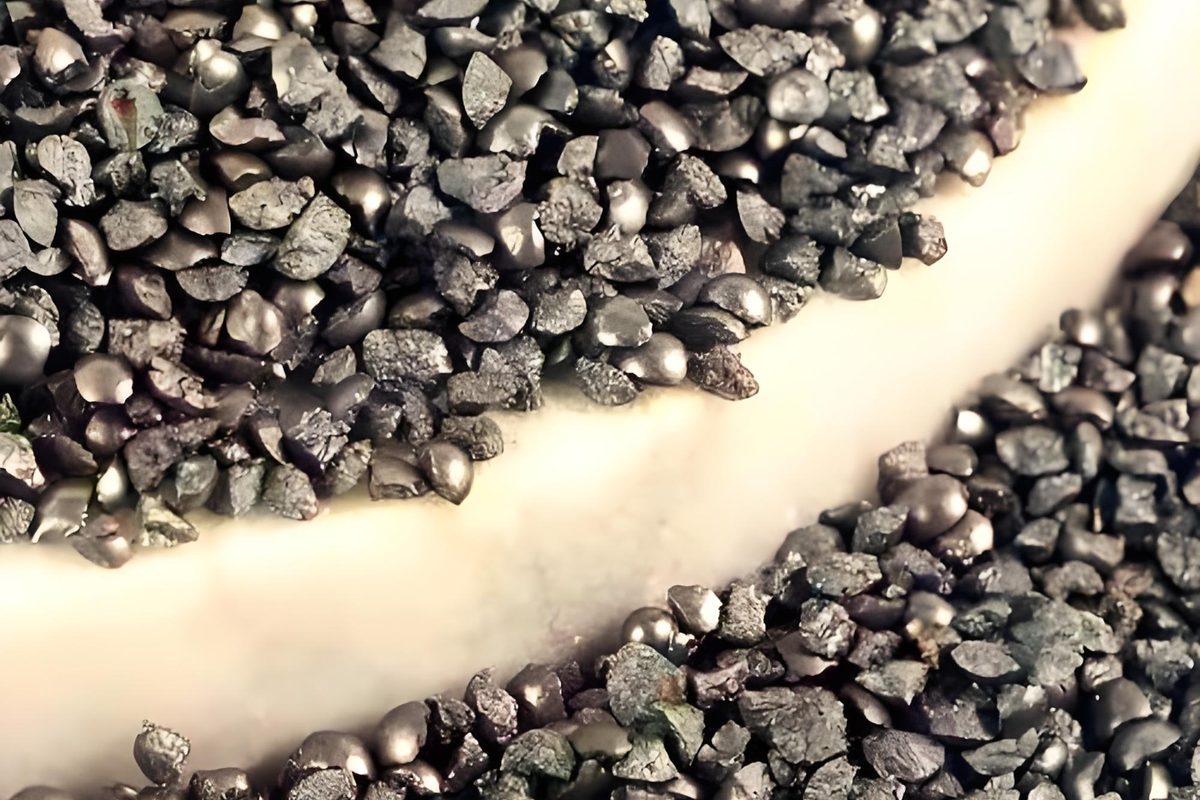
A controlled production trial should record the abrasive sample, blasted surface, profile and operating data.
A laboratory sample can tell you something about the abrasive.
A production trial tells you how that abrasive behaves inside your machine.
Keep the main process variables stable during the comparison.
If you change shot size, wheel speed and abrasive flow simultaneously, it becomes difficult to determine what caused the result.
A controlled trial gives you much better information.
What Should You Measure During a Coating Preparation Trial?
Do not measure cleaning speed alone.
A useful trial should include several acceptance criteria.
Surface Cleanliness
Did the blasted steel reach the required cleanliness level?
Surface Profile
Does the resulting profile fall within the range required by the coating system?
Surface Consistency
Does the result remain consistent across different workpieces and production batches?
Abrasive Consumption
How much new shot is required to maintain the working mix?
Dust and Fines
Is the separator removing the breakdown material effectively?
Production Time
Does the abrasive allow the required production throughput?
Coating Performance
Where appropriate, verify the finished coating according to the applicable inspection procedure.
A trial that produces excellent cleaning but an unacceptable profile is not successful.
Likewise, an abrasive that produces the right profile but requires excessive consumption may not be commercially attractive.
The best result balances surface quality and operating cost.
What Documentation Should You Keep?
Documentation becomes increasingly important as the operation becomes larger.
For a production coating line, useful records may include:
- abrasive product specification
- batch number
- Certificate of Analysis
- shot size
- hardness
- particle size distribution
- machine settings
- trial results
- cleanliness inspection
- profile measurements
- coating system information
This creates traceability.
If a coating problem appears several months later, the production team can look back at the blasting records instead of relying on memory.
For international buyers, this is particularly useful because abrasive shipments may arrive in multiple batches.
The product label and COA should make it possible to identify what material was supplied and when it was produced.
A Practical Example: Fabricated Steel Before Painting
Consider a steel fabrication plant producing welded structural components.
The steel arrives with moderate mill scale. After fabrication, the components need blasting before an industrial protective coating is applied.
The plant uses an automated wheel blast machine.
The buyer's first instinct may be to ask:
"Which steel shot should we buy?"
A better process is to establish the complete requirement first.
The plant should identify:
Steel condition: moderate mill scale and localized surface oxidation.
Cleaning target: the required cleanliness standard for the coating system.
Surface profile: the range specified by the coating manufacturer.
Machine: automated wheel blast equipment with abrasive recovery.
Production requirement: a defined number of tons or components per shift.
Abrasive: a suitable cast steel shot size and hardness to be validated by trial.
The team can then run a controlled test and compare the surface result, shot consumption, and production time.
If the required profile cannot be achieved consistently with shot, the plant should evaluate angular steel grit instead.
That is a much stronger purchasing process than choosing an abrasive based only on price per ton.
Common Mistakes When Using Steel Shot Before Coating
Mistake 1: Treating Visual Cleanliness as the Final Acceptance Standard
A bright-looking surface does not automatically mean the surface meets the coating specification.
Mistake 2: Choosing Shot Without Checking the Coating Requirement
The abrasive should support the coating system, not the other way around.
Mistake 3: Increasing Shot Size to Solve Every Cleaning Problem
Machine settings, working mix, and separator performance should be checked first.
Mistake 4: Ignoring Surface Profile
Removing rust is only part of coating preparation.
Mistake 5: Buying Large Quantities Before Testing
A production trial is usually much cheaper than discovering after a bulk shipment that the abrasive does not meet the process requirement.
Mistake 6: Focusing Only on Purchase Price
The real cost includes abrasive consumption, production time, machine wear, dust management and rework.
Cast Steel Shot for Surface Preparation: Buyer Checklist
Before approving a steel shot specification for coating preparation, confirm:
- Steel grade and workpiece condition
- Type and thickness of contamination
- Required cleanliness standard
- Coating manufacturer's requirements
- Required surface profile
- Shot size
- Shot hardness
- Blast machine type
- Wheel speed or air pressure
- Abrasive flow rate
- Separator condition
- Working mix condition
- COA and batch information
- Trial acceptance criteria
- Surface inspection method
- Coating inspection requirements
This checklist gives the purchasing team something concrete to discuss with the abrasive supplier before ordering.
Final Takeaway
Cast steel shot for surface preparation can be an effective choice when the application calls for controlled impact cleaning and the resulting surface is compatible with the coating system.
But the abrasive should never be selected in isolation.
The process starts with the condition of the steel.
Then comes the required cleanliness level.
Then the coating manufacturer's requirements.
Then the target surface result.
Only after those points are clear should the team finalize the shot size and hardness, together with machine settings.
And when there is any uncertainty, a controlled production trial is the safest way to confirm the choice.
For coating preparation, the goal is not simply to make steel look clean.
The goal is to produce a clean, consistent, and properly prepared surface that allows the specified coating system to perform as intended.
If you are evaluating cast steel shot for a new coating line, changing abrasive suppliers, or trying to improve your current blasting process, provide your workpiece information, machine details, and coating requirements before placing a bulk order.
A process-based recommendation is far more useful than simply choosing a shot size from a product catalogue.
FAQ: Cast Steel Shot Before Coating
Can cast steel shot be used before painting or coating?
Yes, when the selected shot and blasting process can achieve the cleanliness and surface profile required by the coating specification. Suitability should be confirmed by the actual coating requirement and a controlled production trial.
Does steel shot create enough surface profile for coating?
Sometimes. Steel shot provides impact-oriented cleaning and can create a controlled texture, but it is generally less cutting than angular steel grit. If a deeper anchor profile is required, grit may be more appropriate.
What should be checked before choosing steel shot for coating preparation?
Check the workpiece condition, contamination type, required cleanliness, target surface profile, coating manufacturer requirements, shot size and hardness, blast-machine settings, working mix, separator condition and trial acceptance criteria.
Is a visually clean steel surface ready for coating?
Not necessarily. Visual cleanliness alone does not confirm that the surface meets the specified cleanliness or profile requirements for a coating system.
Why is a production trial important before a bulk steel shot order?
A controlled trial shows how the abrasive behaves in the actual machine and workpiece conditions. It allows the buyer to compare cleanliness, surface profile, consistency, consumption, fines, production time and coating-related results before committing to a large order.
For product ranges and specification support, review Promisteel's cast steel shot,
cast steel grit and complete
steel shot and steel grit category.
Cast steel shot supply for industrial blasting, coating preparation and controlled production trials.
Match the Abrasive to the Coating Requirement
Share the steel condition, contamination, coating specification, required cleanliness and profile, machine model and current abrasive data. Promisteel can help define a practical starting specification and trial checklist.
Contact PromisteelDiscuss on WhatsApp


